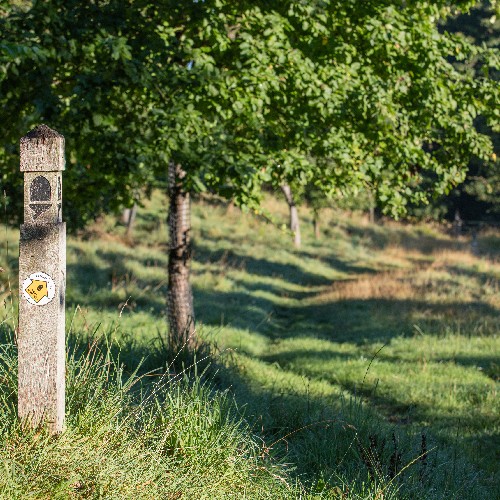
Public rights of way
Online forms
We are currently experiencing some problems with online forms.
Please do not attempt to use any of the online form links on this page.
Although you may be able to complete the form we cannot process them and your data will be lost.
What is a public right of way?
Public rights of way are open to everyone at any time and give you the right to walk, ride a horse or cycle along certain routes. Some rights of way are open to vehicles.
Report a problem on a right of way
Report a problem with...
- a sign
- an animal
- an obstruction
- overgrown vegetation
- the misuse of a path
- ploughing or cropping
- a structure on the path
- the surface of a path
You can follow up on issues you have reported with our online report tracker..
Temporary closures
View a list of main temporary closures known to be affecting the public rights of way network.
What is a definitive map and statement?
It is a legal record of the public rights of way and shows the routes of each public footpath, bridleway, restricted byway and byway open to all traffic in the county.
You can view the:
- Original map at Shire Hall during office hours (no need to book an appointment)
- Rights of Way Map online
This is not the definitive map but our attempt to show the data in an electronic format
Definitive Map Modification Orders and Public Path Orders
It is possible to change the definitive map by applying for a modification order or public path diversion order.
There are three types of modifications:
- Deleting the public right of way from the definitive map
- Adding a public right of way to the definitive map
- Altering the status of a public right of way already recorded e.g. footpath to bridleway
Register of definitive map modification order applications:
The council must provide a register of definitive map modification orders.
View the modification order register on-line
Highways Act 1980, Section 31(6) depositions
Section 31(6) of the Highways Act 1980 enables a landowner to deposit with the highway authority a map and statement showing the ways (if any) that he/she admits are dedicated as highways. The Deposition will provide a degree of protection against claims for additional rights of way based on deemed dedication. It can be kept in force by the landowner by submitting Statutory Declarations at intervals of no greater than ten years. The council must provide a register of Section 31(6) Deposits of Statement and Plan.
View the Section 31(6) register on-line
Gloucestershire Local Access Forum (GLAF)
This forum consists of interest groups such as walkers, cyclists, equestrians, disabled users and landowners. It advises the county council regarding access to the countryside and public rights of way matters. If you would like to find out more, or are interested in joining the forum email prow@gloucestershire.gov.uk.
View the GLAF meeting papers on-line
How can I volunteer?
To become a path volunteer email prow@gloucestershire.gov.uk and we can put you in touch with your local group, or contact your parish/town council.