Frequently asked questions

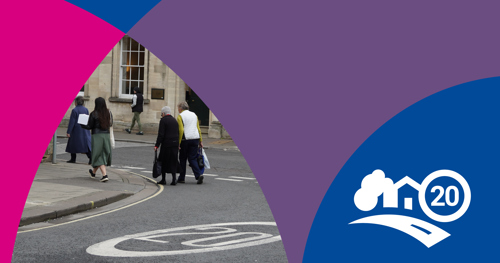
Photo of people walking across a road with a 20 mph sign painted in white

The Safer Roads and Community 20s initiative aims to improve road safety and public health by identifying and delivering speed reductions by focusing on routes where there are existing concerns and a recorded casualty history and areas where communities support change.

By combining community insight with evidence-based analysis, these initiatives support a more targeted and effective programme of speed management and casualty reduction.   

The Safer Roads and Community 20s initiative aims to improve road safety and public health by identifying and delivering speed reductions by focusing on routes where there are existing concerns and a recorded casualty history and areas where communities support change.

By combining community insight with evidence-based analysis, these initiatives support a more targeted and effective programme of speed management and casualty reduction.   

Evidence consistently shows that lowering speeds significantly reduces collisions, injuries and fatalities.  

Cities such as Bristol, Edinburgh and 40 European areas have seen large reductions in road casualties after introducing speed management and 20mph limits.   

Areas where 20mph and reduced speed limits have been introduced have experienced the following benefits: 

  • Safer roads with fewer deaths and injuries: A safer environment for walking and cycling: Reducing speeds creates streets where people feel more comfortable to walk, wheel and cycle. This is especially important for vulnerable groups such as children, older people and disabled people. Safer streets help children travel independently and support everyday active journeys.    

  • Healthier, more active communities: By making walking and cycling feel safer, lower speed limits help increase physical activity levels among both adults and children. This supports wider health outcomes, including improved mental wellbeing, reduced obesity, and more opportunities for social connection.    

  • Better air quality and lower emissions: Driving at lower, more consistent speeds reduces unnecessary acceleration and braking, which are two major contributors to pollution. Up to 75% of vehicle pollution comes from brake and tyre wear, not exhaust emissions, and smoother driving helps reduce this. Research shows that lower limits can cut carbon dioxide and nitrogen oxide emissions significantly, and cities implementing them have reported reductions of up to 18% in overall transport emissions.    

  • Reduced noise pollution: A reduction from 30mph to 20mph typically decreases noise levels by around 3 decibels, perceived as halving background noise. This makes neighbourhoods more pleasant, especially in areas with high footfall or residential density.    

  • Minimal impact on journey times: In urban environments, journey times are shaped mainly by junctions, crossings and parking, not speed limits. Shifting to lower speeds and 20mph has been shown to have negligible impact on travel time, including for buses. Lower speeds also smooth traffic flow by reducing acceleration and braking.    

  • Lower fuel consumption and driving costs: Smoother driving at lower speeds can reduce fuel use by avoiding rapid acceleration. Real-world modelling suggests drivers can save up to 10p per mile, around 30% of urban fuel costs, when travelling more steadily. Data from areas where lower speeds and 20mph zones have been delivered has also shown that drivers within these zones pay lower insurance premiums.

Evidence consistently shows that lowering speeds significantly reduces collisions, injuries and fatalities.  

Cities such as Bristol, Edinburgh and 40 European areas have seen large reductions in road casualties after introducing speed management and 20mph limits.   

Areas where 20mph and reduced speed limits have been introduced have experienced the following benefits: 

  • Safer roads with fewer deaths and injuries: A safer environment for walking and cycling: Reducing speeds creates streets where people feel more comfortable to walk, wheel and cycle. This is especially important for vulnerable groups such as children, older people and disabled people. Safer streets help children travel independently and support everyday active journeys.    

  • Healthier, more active communities: By making walking and cycling feel safer, lower speed limits help increase physical activity levels among both adults and children. This supports wider health outcomes, including improved mental wellbeing, reduced obesity, and more opportunities for social connection.    

  • Better air quality and lower emissions: Driving at lower, more consistent speeds reduces unnecessary acceleration and braking, which are two major contributors to pollution. Up to 75% of vehicle pollution comes from brake and tyre wear, not exhaust emissions, and smoother driving helps reduce this. Research shows that lower limits can cut carbon dioxide and nitrogen oxide emissions significantly, and cities implementing them have reported reductions of up to 18% in overall transport emissions.    

  • Reduced noise pollution: A reduction from 30mph to 20mph typically decreases noise levels by around 3 decibels, perceived as halving background noise. This makes neighbourhoods more pleasant, especially in areas with high footfall or residential density.    

  • Minimal impact on journey times: In urban environments, journey times are shaped mainly by junctions, crossings and parking, not speed limits. Shifting to lower speeds and 20mph has been shown to have negligible impact on travel time, including for buses. Lower speeds also smooth traffic flow by reducing acceleration and braking.    

  • Lower fuel consumption and driving costs: Smoother driving at lower speeds can reduce fuel use by avoiding rapid acceleration. Real-world modelling suggests drivers can save up to 10p per mile, around 30% of urban fuel costs, when travelling more steadily. Data from areas where lower speeds and 20mph zones have been delivered has also shown that drivers within these zones pay lower insurance premiums.

The level of injury to pedestrians and cyclists when hit by vehicles travelling above 20mph rises sharply to severe, with 20mph recognised as the inflection point of the graph of survivability.  

Lower speeds provide greater opportunities for drivers to react to unforeseen hazards. Driving at 20mph instead of 30mph allows drivers to stop at half the distance (12m vs 23m).  

In the event of a collision there are 7-10 times fewer fatalities if drivers are travelling at 20mph compared to 30mph.

The level of injury to pedestrians and cyclists when hit by vehicles travelling above 20mph rises sharply to severe, with 20mph recognised as the inflection point of the graph of survivability.  

Lower speeds provide greater opportunities for drivers to react to unforeseen hazards. Driving at 20mph instead of 30mph allows drivers to stop at half the distance (12m vs 23m).  

In the event of a collision there are 7-10 times fewer fatalities if drivers are travelling at 20mph compared to 30mph.

The initial priority areas have been identified based on interest and need and will be delivered in phase one.  The programme is being delivered in phases across a four-year period where further areas will be delivered.  We will continue to update communities regarding future phases and updates and their representatives to kick off the Early Design and Engagement phase for their location.  

The initial priority areas have been identified based on interest and need and will be delivered in phase one.  The programme is being delivered in phases across a four-year period where further areas will be delivered.  We will continue to update communities regarding future phases and updates and their representatives to kick off the Early Design and Engagement phase for their location.  

The initial designs are being developed by Road Safety Council Officers through workshops with Local Highway Managers (LHMs) who have helped to refine the proposals using their local knowledge and insights.  

These insights include issues that have been raised to the LHMs by stakeholders and community members, as well as knowledge and experience of local pinch points and traffic issues, that may not have been identified through the collisions data.

The initial designs are being developed by Road Safety Council Officers through workshops with Local Highway Managers (LHMs) who have helped to refine the proposals using their local knowledge and insights.  

These insights include issues that have been raised to the LHMs by stakeholders and community members, as well as knowledge and experience of local pinch points and traffic issues, that may not have been identified through the collisions data.

The development of the design proposals will be an iterative process, shaped by ongoing engagement and consultation with both stakeholders and the local community. The Early Design and Engagement phase will seek to gather feedback from the community on the initial designs for their locations. All input received, whether online, at events, or via written correspondence, will be carefully considered and, where appropriate, incorporated within the updated designs.   

The community will then have an opportunity to formally respond to the updated designs via the statutory Traffic Order process. 

The development of the design proposals will be an iterative process, shaped by ongoing engagement and consultation with both stakeholders and the local community. The Early Design and Engagement phase will seek to gather feedback from the community on the initial designs for their locations. All input received, whether online, at events, or via written correspondence, will be carefully considered and, where appropriate, incorporated within the updated designs.   

The community will then have an opportunity to formally respond to the updated designs via the statutory Traffic Order process. 

For both Safer Roads and Community 20s we are seeking to fund the installation of signage to implement a reduction in speed limits, we expect that the need for any physical infrastructure is unlikely at most sites however where physical infrastructure might be needed this will be considered only where there are casualty trends that might benefit from infrastructure.  

For both Safer Roads and Community 20s we are seeking to fund the installation of signage to implement a reduction in speed limits, we expect that the need for any physical infrastructure is unlikely at most sites however where physical infrastructure might be needed this will be considered only where there are casualty trends that might benefit from infrastructure.  

Early initial engagement will be sought through the provision of an online mapping tool. This online tool is planned to allow specific feedback to be provided on areas selected.    

In-person engagement events will also be held in certain locations where you will be able to view and discuss the proposals with members of the project team and complete the survey using tablets available during the session.  

Following initial engagement, a public consultation will be undertaken following Gloucestershire County Council’s (GCC’s) formal Traffic Order process.  

Early initial engagement will be sought through the provision of an online mapping tool. This online tool is planned to allow specific feedback to be provided on areas selected.    

In-person engagement events will also be held in certain locations where you will be able to view and discuss the proposals with members of the project team and complete the survey using tablets available during the session.  

Following initial engagement, a public consultation will be undertaken following Gloucestershire County Council’s (GCC’s) formal Traffic Order process.  

The project looks to improve safety for active travellers by reducing speeds across the county. These speed reductions are complementary to other recent and emerging active travel schemes such as the Gloucestershire Cycle Spine, and wider improvements to support walking and cycling. 

The project looks to improve safety for active travellers by reducing speeds across the county. These speed reductions are complementary to other recent and emerging active travel schemes such as the Gloucestershire Cycle Spine, and wider improvements to support walking and cycling. 

£2 million public health funding has been secured to support a wide range of road safety investment by the council.

A further £619,000 of road safety capital investment is allocated to the accident remedial programme in the council’s 2026/27 budget towards this initiative.

Together this is anticipated to cover investment required for the first 2 years delivery of the safer roads and communities 20s programme.  

£2 million public health funding has been secured to support a wide range of road safety investment by the council.

A further £619,000 of road safety capital investment is allocated to the accident remedial programme in the council’s 2026/27 budget towards this initiative.

Together this is anticipated to cover investment required for the first 2 years delivery of the safer roads and communities 20s programme.