
What we are doing about potholes
We all know that potholes are at best annoying and at worse, dangerous to those who use the roads. We’ve invested a lot of money in resurfacing schemes which are the best long-term way to tackle potholes but we want to explain in more detail how we tackle potholes day to day.
Did you know?
Potholes can occur at time of the year but most commonly form in the spring. Because during the winter, water seeps through cracks in the road, freezes and expands. Later, once the water evaporates a gap is left below the surface of the road. Changes in the weather due to climate change are increasing the chances of potholes occurring.
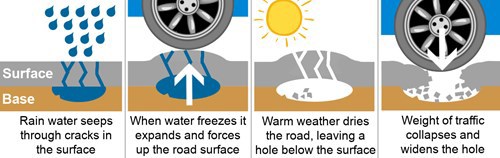
Each spring we increase our pothole repair operations to address the damage caused by winter weather and make the most of the warmer and drier weather which is more favourable for making lasting repairs.
How we’re strengthening the county’s roads:
- In addition to our usual repair teams we have 'Find and Fix' teams working across the county to fix smaller potholes before they get worse. When possible, all our teams tackle smaller potholes near by to any safety critical ones that they are repairing.
- We are testing machines and techniques to boost efficiency and make repairs stronger in all weather conditions. We use a Spray Injection Patcher, which works at twice the speed of a conventional repair team. We also use Roadmender, which covers patches of damaged road with a smooth and durable surface made from recycled materials.
Pothole repair trials
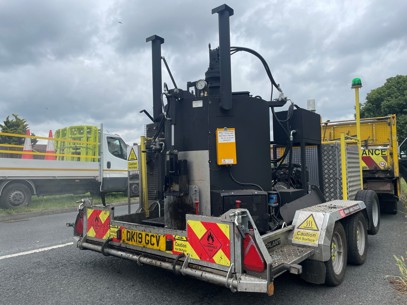
The county council has been trialling a range of pothole repair techniques at the cutting edge of highways maintenance. During July 2024 machines went head-to-head in the battle of the pothole repair machines and since then engineers have been monitoring the repairs and assessing the results. We found the machines all have their strengths and are suited to different sites and road conditions.
The Roadmender (pictured above) performed particularly well for quality and speed of repairs as well as environmental impact. With this kit, damaged patches of road are covered with a hot rubber asphalt mix made with recycled tyres. This long-lasting layer forms a watertight seal over the affected patch of road. It’s ideal for making quick, durable and neat repairs to damaged road surfaces. It also has the bonus of being more environmentally sustainable than traditional pothole repairs.
We continue to use a Spray Injection Patching machine and a Bobcat to make repairs. Due to their size and design the three different techniques are best suited to different locations so choosing the right solution for each area is important to get the best results for our roads. The machines will be deployed most often during the spring and summer when the after-effects of winter weather put a strain on the roads.
We continue to invest in proactive pothole repairs and have more teams fixing smaller potholes before they develop into safety hazards. Further trials continue, for example, tests of cold material for road repairs to reduce waste and save energy. We are also pushing ahead with an extensive road resurfacing programme.
Last reviewed: