Fibre broadband utilises fibre optic cables, which can carry much more data than ADSL. There are two main types of fibre broadband:
Fibre to the Cabinet (FTTC)
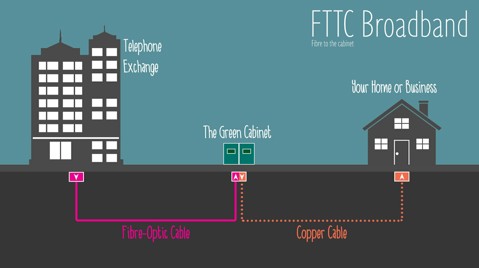
FTTC uses fibre optic cables to connect local street-side cabinets, but existing copper wires are still used to make the final connection from the cabinet to the property. FTTC can offer superfast broadband, allowing for multiple connected devices, online shopping, home working, and streaming. However, speeds decrease the further your property is from the cabinet, resulting in varying speeds for properties connected to the same cabinet.
Full Fibre / Fibre to the Premise (FTTP)
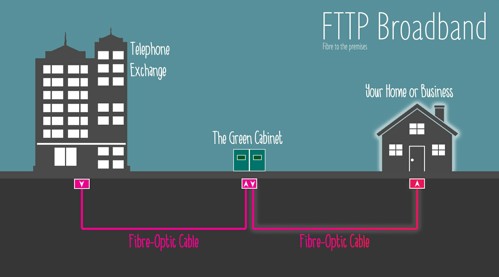
Full fibre is a 100% fibre connection that allows access to a gigabit-capable fibre connection straight to your home, regardless of the distance from the cabinet. FTTP is ideal for businesses, large families, and online gaming, and it typically offers symmetrical speeds where your upload speed is the same as your download speed.
Coverage for FTTP only extends across some of the UK, and building new networks is very expensive. These high costs make it financially unviable for commercial broadband suppliers to build networks in sparsely populated rural areas. To address these hard-to-reach areas, the UK Government launched Project Gigabit, a £5 billion program to enable communities to access lightning-fast gigabit-capable broadband.

