
Newly-recognised refugees

After spending time in either contingency or dispersal accommodation, asylum seekers will have their asylum claim assessed. This process results in one of two outcomes:
Granted asylum:
If their claim is approved, they receive refugee status and the right to remain in the UK. After this positive decision, they will need to move out of asylum accommodation within a month and find independent housing.
In 2024, 89.7% of asylum seekers in Gloucestershire received a positive decision on their asylum claim.
Refused asylum:
If their claim is rejected, the individual will be supported to return to their country of origin.
This transition can be a significant moment for asylum seekers, whether they are beginning a new chapter as refugees or facing the challenges of returning to their home countries.
Risk of homelessness for refugees
Homelessness is a complex issue that affects a diverse range of individuals including:
- families
- young people
- those with complex needs.
In Gloucestershire, homelessness has been on the rise, driven by things like:
- high housing costs
- a lack of affordable homes
- ongoing economic pressures
Refugees are at particular risk from these pressures.
Homelessness amongst refugees is a pressing issue that highlights the challenges of integration and support in host countries. Many struggle with limited finances, unfamiliar housing markets, and language barriers, all while coping with the trauma of displacement and navigating complex systems to secure their refugee status.
In 2023, the UK government worked to clear the backlog of asylum applications by speeding up decision making.
It became clear that newly recognised refugees were struggling to find a home, look for work and put down roots in their new home country in the time available.
As a result, homelessness and rough sleeping became growing concerns for this vulnerable group.
The potential rise in homelessness among refugees in Gloucestershire was putting pressure on temporary accommodation and rough sleeper services. Figure X below shows the number of former asylum seekers granted a homelessness duty in Gloucestershire after receiving their decision year on year. This increased by almost 10 times over two years from 2022 to 2024.
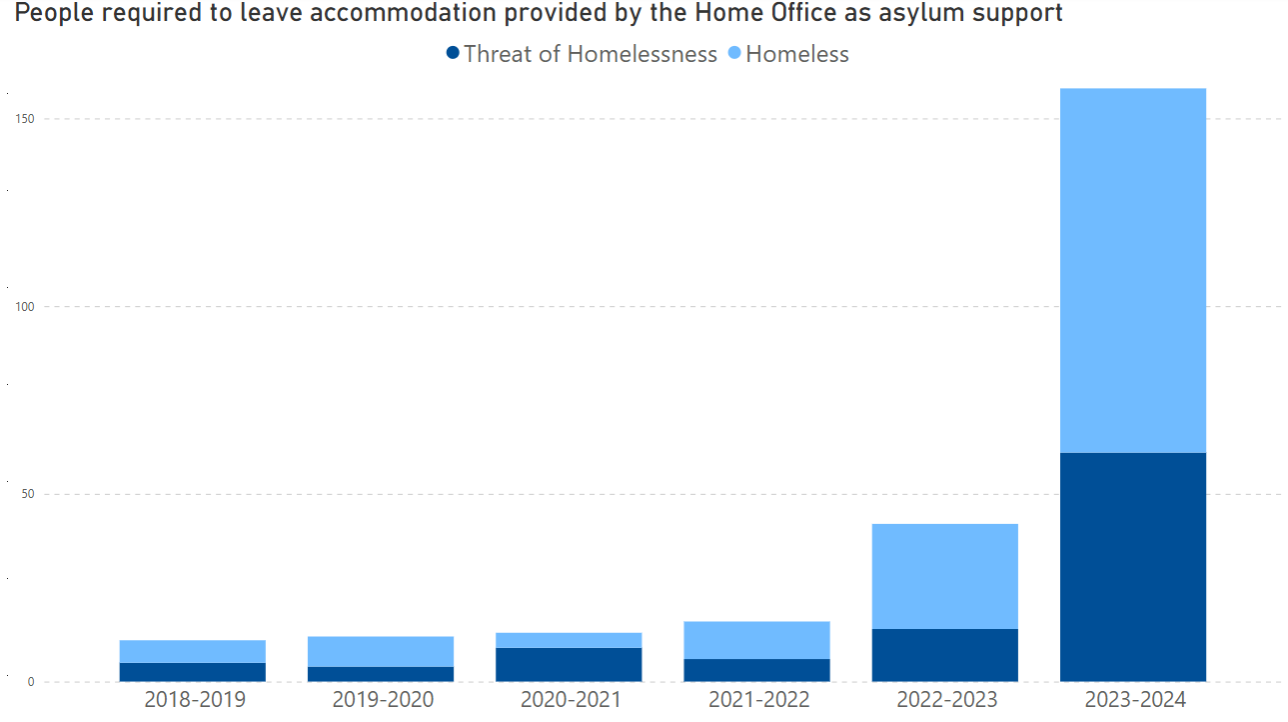
| Year | 2018 - 2019 | 2019 - 2020 | 2020 - 2021 | 2021 - 2022 | 2022 - 2023 | 2023 - 2024 |
| Threat of Homelessness | 5 | 4 | 9 | 6 | 14 | 61 |
| Homeless | 6 | 8 | 4 | 10 | 28 | 97 |
It's important to note that homelessness costs more than housing someone. Ending homelessness has potential benefits that outweigh the costs of interventions, due to reducing costs from the use of homelessness services and the use of public services such as the NHS or criminal justice services.
Safe and secure housing allows people to contribute financially to society by increasing the number of people able to work and earn. This means once refugees have the right to remain and stable accommodation, they can be legally employed and contribute to both the local and national economy through taxes, particularly as the majority of refugees are of working age.