
Identify push and pull factors early
Push and pull factors
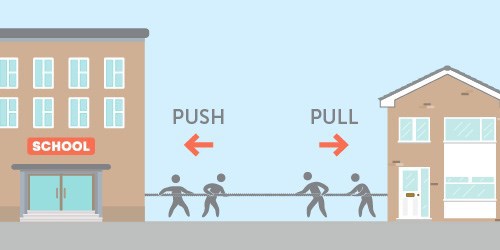
Kevin has not attended school for 6 months. He stopped attending after a summer holiday as he found it difficult to get back into the routine of school; he was often late as he struggled to organise himself in the morning and did not sleep well due to worries about going back to school.
Kevin was supported by a member of staff who he knew well and trusted to enter the school building and go into the classroom. However, he became very panicky when going into class and was only able to go into the Reception area.
Over time, Kevin became more withdrawn and struggled to talk to adults, including his mother. His behaviour towards his mother became challenging at home and it was a struggle for her to support Kevin to leave the house. Eventually, Kevin became resistant to leaving his room and would not meet with any adults from school when they came to his home, even those who he had got on well with previously.
Kevin's older brother had been unwell and his mother was often caring for him at home. Kevin was also worried about his father's health as he sometimes struggled to move around due to pain in his back. Kevin had always experienced difficulties with his learning and thought that he was not as clever as other children in his class. He had a few friends from school who he had known for a number of years but as his attendance reduced, his contact with these friends also lessened. When they came to Kevin's house to see him, Kevin infrequently left his room.
Push (to school) |
Pull (away from school) |
| Friendship with peers | Significant break from school over the holidays |
| Relationships with adults in school | Difficulties with organisation |
| Kevin has been provided with a space in school that he can access when needed | Poor sleep |
| Adults from school have visited him at home | Perceptions of his academic ability |
| His older brother is not well | |
| He is worried about his parent's health | |
| Reduced contact with friends | |
| Experiences anxiety when attending school |
Now, let's consider how we can improve Kevin's relationship with school and encourage him to attend.
Push (to school) |
Pull (away from school) |
| Strengthen relationships with peers by providing times that Kevin can meet with them in a safe place | Due to the significant break from school over the summer holidays, a graduated support plan could be agreed and introduced after these periods |
| Strengthen relationships with adults in school - see the Build trust pages for details | Due to difficulties with self-organisation, adults could reduce this demand and support Kevin to develop strategies for self-organisation |
| Provide Kevin with a space in school that he can access when needed by initially considering where he feels safe / unsafe in school. For ideas, visit the Communication section | Due to poor sleep, supporting adults could consider with Kevin strategies to promote a positive sleep regime |
| Adults from school who have visited Kevin at home ensure that this contact is maintained | Due to Kevin's perceptions of his academic ability, key adults could provide Kevin with positive and constructive feedback about his academic progress and provide support, ensuring that all adults are aware of his needs |
| Due to Kevin's older brother being unwell, support for Kevin and his family to consider what he/they can do at times when he experiences anxiety about this | |
| Due to Kevin's experiences of anxiety associated with attending school, he could be supported to develop his emotional literacy and understand thoughts and feelings |
Last reviewed: