
What does the demographic shift mean for residential and nursing care?
There has been a reduction in use of bed-based care by 8% between 2019 and 2023. This has been achieved using two strategies. The ‘Make the Difference’ approach aims to prioritise self-care and time limited support before any long-term care and support services are explored, and the 'hyper-local' commissioning model changes the way we purchase domiciliary care, facilitating more care closer to home.
These changes are reflected in a reduction of bed-based care available in Gloucestershire and the same period has seen the closure of 13 care homes. Care home closure has largely been led by the unsuitability of the premises for the provision of quality care on an ongoing basis.
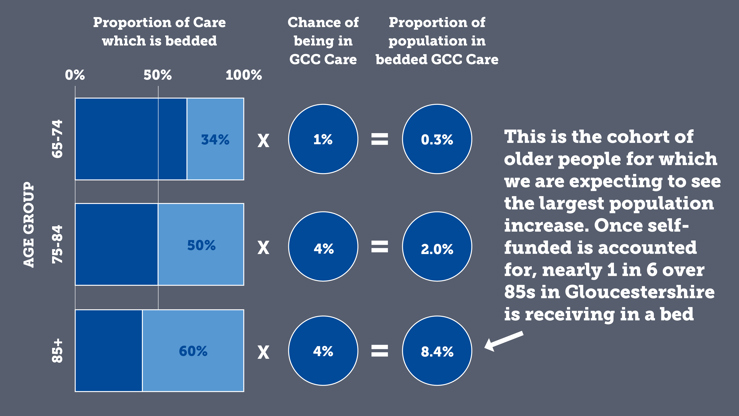
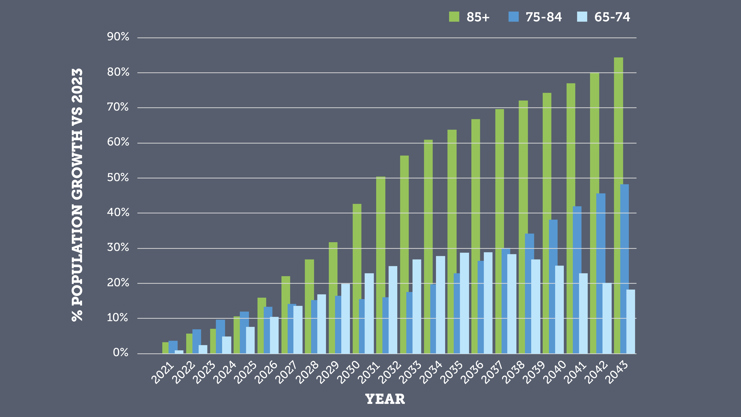
Whilst the key commissioning priority since the last market position statement has been to reduce unnecessary use of residential care beds, demographic projection data shows the population of over 85s is expected to grow rapidly, and our study of demand shows that those over 85s are much more likely to need care, and that the care they need will be more likely to be bed-based.
Figure 7: Proportion of demand for residential and nursing care by age group of those aged over 65 years.
ContrOCC Commitments Report 2019-2023
ONS Sub-national population projections 2018-based principal projection
Assuming that the need for bed-based care will be comparable for older people at the same age in 2023 and 2043, we are projecting a 97% growth in overall bed-based demand for this cohort in the next 20 years, with 4,058 older people in need of residential beds (84% increase) and 3,116 needing nursing beds(122% increase) by 2043.
Figure 8: Percentage of population growth by age group for those aged over 65 years between 2023-2043
ONS Subnational population projections 2018 based (principal projection)
Given the current challenge to meet nursing and dementia specific care needs, plans to expand the bedded capacity in the market are needed but there is a caveat that any new provision should reflect the type of beds in demand and also recognise the challenges in workforce and have robust plans to deliver within this context.
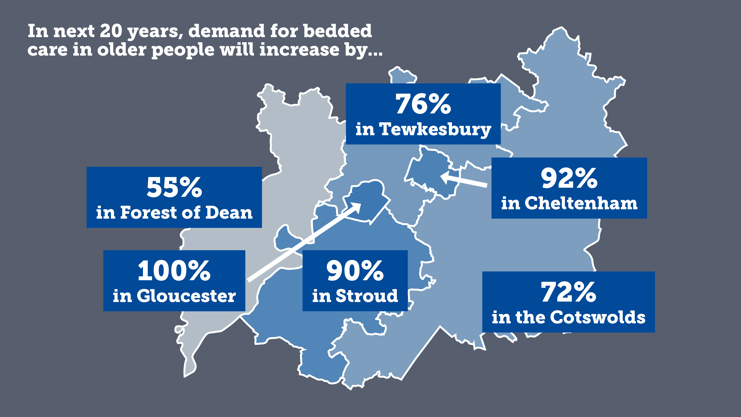
Figure 9: Estimated percentage of increase in demand by district across the county by 2043
ContrOCC Commitments Report 2019-2023
ONS Sub-national population projections 2018-based principal projection
Every district within Gloucestershire is expected to experience the increase in demand, ranging from 55% in the Forest of Dean to 100% in Gloucester.
Bed-based provision for nursing and dementia needs continue to be in the most demand.
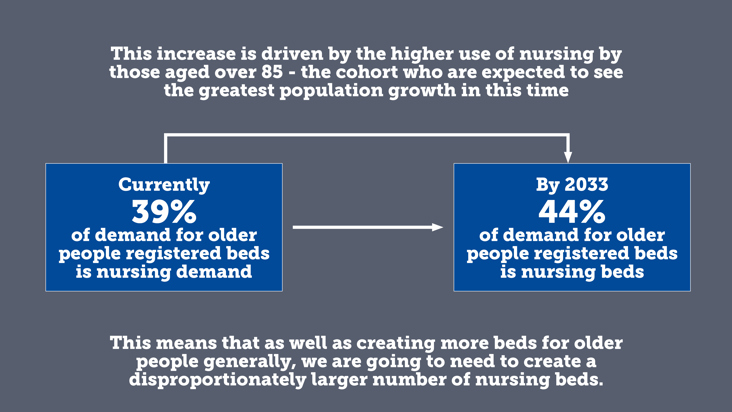
Currently 39% of demand for bed-based care for older people is for nursing care. By 2033, 44% of demand for bed-based care for older people is expected to be for nursing beds.
The increase is driven by the higher use of nursing by those aged over 85 - the cohort who are expected to see the greatest population growth in this time.
- Currently 39% of demand for older people registered beds in nursing demand
- By 2023, 44% of demand for older people registered beds expected to be for nursing beds
This means that as well as creating more beds for older people generally, we are going to need to create a disproportionately larger number of nursing beds.
Figure 10: Illustration of the proposed increase in demand in nursing care by 2033.
ContrOCC Commitments Report 2019-2023
ONS Sub-national population projections 2018-based principal projection
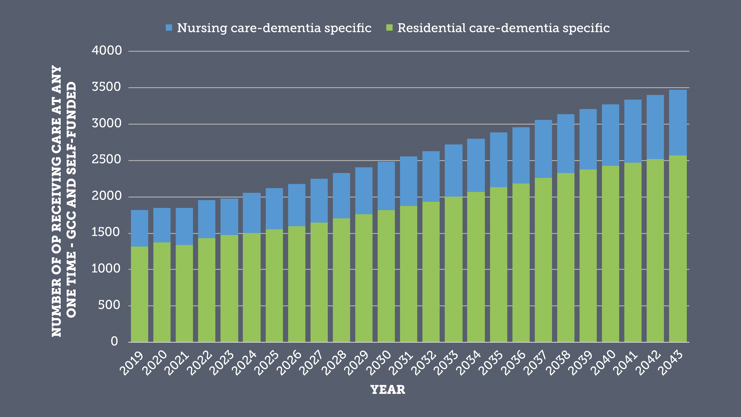
Throughout the next 20 years, we will need 65% of residential and 30% of nursing beds to be suitable to meet the needs of people with dementia.
Figure 11: Figure showing the estimated growth in the number of dementia-specific residential and nursing placements required between 2023 - 2043
ContrOCC Commitments Report 2019-2023
ONS Sub-national population projections 2018-based principal projection
Last reviewed: