
Do we have sufficient market capacity to meet this demand?
Since 2015, 679 beds have been opened. The vast majority of these have been opened in brand new locations but a small number (23) are new beds in existing locations. In the same timeframe,1,075 beds have closed, most of these beds were not fit for purpose and could not have been kept open. Overall, this has meant a decline in the number of beds in recent years with the overall number of beds dropping from just over 5400 to just over 5000.
Figure 12: Figure showing the number of new and closed care homes 2015-2022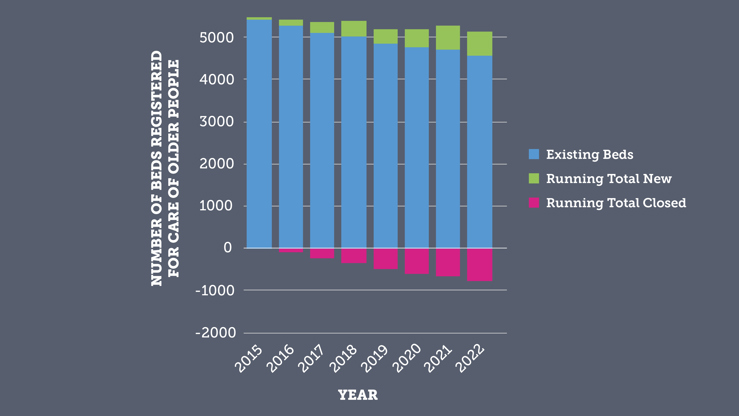
ContrOCC Commitments Report 2019-2023
Capacity Tracker – Estate Report
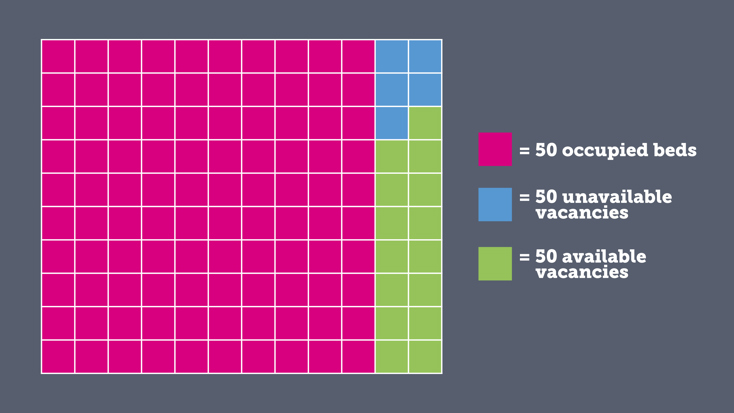
As of January 2024, after taking into account the 3,929 older adults already receiving bed-based care, there were 1,076 vacancies suitable for older people, of which 750 were available.
Figure 13: Figure showing the number of beds available, occupied, and unavailable vacancies
ContrOCC Commitments Report 2019-2023
Capacity Tracker – Estate Report
CQC HSCA Location Register
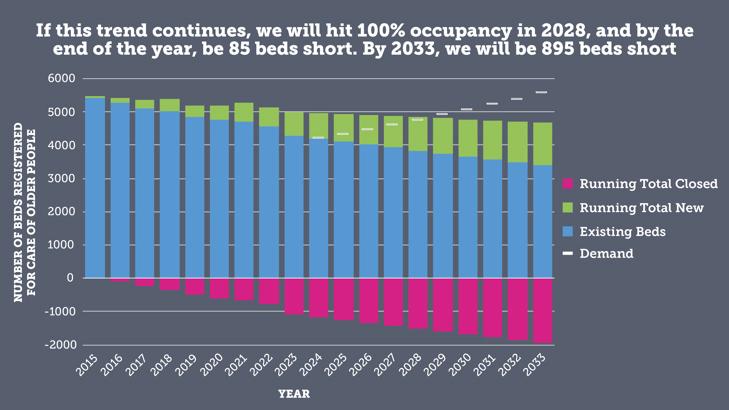
If the trend from 2015 to 2023 continues over the next 10 years, we would expect the number of beds to decline further – leaving us with only 4680 beds in 2033. Even if we were able to hit 100% utilisation of beds, nearly 900 older adults would be left waiting for a bed.
Figure 14: Figure showing the predicted deficit in care home provision based on previous trends and predicted demographic growth
ContrOCC Commitments Report 2019-2023
Capacity Tracker – Estate Report
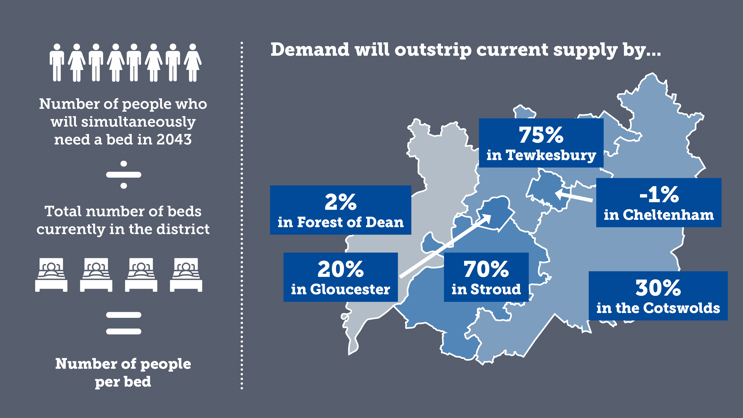
It is likely that to meet the increasing demand an increase in care homes will need to be achieved. The demand increases are specifically for more provision for people with dementia and/or nursing needs.
Figure 15: Graphic showing how demand will surpass current supply by district
ContrOCC Commitments Report 2019-2023
Capacity Tracker – Estate Report (01 Jul, 01 Aug, 01 Sept 2023)
ONS Sub-national population projections 2018-based principal projection
Last reviewed: