
How will the demographic shift impact bedded care for adults of working age?
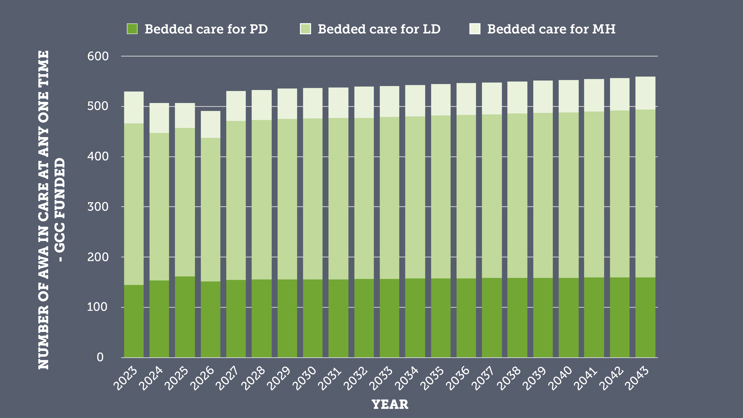
Currently, there are 530 adults of working age in bed-based care placed by the county council, where 60 receive support for physical disability, 320 for learning disability and 150 for mental health.
Figure 6: Estimated total numbers of adults of working age receiving care (GCC-funded and privately funded) 2023-2043
 ContrOCC Commitments Report 2019-2023
ONS Sub-national population projections 2018-based principal projection
Bedded care for MH – residential services to support people with mental health needs
Bedded care for LD – residential services to support people with a learning disability
Bedded care for PD – residential services to support people with a physical disability or impairment
We are anticipating a steady stead of demand with a 6% increase over next 20 years, underpinned by 5% growth in working age population.
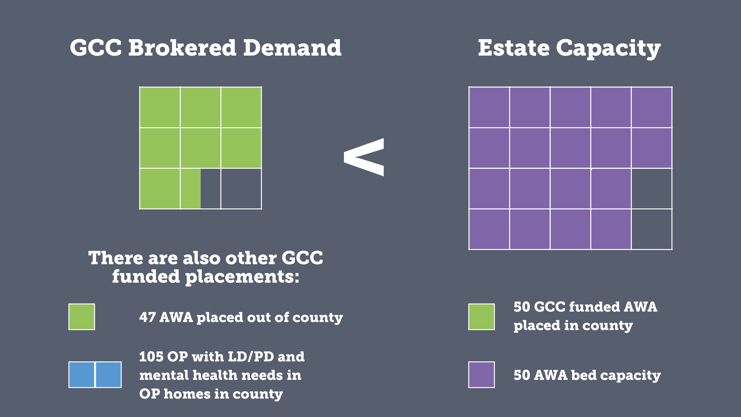
Figure 19: Figure showing GCC brokered demand versus estate capacity for adults of working age as of 2023.
ContrOCC Commitments Report 2019-2023
Capacity Tracker – Estate Report
We currently have 879 beds designated to be occupied by adults of working age, with a learning disability, a physical disability and/or a mental health condition.
348 of these beds are used by Gloucestershire County Council -funded individuals, so there is ample capacity within Gloucestershire to meet commissioned demand.
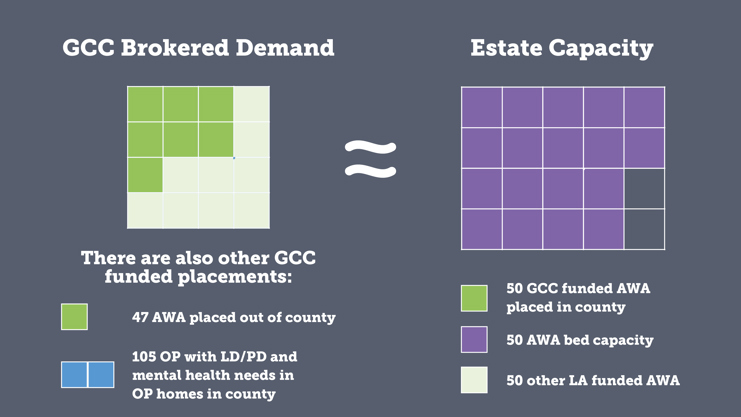
There are 47 Gloucestershire County Council -funded individuals placed in care homes outside of Gloucestershire.
There are 105 individuals with a learning disability, a physical disability and/or a mental health condition who have been placed into older people care homes due to being aged 65 or over.
Figure 20: Figure showing GCC brokered demand plus out of county placements versus estate capacity for adults of working age as of 2023.
ContrOCC Commitments Report 2019-2023
Capacity Tracker – Estate Report
464 beds designated for adults of working age are currently occupied by individuals placed by other local authorities.
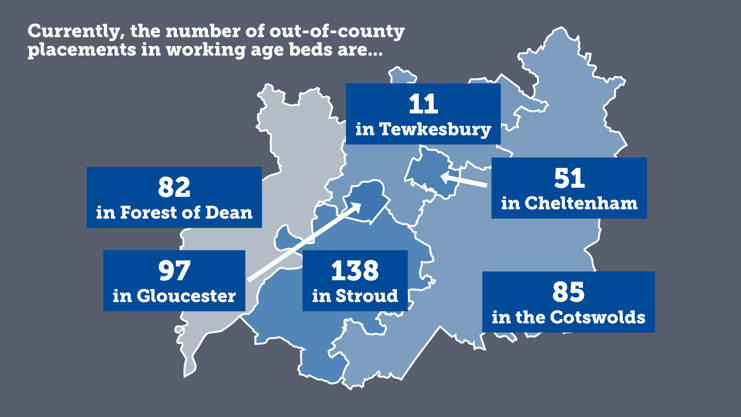
Figure 21: Figure showing the total number of out-of-county placements for working age adults in each district as of 2023.
ContrOCC Commitments Report 2019-2023
Capacity Tracker – Estate Report
ONS Sub-national population projections 2018-based principal projection
Due to diverse provision of beds and volume of needs from neighbouring local authorities, there is an uneven distribution of out-of-county placement between districts.
Stroud has the most out-of-county placements of 138 people, possibly because of its proximity to Bristol.
The combined demand from Gloucestershire County Council and other local authorities is using a total of 812 beds, leaving a slight surplus capacity of 67 beds.
Assuming, as evident from our data, that the level of LD, PD, and MH need in the county is going to remain constant over the next 20 years, Gloucestershire has enough capacity in estate and workforce to support demand. Further increases to this population brought about by the placement of people from other counties will challenge the workforce capacity as well as having an impact on health services. More work is required to understand the dynamics of this situation.
Last reviewed: