
What about supported living and other home-based services?
Over the course of the next 20 years, we are expecting a very small increase (about 5%) in the demand for community services by adults of working age.
The rate of growth across learning disability, physical disability and mental health care needs is generally similar.
As with bed-based settings for adults of working age, the estate and workforce capacity is expected to be able to meet the small increase in demand.
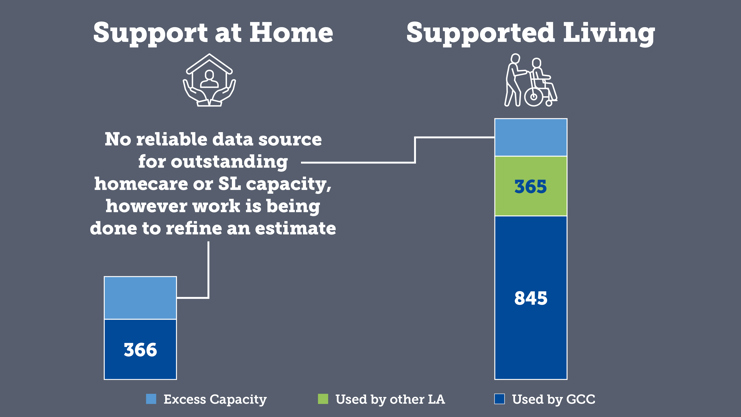
Figure 26: Figure demonstrating unknown excess capacity within community care and supported living
ContrOCC Commitments Report 2019-2023
Capacity Tracker Occupancy Report
Currently at least 30% of capacity in the county is used by other local authorities. There may be more people from out of county using this provision, who we are unable to identify due to the data challenges highlighted.
As we are unable to ascertain our true capacity in supported living, it is not possible to determine how much spare capacity exists, however, assuming, as evident from our data, that the level of LD, PD, and MH need in county is going to remain constant over the next 20 years, Gloucestershire currently has enough capacity to support demand. Further increases to this population brought about by the placement of people from other counties will challenge the workforce capacity as well as having an impact on health services. More work is required to understand the dynamics of this situation.
Last reviewed: