
Social prescribing and the community wellbeing service
Social Prescribing supports people to develop relationships and connect people to relevant activities for their health and wellbeing. Individuals or local agencies can refer people to the service to meet with a dedicated professional who will focus on what matters to the individual, taking a holistic approach to health and wellbeing.
Social prescribing works for a wide range of people, including people:
- with one or more long-term conditions
- who need support with their mental health and wellbeing
- who are lonely or isolated
- who have complex social needs which affect their wellbeing.
NHS Gloucestershire and Gloucestershire County Council have co-commissioned a service called the Community Wellbeing Service, which offers social prescribing. There are five providers covering the county:
- Forest of Dean, Newent and Staunton - Forest of Dean District Council
- Stroud and Berkley Vale - Independence Trust
- Tewkesbury and Cheltenham - Caring for Communities and People
- North and South Cotswolds - Gloucestershire Rural Community Council
- Gloucester City - Home Group

The Community Wellbeing Service (CWS) connects people to community groups and statutory services for practical and emotional support. The service also helps people to start new community groups, as well as supporting existing community groups to be accessible and sustainable. The Community Wellbeing Service has a strong and close working relationship across the voluntary and community sector in Gloucestershire, acting as a pathway to participation for residents to get involved in their community and develop meaningful social connections.
Who the service supports
- Individuals with non-medical needs, which may be impacting on health and wellbeing such as stress, social isolation and loneliness, worry about debt, housing issues or managing a long-term health condition.
- Individuals who want to be linked to community opportunities in order to become more active, join community groups or volunteer.
- Anyone aged 16+ yrs living in Gloucestershire or registered with a Gloucestershire GP.
How to refer
Referrals are open from community and primary care including self-referrals, health and social care practitioners, emergency services, VCSE sector, family and friends.
- Check with an individual if they want to be referred.
- Contact the service in the area of the person you are referring by phone or email.
What the service offers
Different levels of support according to need, including:
- Signposting to local community provision; and
- One-to-one support using a coaching approach to wellbeing.
Who the service supports
- Individuals with non-medical needs, which may be impacting on health and wellbeing such as stress, social isolation and loneliness, worry about debt, housing issues or managing a long-term health condition.
- Individuals who want to be linked to community opportunities in order to become more active, join community groups or volunteer.
- Anyone aged 16+ yrs living in Gloucestershire or registered with a Gloucestershire GP.
How to refer
Referrals are open from community and primary care including self-referrals, health and social care practitioners, emergency services, VCSE sector, family and friends.
- Check with an individual if they want to be referred.
- Contact the service in the area of the person you are referring by phone or email.
What the service offers
Different levels of support according to need, including:
- Signposting to local community provision; and
- One-to-one support using a coaching approach to wellbeing.
Real names have been changed in this case study.
Joanne came to us with several issues - the predominant one being her mental health. For some time, she has been on a waiting list for counselling. She was worried that they would not understand her and would push her to talk about challenging times in her life before she was ready. She shared her history with anxiety and how she often struggled to leave the house because of it. She is unable to work due to her physical health but was keen to get involved in activities to support her mental wellbeing.
Joanne completed the NHS Live Better to Feel Better self-management course, engaged with a range of local art activities, and was signposted to other opportunities for the future. She proudly showed us the art projects she was working on at each follow-up meeting. Through the Community Advice, Links and Mental Health Support Service (CALMHS) she was connected to volunteering at a local animal shelter.
Since working with the Community Wellbeing Service, Joanne has blossomed and has repeatedly told us how much more positive she is feeling and how much she has benefited from these groups. Upon closing Joanne’s case her wellbeing scores had improved by 25%, particularly around her positivity about life. We met outside the office approximately six weeks after her case was closed and she was thrilled to share how well she was doing and how ready she was feeling for her first counselling session which was starting that week. This was a significant change from the first meeting and great to hear.
Real names have been changed in this case study.
Joanne came to us with several issues - the predominant one being her mental health. For some time, she has been on a waiting list for counselling. She was worried that they would not understand her and would push her to talk about challenging times in her life before she was ready. She shared her history with anxiety and how she often struggled to leave the house because of it. She is unable to work due to her physical health but was keen to get involved in activities to support her mental wellbeing.
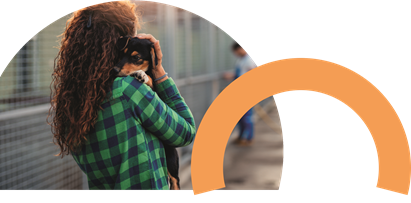
Joanne completed the NHS Live Better to Feel Better self-management course, engaged with a range of local art activities, and was signposted to other opportunities for the future. She proudly showed us the art projects she was working on at each follow-up meeting. Through the Community Advice, Links and Mental Health Support Service (CALMHS) she was connected to volunteering at a local animal shelter.
Since working with the Community Wellbeing Service, Joanne has blossomed and has repeatedly told us how much more positive she is feeling and how much she has benefited from these groups. Upon closing Joanne’s case her wellbeing scores had improved by 25%, particularly around her positivity about life. We met outside the office approximately six weeks after her case was closed and she was thrilled to share how well she was doing and how ready she was feeling for her first counselling session which was starting that week. This was a significant change from the first meeting and great to hear.
Last reviewed: