
Boilers, heat pumps and radiators
Over half of the average energy bill comes from heating your home.
Reducing your energy use doesn't need to make your home colder! Have a look at the tips below to see if there are any ways you could make your heating system more efficient, your home more cosy and your bills lower.
If you are thinking about replacing your boiler, The Energy Saving Trust website has some great information explaining what the difference is between various types, and what it means for your energy bills.
Boilers
Take the money saving boiler challenge 💸
One of the simplest tips for reducing costs related to boilers is checking your boiler flow temperature. This is the temperature of the water leaving your boiler. Turning this down will not impact the overall heat of your home (this is set by your thermostat) but it will mean your boilers take slightly longer to get to that temperature (around 10 minutes longer). Find out how to turn your boiler flow temperature down by watching the video below and save up to £100 a year.
Find out more and pledge to reduce your boiler flow temperature by joining the money saving boiler challenge.
If you don't need hot water on demand all day, check your boiler's 'pre-heat' settings
Most modern combi boilers also have a 'pre-heat' function, so the hot water in your pipes is set at a certain temperature, to ensure you don't have to wait too long for your water to heat up. However, experts say while pre-heating is more convenient and less water is wasted, it is hugely inefficient from an energy-saving perspective, particularly in homes where the occupants are out at work all day.
So to save cash, check your boiler manual for instructions on how to turn the pre-heat off (it varies by model).
Take the money saving boiler challenge 💸
One of the simplest tips for reducing costs related to boilers is checking your boiler flow temperature. This is the temperature of the water leaving your boiler. Turning this down will not impact the overall heat of your home (this is set by your thermostat) but it will mean your boilers take slightly longer to get to that temperature (around 10 minutes longer). Find out how to turn your boiler flow temperature down by watching the video below and save up to £100 a year.
Find out more and pledge to reduce your boiler flow temperature by joining the money saving boiler challenge.
If you don't need hot water on demand all day, check your boiler's 'pre-heat' settings
Most modern combi boilers also have a 'pre-heat' function, so the hot water in your pipes is set at a certain temperature, to ensure you don't have to wait too long for your water to heat up. However, experts say while pre-heating is more convenient and less water is wasted, it is hugely inefficient from an energy-saving perspective, particularly in homes where the occupants are out at work all day.
So to save cash, check your boiler manual for instructions on how to turn the pre-heat off (it varies by model).
Insulating your hot water tank can save you money. It normally costs between £15 and £40 to buy a 'jacket' for your tank. The jacket works by keeping the water hotter for longer and reducing heat loss from the tank. This could save you up to £70 a year.
Getting your domestic boiler serviced before putting your heating on for the winter. The average cost of servicing a modern combi boiler is between £80-100. While servicing your boiler is an extra household cost, it will massively reduce the chance of the boiler breaking down over the winter and ensure it will run more efficiently when it gets really cold which could save you money.
Insulating your hot water tank can save you money. It normally costs between £15 and £40 to buy a 'jacket' for your tank. The jacket works by keeping the water hotter for longer and reducing heat loss from the tank. This could save you up to £70 a year.
Getting your domestic boiler serviced before putting your heating on for the winter. The average cost of servicing a modern combi boiler is between £80-100. While servicing your boiler is an extra household cost, it will massively reduce the chance of the boiler breaking down over the winter and ensure it will run more efficiently when it gets really cold which could save you money.
Some estimates say that replacing your old gas boiler with a heat pump could save you money in the long run. Every house is different and if you are considering installing a heat pump as an energy and cost saving measure it is worth consulting a professional. There are available to upgrade your boiler for a more environmentally friendly alternative.
The BBC has a podcast episode about the costs and benefits of air source heat pumps. You can also find out about the efficiency of heat pumps in these case studies across UK homes including in Gloucestershire. You can find out more about heat pumps on the money saving expert website.
Some estimates say that replacing your old gas boiler with a heat pump could save you money in the long run. Every house is different and if you are considering installing a heat pump as an energy and cost saving measure it is worth consulting a professional. There are available to upgrade your boiler for a more environmentally friendly alternative.
The BBC has a podcast episode about the costs and benefits of air source heat pumps. You can also find out about the efficiency of heat pumps in these case studies across UK homes including in Gloucestershire. You can find out more about heat pumps on the money saving expert website.
Radiators
Turn down your radiators
Make it a regular habit to adjust your radiators. Don't just turn them down once, get into turning them up and down depending on how much you use a room and how warm you want the room to be. Smart Energy GB says you could save around £40 a year turning radiator valves down to the midway point, in rooms you don’t use.
Learn how to time your central heating
Much like turning radiators on and off, don't just time your central heating once. Learn how to adjust the time so you can comfortably programme it to just be on when you are in the house, even if your day to day schedule changes. You can find out more on the Energy Saving Trust website. If you are still unsure where to start with your heating controls try to find the brand name of your central heating control panel and then search for instruction videos on Youtube. An example of a common heating control panel instruction is shown below:
Clean your radiators 🧼
Regularly cleaning your radiator is a simple and effective way to improve its efficiency. Dust and dirt build-up can significantly reduce its effectiveness, making it less efficient in heating up a room.
Additionally, it can help prolong the lifespan of your radiator, saving you money on repairs or replacements in the long run!
Turn down your radiators
Make it a regular habit to adjust your radiators. Don't just turn them down once, get into turning them up and down depending on how much you use a room and how warm you want the room to be. Smart Energy GB says you could save around £40 a year turning radiator valves down to the midway point, in rooms you don’t use.
Learn how to time your central heating
Much like turning radiators on and off, don't just time your central heating once. Learn how to adjust the time so you can comfortably programme it to just be on when you are in the house, even if your day to day schedule changes. You can find out more on the Energy Saving Trust website. If you are still unsure where to start with your heating controls try to find the brand name of your central heating control panel and then search for instruction videos on Youtube. An example of a common heating control panel instruction is shown below:
Clean your radiators 🧼
Regularly cleaning your radiator is a simple and effective way to improve its efficiency. Dust and dirt build-up can significantly reduce its effectiveness, making it less efficient in heating up a room.
Additionally, it can help prolong the lifespan of your radiator, saving you money on repairs or replacements in the long run!
Learn when and how to bleed a radiator
Bleeding a radiator is the process of removing trapped air from a radiator to ensure it heats efficiently. When air gets trapped inside, it can obstruct the system's airflow, leading to uneven heating or cold spots.
You may need to invest in a radiator key, these are normally a few pounds but bleeding your radiator means your home will get warmer at a lower cost. It's recommended that you bleed your radiator once a year, even if they are working. Find out how to bleed a radiator below.
Use a radiator reflector
If you’re trying to save money on your heating bills and reduce your energy consumption, radiator reflector panels are an attractive low-cost option.
Fixed behind your radiators, they reflect heat from the radiator back into the room, instead of letting the heat out through an external wall. They can produce the most benefit when installed on uninsulated solid walls.
Remember, you only need to put reflector panels behind radiators on external walls.
Learn when and how to bleed a radiator
Bleeding a radiator is the process of removing trapped air from a radiator to ensure it heats efficiently. When air gets trapped inside, it can obstruct the system's airflow, leading to uneven heating or cold spots.
You may need to invest in a radiator key, these are normally a few pounds but bleeding your radiator means your home will get warmer at a lower cost. It's recommended that you bleed your radiator once a year, even if they are working. Find out how to bleed a radiator below.
Use a radiator reflector
If you’re trying to save money on your heating bills and reduce your energy consumption, radiator reflector panels are an attractive low-cost option.
Fixed behind your radiators, they reflect heat from the radiator back into the room, instead of letting the heat out through an external wall. They can produce the most benefit when installed on uninsulated solid walls.
Remember, you only need to put reflector panels behind radiators on external walls.
Energy efficient radiators
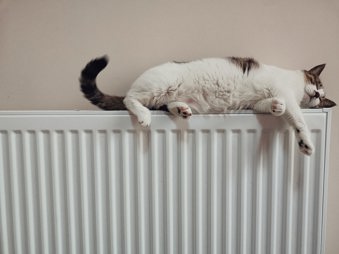
Radiators come in all shapes, sizes and colours. You can mount them vertically or horizontally and you can use electric or oil radiators.
Not all radiators are made equal and buying the most efficient radiator can save you money.
- The colour of your radiator will effect the heat radiation. Traditionally radiators are white as it radiates heat best.
- The surface area of your radiator will effect how much heat it can radiate. Traditionally designed radiators with 'bumps' on them are designed that way to increase their efficiency.
- Electric radiators may be more efficient than oil radiators if you don't have central heating. They also have lower carbon emissions.
Energy efficient radiators
Radiators come in all shapes, sizes and colours. You can mount them vertically or horizontally and you can use electric or oil radiators.
Not all radiators are made equal and buying the most efficient radiator can save you money.
- The colour of your radiator will effect the heat radiation. Traditionally radiators are white as it radiates heat best.
- The surface area of your radiator will effect how much heat it can radiate. Traditionally designed radiators with 'bumps' on them are designed that way to increase their efficiency.
- Electric radiators may be more efficient than oil radiators if you don't have central heating. They also have lower carbon emissions.
This information is from Cheltenham Borough Council's 'be more heat pump aware' campaign' (in association with Charlton Kings Parish Council).
❌Myth - heat pumps are noisy....
👉When properly installed and maintained, heat pumps operate quietly, with sound levels similar to a gas boiler or fridge. Manufacturers are continually improving the technology, making them quieter and more efficient. The latest models have sound levels lower than those of even just 5 years ago.
❌Myth - heat pumps are expensive....
👉The higher upfront costs are offset by the Government’s Boiler Upgrade Scheme grant of £7500, with running costs lowered through special heat pump energy tariffs. Properly installed heat pumps are usually around 4 times more efficient than a gas boiler and can be slightly cheaper to run at the current energy prices.
Myth - heat pumps don't work in winter....
👉Heat pumps do work during the colder months! They’re designed to handle all types of weather, even
the cold. Around two thirds of Scandinavian properties have a heat pump, and in Norway approximately 90% of them are air source heat pumps. As the outside temperatures drop, the heat pump efficiency will slightly reduce but they’re still more efficient than a gas boiler and will maintain the temperature of your house even when temperatures are as low as -20°C.
❌Myth - heat pumps don't work with older of existing radiators....
👉Heat pumps work perfectly well with larger size radiators or an underfloor heating system. But if you don’t want to change your radiators, you could opt to install a high temperature heat pump which is designed for older and/or smaller radiators as they can produce higher water temperatures.
❌Myth - heat pumps require planning permission....
👉Air source heat pumps typically fall under permitted development rights, so in most cases homeowners can install them without planning permission, provided they meet the Microgeneration Certification Scheme Planning Standards (MCS). However, if you live in a listed building or a conservation area, we recommend speaking to your local planning office.
❌Myth - heat pumps are not as good as gas boilers....
👉In the UK, gas boilers are the most popular choice for home heating. However they burn fossil fuel and produce a lot of carbon dioxide (CO2) at the point of use whereas heat pumps produce no CO2 so
consequently are much better for the environment. Gas boilers are also much less efficient than heat pumps. They produce only up to 90% of heat per kilowatt of gas energy used, whereas heat pumps can produce around 400% of heat per kilowatt of electrical energy used. The latest high temperature heat pumps can also produce water temperatures up to 75°C if required.
This information is from Cheltenham Borough Council's 'be more heat pump aware' campaign' (in association with Charlton Kings Parish Council).
❌Myth - heat pumps are noisy....
👉When properly installed and maintained, heat pumps operate quietly, with sound levels similar to a gas boiler or fridge. Manufacturers are continually improving the technology, making them quieter and more efficient. The latest models have sound levels lower than those of even just 5 years ago.
❌Myth - heat pumps are expensive....
👉The higher upfront costs are offset by the Government’s Boiler Upgrade Scheme grant of £7500, with running costs lowered through special heat pump energy tariffs. Properly installed heat pumps are usually around 4 times more efficient than a gas boiler and can be slightly cheaper to run at the current energy prices.
Myth - heat pumps don't work in winter....
👉Heat pumps do work during the colder months! They’re designed to handle all types of weather, even
the cold. Around two thirds of Scandinavian properties have a heat pump, and in Norway approximately 90% of them are air source heat pumps. As the outside temperatures drop, the heat pump efficiency will slightly reduce but they’re still more efficient than a gas boiler and will maintain the temperature of your house even when temperatures are as low as -20°C.
❌Myth - heat pumps don't work with older of existing radiators....
👉Heat pumps work perfectly well with larger size radiators or an underfloor heating system. But if you don’t want to change your radiators, you could opt to install a high temperature heat pump which is designed for older and/or smaller radiators as they can produce higher water temperatures.
❌Myth - heat pumps require planning permission....
👉Air source heat pumps typically fall under permitted development rights, so in most cases homeowners can install them without planning permission, provided they meet the Microgeneration Certification Scheme Planning Standards (MCS). However, if you live in a listed building or a conservation area, we recommend speaking to your local planning office.
❌Myth - heat pumps are not as good as gas boilers....
👉In the UK, gas boilers are the most popular choice for home heating. However they burn fossil fuel and produce a lot of carbon dioxide (CO2) at the point of use whereas heat pumps produce no CO2 so
consequently are much better for the environment. Gas boilers are also much less efficient than heat pumps. They produce only up to 90% of heat per kilowatt of gas energy used, whereas heat pumps can produce around 400% of heat per kilowatt of electrical energy used. The latest high temperature heat pumps can also produce water temperatures up to 75°C if required.
Last reviewed: