
Adult Education In Gloucestershire Policy and Procedures for Safeguarding and Prevent
Safeguarding and Prevent Policy and Procedures
Version control
Version Date of Change Author Reason for Change
1 31/12/2019 David Peake Finalised version
1.1 18/09/2020 Natasha Panchbhaya Formatting update
1.2 18/01/2022 Natasha Panchbhaya Review
1.3 25/07/2022 Nick Morrall Review
1.4 03/02/2023 Nick Morrall Review - Exam
1.5 10/05/2023 Nick Morrall Process review
1.6 07/08/2025 Nick Morrall Process review
1.7 24/07/2026 Nick Morrall Policy revised and rewritten to strengthen safeguarding content. Amendments include the addition of the Prevent referral process, guidance relating to Modern Slavery, inclusion of the Terrorism (Protection of Premises) Act and Loan Sharks.
List of abbreviations
ACT Action Counters Terrorism AEiG Adult Education in Gloucestershire CPD Continuing Personal Development DBS Disclosure and Barring Service DfE Department for Education DOLS Deprivation of Liberty Safeguards DSL Designated Safeguarding Lead ESFA Education and Skills Funding Agency GCC Gloucestershire County Council GSAB Gloucestershire Safeguarding Adults Board GSCP Gloucestershire Safeguarding Children’s Partnership ICO Information Commissioners Office ICT Information Communication Technology LADO Local Authority Designated Officer MARF Multi Agency Referral Form MASH Multi Agency Safeguarding Hub MCA Mental Capacity Act NHS National Health Service NRM National Referral Mechanism PVPU Protection of Vulnerable People Unit SCaN See, Check, Notify SEND Special Educational Needs and/or Disabilities SO Safeguarding Officer
1. Why we need a Safeguarding and Prevent policy
1.1. Purpose
The policy sets out the responsibilities of all staff, tutors, assessors and volunteers who work for Adult Education in Gloucestershire (AEiG) to safeguard adults from abuse and underlines the principle that safeguarding is everybody’s business. The policy applies to people aged eighteen years of age and above. If there is a concern about a person under the age of eighteen, the service Designated Safeguarding Lead (DSL) will refer the case to Children’s Social Services. The purpose of this policy is to meet our statutory duties to effectively safeguard vulnerable adults, work proactively to reduce the risk both inside and outside the organisation and its services and meet any statutory safeguarding responsibilities 1.2. Aims and objectives
The aims of adult safeguarding are to:
- stop abuse or neglect wherever possible.
- prevent harm and reduce the risk of abuse or neglect to adults with care and support needs.
- safeguard adults in a way that supports them in making choices and havingcontrol about how they want to live.
- promote an approach that concentrates on improving life for the adults concerned.
- raise public awareness so that communities as a whole, alongside professionals,play their part in preventing, identifying and responding to abuse and neglect.
- provide information and support in accessible ways to help people understand the different types of abuse, how to stay safe and what to do to raise a concern about the safety or well-being of an adult.
- Address what has caused the abuse or neglect.
1.3. Safeguarding is not a substitute for:
- providers’ responsibilities to provide safe and high quality care and support.
- commissioners regularly assuring themselves of the safety and effectiveness of our delivery and subcontracted services.
- the core duties of the police to prevent and detect crime and protect life and property.
1.4. To achieve these aims, it is necessary to:
- ensure that everyone is clear about their roles and responsibilities.
- create strong multi-agency partnerships that provide timely and effective prevention of and responses to abuse or neglect.
- support the development of a positive learning environment across these partnerships and at all levels within them to help break down cultures that are risk-averse and seek to scapegoat or blame practitioners.
- enable access to mainstream community resources such as accessible leisurefacilities, safe town centres and community groups that can reduce the social andphysical isolation which may increase the risk of abuse or neglect.
- Clarify how responses to safeguarding concerns deriving from the poor qualityand inadequacy of service provision should be responded to.
2. Legal Framework
Laws exist to protect children and adults, including,
•UK General Data Protection Regulations
•Human Rights Act 1998
•Sexual Offences Act 2003
•Safeguarding Vulnerable Groups Act 2006
•Protecting of Freedoms Act 2012
•Special Education Needs and Disability (SEND) code of practice: 0-25 years –Statutory Guidance
•Care Act 2014
•Children Act 1989 and 2004
•Counter Terrorism and Security Act 2015
•Modern Slavery Act 2015
•Domestic Abuse Act 2021
•Online Safety Act 2023
3. Scope
This policy applies to all staff working within AEiG, including staff, tutors, assessors and volunteers, and they must comply with their roles and responsibilities.
4. Introduction: A Whole Organisation Approach to Safeguarding
AEiG is committed to promoting awareness of safeguarding among staff, tutors, assessors and volunteers preventing abuse wherever possible, and ensuring robust procedures are in place to respond effectively to any safeguarding concerns or incidents.
While AEiG is responsible for establishing safeguarding policies and procedures, partner organisations are responsible for ensuring full compliance with these requirements. This policy outlines the organisation’s strategic approach to safeguarding, including learner engagement and the extent to which safeguarding policies and practices are embedded, implemented, and effective throughout the organisation.
AEiG will ensure that this policy aligns with the procedures and requirements of both the Gloucestershire Safeguarding Adults Board (GSAB) and the Gloucestershire Safeguarding Children Partnership (GSCP) 12These procedures have been developed in accordance with Gloucestershire County Council’s (GCC) Safeguarding Adults Strategy, Policy, Procedures, and Good Practice Guide, which provides comprehensive guidance and can be accessed at the following links.
•gsab-strategy-26-29-final.pdf
•Multi-agency safeguarding policy and procedures | GSAB The Gloucestershire Safeguarding Children Partnership (GSCP) guidelines can be found at:
•Multi-Agency Safeguarding Hub (MASH) & Community Social Work Team -Gloucestershire Safeguarding Children Partnership
All Adult Education staff, tutors, assessors and volunteers, must be familiar with and understand the safeguarding reporting process, which is detailed in Annex C. Staff and tutors should ensure they have up-to-date contact details for the DSL and Safeguarding Officer (SO) at every location where learning is delivered. If a learner discloses a concern relating to their welfare or safety, staff must notify the Safeguarding Team as soon as possible and follow the procedure outlined in Annex C. This enables appropriate action to be taken to support the learner, including referral to Social Services where necessary. Similarly, if any member of staff or tutor has concerns about the welfare or safety of a child, they must report these concerns promptly to the Safeguarding Team in accordance with the process set out in Annex C. The Safeguarding Team contact details are as follows and also in Annex C :-
- DSL – Nick Morrall 07900 135123.
- SO - Nusrath Khan 07825 424319. AEiG has reviewed and developed our strategic and operational responsibilities as outlined below:
5. Strategic responsibilities AEiG must ensure the following are in place:
- a safeguarding policy with effective systems for monitoring its implementation.
- updated policies to include the Prevent Duty and the embedding of British values
1 Gloucestershire Safeguarding Adults Board | GSAB 2 Gloucestershire Safeguarding Children Partnership | Gloucestershire Safeguarding Children's Partnership
- protocols for sharing information.
- effective planning and co-ordination of services and allocation of resources.
- effective partnerships with other agencies including Adult and Children’s
Services’ safeguarding teams; and local Safeguarding Boards. Senior named person to have specific responsibility for safeguarding issues.
6. Operational responsibilities
All staff, tutors, assessors and volunteers have a responsibility to ensure that a safe, secure, and supportive environment is maintained for learners and staff. Where learning is delivered within community venue, school, Children’s Centre, Youth Service setting, or residential care home, any concerns regarding the welfare or safety of a child or young person should, in the first instance, be reported to the DSL within that setting. A member of the AEiG Safeguarding Team must also be informed as soon as possible. Appropriate policies and procedures are in place to support safer recruitment practices, risk assessment processes, record management, and the handling of safeguarding concerns and allegations of abuse. Where abuse is known or suspected to have occurred, the immediate priority must be to safeguard and support those directly affected. Consideration should also be given to the wider impact on learners, staff, volunteers, and the local community, ensuring that appropriate support is available to all those who may be affected.
7. Promoting the Safeguarding of Learners
- Safeguarding arrangements are established, effectively implemented, and subject to regular review to ensure the ongoing safety and wellbeing of all staff and learners. Staff, tutors, assessors and volunteers and leaders receive appropriate safeguarding
training and guidance, which is regularly updated to reflect current legislation, best practice, and emerging safeguarding risks. • Leaders, governors, and supervisory bodies (where applicable) fulfil their statutory
and regulatory responsibilities, including those relating to safeguarding, equality and disability, health and safety, and learner welfare.
8. Definitions of Abuse, Harm and Neglect Abuse is any action or behaviour that infringes upon an individual’s human rights, involving the misuse of power, control, or influence by one person or group over another. This is particularly relevant where a vulnerable person may have limited capacity to make informed decisions or exercise choice, resulting in harm, exploitation, neglect, or a loss of dignity and autonomy.
- Abuse can be perpetrated by a wide range of individuals, including those known to
and trusted by the victim, as well as strangers. Those responsible for abuse may include:
o Family members, relatives, friends, or carers. o Paid care workers, support staff, or personal assistants. o Employees, tutors, volunteers, or other members of staff. o Other learners, including through peer-on-peer abuse. o Members of the public or individuals within the wider community. o The individual themselves, such as in cases involving self-harm or self-
neglect.
- It is important to recognise that abuse can occur in any setting and may be carried
out by anyone, regardless of their relationship to the individual. All concerns should be taken seriously and reported in accordance with safeguarding procedures.
9. Types of Abuse There are many forms of abuse that may affect children, young people, and adults at risk. These include, but are not limited to:3
- Physical abuse – the use of physical force that causes injury, pain, impairment, or
distress. • Sexual abuse – any sexual activity or behaviour that takes place without informed
consent, or where an individual is unable to give consent. • Financial or material abuse – the unauthorised, improper, or illegal use of a person's
money, property, benefits, or other assets. • Emotional or psychological abuse – behaviour that causes mental distress, fear,
humiliation, intimidation, isolation, or a loss of self-esteem and confidence. • Neglect and acts of omission – the failure to provide appropriate care, support,
supervision, or access to basic needs, resulting in harm or a risk of harm. Staff should be aware that abuse can take many different forms and may occur either as a single incident or as a pattern of behaviour over time. All concerns should be taken seriously and reported in accordance with safeguarding procedures. Please see Annex A for more detail on the types of abuse.
9.1. Definition of a Vulnerable Adult:
The NHS defines vulnerable adults as any adult (person over the age of 18) unable to take care of themselves or protect themselves from exploitation. Many factors can influence adult vulnerability, experiences of vulnerability in childhood may negatively impact adults in later life – particularly if someone has fewer protective factors in place, such as a supportive family or a stable household income. 4
3 Types and indicators of abuse: Safeguarding adults - SCIE 4 Your parents' support framework
For the purposes of safeguarding, this includes adults aged 18 and over who have care and support needs arising from factors such as physical or mental ill health, disability, age, or other circumstances, and who may be unable to protect themselves from abuse, neglect, exploitation, or significant harm. Consideration should be given to individuals whose ability to make informed decisions, maintain their wellbeing, or safeguard their own interests may be affected by these needs.
9.2. Definition of a Child or Young Person:
In the context of safeguarding, a child or young person is defined as anyone under the age of 18. AEiG works with children and young people through its family learning provision and, in accordance with the Education Skills Funding Agency (ESFA) funding eligibility rules, enrols learners aged 16 and over onto mainstream programmes. AEiG may also deliver targeted learning programmes specifically for 16–18-year-olds in partnership with schools, colleges and other organisations. Regardless of the setting or programme, AEiG is committed to ensuring that appropriate safeguarding measures are in place to protect the welfare, safety, and wellbeing of all children and young people engaged in its learning activities.
10. Bullying and Harassment AEiG is committed to providing a supportive, welcoming, safe, and inclusive learning and working environments for all learners, staff, tutors, assessors and volunteers. We aim to create a culture in which everyone feels respected, valued, and able to participate confidently, enabling them to achieve their full potential and make the most of their learning and development opportunities. Bullying, harassment, discrimination, and anti-social behaviour of any kind will not be tolerated. All staff share responsibility for fostering an environment that is free from bullying, harassment, and inappropriate behaviour. Tutors play a particularly important role in establishing and maintaining positive learning environments by setting clear expectations, promoting mutual respect, and addressing unacceptable behaviour promptly and effectively. Managers and officers are responsible for implementing this policy and ensuring that it is understood and followed by all staff, including tutors. They must also ensure that learners, partners, stakeholders, volunteers, and any other individuals with whom learners come into contact are aware of the standards and expectations set out in this policy. Where necessary, managers and officers will take appropriate action to address concerns and ensure compliance with policy requirements.
10.1. Bullying
Bullying is behaviour intended to intimidate, threaten, humiliate, undermine, or victimise another person. It may be carried out by an individual or a group and is characterised by
unwanted conduct that is offensive, degrading, or distressing to the person on the receiving end, or to others who witness it. Bullying can take many forms and may occur in person, online, or through other means of communication.5This definition does not include the legitimate actions of tutors, managers, or other staff members when they are carrying out their professional responsibilities, such as providing guidance, instruction, supervision, feedback, monitoring attendance, or assessing performance. However, concerns may arise where these responsibilities are exercised in an inappropriate, unreasonable, or disrespectful manner, or where the way in which they are carried out causes unnecessary distress or humiliation.
10.2. Harassment
Harassment can take many forms, arise for a variety of reasons, and be directed towards an individual or a group of people. It may be related to a person’s age, disability, gender reassignment, race, religion or belief, sex, sexual orientation, or any other personal characteristic. In legislation, harassment is defined as unwanted conduct that has the purpose or effect of violating an individual’s dignity, or creating an environment that is intimidating, hostile, degrading, humiliating, or offensive. When determining whether behaviour constitutes harassment, the impact on the recipient is of primary importance. It is not solely the intention of the person responsible, but the nature of the behaviour and the effect it has on the individual, that determines whether harassment has occurred. Any complaint, allegation, or report of bullying, harassment, discrimination, or anti-social behaviour should be taken seriously and investigated promptly, fairly, and in accordance with established procedures. Behaviour that may be considered bullying, harassment, discrimination, or anti-social conduct includes, but is not limited to:
- Repeatedly targeting or “picking on” an individual in a way that causes distress,
discomfort, fear, or humiliation. • Name-calling, mocking, or the use of derogatory language that may cause
offence or emotional harm. • Unwanted physical contact or inappropriate comments relating to a person’s
race, ethnicity, gender, sexuality, disability, culture, religion, or other protected characteristic. • Persistently interrupting, shouting at, belittling, or undermining another person. • Spreading rumours or engaging in gossip intended to damage an individual’s
reputation, confidence, or relationships. • Making unwanted, offensive, derogatory, or abusive comments, whether verbally,
in writing, or through electronic communications. • Using patronising, insulting, intimidating, or demeaning language, gestures,
jokes, or remarks. • Displaying, distributing, or sharing sexist, racist, homophobic, xenophobic, or
otherwise discriminatory material.
5 Bullying at school: The law - GOV.UK
- Making unwelcome comments about another person’s appearance, clothing,
body shape, lifestyle, personal circumstances, or mannerisms. • Displaying offensive graffiti, symbols, images, or badges. • Engaging in intrusive questioning, unwanted banter, threats, gestures, insults,
intimidation, or deliberately excluding individuals from activities or groups. • Misusing technology, including social media, email, messaging platforms, or
other digital communications, to target, harass, intimidate, or humiliate others. • Encouraging, pressuring, or coercing another person to bully, harass, victimise,
or discriminate against someone else. • Deliberately damaging, interfering with, or stealing another person’s belongings
or property. • Making offensive, unwanted, repetitive, threatening, obscene, or malicious
telephone calls, messages, or other forms of communication. Such behaviour is inconsistent with the values of a safe, respectful, and inclusive learning environment and will not be tolerated. Appropriate action will be taken where concerns are identified or complaints are upheld.
11. Online Safety AEiG recognises the significant benefits that online technologies and digital communication tools bring to teaching, learning, and learner development. We are committed to ensuring that learners and staff can access and use these resources safely, responsibly, and effectively in accordance with the Online Safety Act 2023. 6Our aims are to:
- Provide all learners with opportunities to use internet-based technologies safely and
confidently as part of their learning experience. • Promote awareness among learners and staff of the potential risks associated with
online activity and equip them with the knowledge and skills needed to protect themselves in digital environments. • Foster a culture of responsible digital citizenship, encouraging safe, respectful, and
lawful use of online resources and communication platforms. All GCC Information Communication Technology (ICT) equipment is provided, managed, and maintained by GCC ICT Services. Appropriate technical safeguards, including web filtering and monitoring systems designed to prevent access to inappropriate, harmful, or illegal online content, are centrally managed by GCC ICT in line with procedures agreed with the relevant Safeguarding Boards. Internet usage on GCC systems is monitored, and any misuse may be investigated and reported by GCC ICT Services. Users must not use internet facilities for unlawful purposes, including breaking the law, promoting illegal activity, or inciting criminal behaviour. GCC will work in cooperation with law enforcement agencies where criminal activity or misuse of IT systems is identified.
6 Online Safety Act - GOV.UK
The following will be strictly adhered to by AEiG staff, tutors, assessors and learners:
- Internet Users must not gain unauthorised access or make unauthorised
modifications to computer material (hacking). • Internet Users must take all reasonable care not to distribute copyright material in
breach of copyright. • Internet Users must take all reasonable care not to distribute defamatory material. • Internet Users must not display access, use, extract, store, distribute, print, reveal or
otherwise process information which contravenes the law. AEiG tutors and assessors ensure that all learners, regardless of the course they are attending, are made aware of e-safety issues as part of the curriculum. This includes promoting safe and responsible use of online technologies and highlighting the importance of implementing appropriate security measures, such as antivirus software, privacy settings, and other forms of protection on personal devices. All staff, tutors, assessors and volunteers are provided with an official work email address and are required to use this for all communication with learners. Most staff are also issued with GCC ICT equipment, including computers and mobile phones, and the Leadership Team is responsible for ensuring that appropriate safeguards and controls are in place to minimise risks associated with their use. Any social media accounts representing AEiG are managed by the AEiG Social Media Team under the guidance and oversight of the GCC Social Media Team. Only authorised social media channels may be used to promote AEiG activities. Personal or unofficial social media pages created for promotional purposes must not be used and should be removed where appropriate. AEiG will work collaboratively with learners, staff, partner organisations, and other relevant stakeholders to promote a culture of online safety and to support the wellbeing of learners in relation to internet use and digital technologies. Given the rapid pace of technological change, some learners may have a limited awareness of online risks and may not fully recognise potentially harmful, inappropriate, or misleading content encountered online. Learners may also be uncertain about how to respond to online threats or concerns. AEiG is committed to helping learners develop the knowledge, confidence, and digital resilience needed to navigate online environments safely and responsibly. Some of the risks associated with the use of digital technologies and online activity include:
- Unwanted or inappropriate contact from individuals online. • Grooming, radicalisation, or other forms of online exploitation. • Accessing or being exposed to inappropriate, harmful, or illegal content. • Online bullying, harassment, or abuse, including the sharing of nude or semi-nude
images (sometimes referred to as sexting). • Identity theft, fraud, or breaches of personal privacy. • Infringement of copyright laws through the unauthorised use or distribution of
protected materials.
- The creation of a permanent digital footprint, where online activity, comments,
images, or personal information may remain accessible and have long-term consequences. Learners and staff should be aware of these risks and take appropriate steps to protect themselves and others when using online platforms and digital technologies.
11.1. Implementation
The use of the internet, email, and other digital technologies by both staff and learners is encouraged where it supports the aims, objectives, and delivery of learning programmes, and enhances teaching, learning, and communication.
AEiG will:
- Take all reasonable steps to ensure that hardware, software, systems, and networks
are secure and protected through appropriate measures, including web filtering, encryption, firewalls, anti-virus software, and other relevant security controls. • Regularly assess and manage risks associated with the use of technology,
considering the safety and wellbeing of staff and learners as well as the security of information and data. • Ensure that all users of technology comply with GCC and/or the provider’s
Acceptable Use Policy or Acceptable Use Statement. • Promote safe and responsible use of digital technologies by providing learners with guidance on internet safety as part of their learning programme, delivering appropriate training and information to staff, and embedding online safety principles within organisational policies and, where appropriate, curriculum planning and delivery.
12. Safer Recruitment Procedures
AEiG is committed to implementing robust safer recruitment practices to help ensure the safety and wellbeing of learners. As part of the recruitment process, AEiG will carry out appropriate pre-employment checks, including verifying an applicant’s right to work in the UK, confirming relevant qualifications and professional credentials, obtaining satisfactory references, and reviewing employment history to identify and explore any gaps or concerns. These checks are designed to ensure that individuals appointed to roles within AEiG are suitable for the position and meet the standards expected. All staff who accept a role at AEiG will be advised that a Disclosure and Barring Service (DBS) check will be carried out. 7
7 Disclosure and Barring Service - GOV.UK
Role Requirement 1 DSL and SO Enhanced DBS and check against adult and children’s barred list 2 Tutors, support workers and volunteers who work in schools during school hours
Enhanced DBS and check against children’s barred list
Enhanced DBS and check against children’s barred list
3 Family learning Tutors who regularly work in schools
Enhanced DBS
4 Tutors who teach in all other settings including support Tutors
5 All other Staff Basic DBS It has recently been recommended within the DfE’s guidance that organisations consider conducting an online search, including reviews of publicly accessible social media profiles, as part of the recruitment process for shortlisted candidates. This additional due diligence measure is intended to help identify any publicly available information, incidents, or concerns that may be relevant to the role and which the organisation may wish to explore further with the candidate during the interview process. Such searches should be carried out fairly, consistently, and in accordance with relevant data protection and recruitment legislation.
12.1. Relevant Tutors, assessors and managers are DBS checked according to role:
AEiG adheres to GCC recruitment requirements and will implement any new safeguarding and recruitment procedures as they are introduced. Recruiting managers are required to complete both safer recruitment and safeguarding training to ensure that recruitment practices effectively support the protection of children, young people, and adults at risk. Relevant staff and volunteers will be subject to an appropriate DBS check before commencing work with AEiG. Where an individual presents a DBS certificate obtained through the DBS Update Service, the original documentation must be verified by their line manager. If a tutor or member of staff is to work with children, young people, or in a regulated activity or setting, a satisfactory DBS clearance must be obtained before they begin working in that role. Where a DBS check is pending, the recruiting manager must carry out a documented risk assessment. This should take into account factors such as previous DBS clearance for a comparable role (with the original certificate verified), the location and nature of the work, the level of supervision available, and any significant gaps in employment history. In such circumstances, managers should ensure that the individual is appropriately supervised by a member of staff who has received the necessary clearance until the DBS process is complete. In line with GCC requirements, DBS checks must be renewed every three years. Responsibility for monitoring and ensuring timely renewal of DBS checks rests with the DSL with the support of administrative staff.
These procedures should contribute to a culture of safeguarding and help deter, identify, and prevent the recruitment of individuals who may pose a risk to children, young people, or adults at risk. Governing bodies, management teams, and recruiting managers must make informed and reasonable decisions regarding the suitability of prospective employees and volunteers. These decisions should be based on a range of evidence, including DBS and barred list checks where applicable, references, employment history, qualifications, identity verification, and information obtained through the interview and selection process. The overall aim is to ensure that all individuals appointed are suitable to work within a safe learning environment and are committed to safeguarding the welfare and wellbeing of learners. Vetting staff and volunteers through appropriate pre-employment screening and background checks is an important element of safer recruitment. However, it should be viewed as one of a range of measures that AEiG and its providers undertake to ensure the suitability of individuals working with learners. As part of a comprehensive safer recruitment process, checks may include identity verification, right-to-work confirmation, qualification and reference checks, employment history reviews, and DBS checks where appropriate. Together, these measures help to promote a safe learning environment and reduce the risk of unsuitable individuals gaining access to children, young people, and adults at risk. In some circumstances, where a tutor is working with groups of adults and both the individuals and activities meet the pre-September 2012 definition of regulated activity, the tutor may be eligible to obtain an enhanced DBS check (without barred list information), although this is not a legal requirement. Further guidance on regulated activity relating to adults, as defined by the Safeguarding Vulnerable Groups Act 2006 and amended by the Protection of Freedoms Act 2012, can be found in the guidance Regulated Activity (Adults), April 2026. 8910AEiG are responsible for ensuring that they understand and comply with current safeguarding legislation and statutory guidance, identify roles that require DBS checks, and maintain an accurate and up-to-date Single Central Record or equivalent safeguarding records. This approach helps ensure that recruitment and vetting arrangements are proportionate, legally compliant, and effective in safeguarding learners.
13. Induction, Training and Development
All employees should receive an appropriate induction that includes guidance on professional conduct and working safely with children, young people, and adults. As part of this process, staff must be provided with access to the organisation’s Safeguarding Policy and clear information about safeguarding roles, responsibilities, and reporting procedures.
8 Safeguarding Vulnerable Groups Act 2006 9 Protection of Freedoms Act 2012 10 Regulated activity with adults in England and Wales - GOV.UK
AEiG should ensure that staff have access to ongoing training and continuing professional development (CPD) opportunities that support effective safeguarding practice. Examples of CPD can be found at Annex G but also provided in Quarterly updates. This should include training on safer working practices, recognising and responding to safeguarding concerns, and creating safe and inclusive environments for children and adults. All staff are expected to refresh their safeguarding knowledge through annual updates. Staff with designated safeguarding responsibilities or those who regularly manage safeguarding concerns should undertake more comprehensive safeguarding training at least every three years, or more frequently where required by legislation or local procedures. Where appropriate, safeguarding should form part of staff appraisal and performance review discussions to reinforce responsibilities and identify any additional training or support needs.AEiG are responsible for ensuring that all staff understand and comply with relevant safeguarding policies and procedures, complete the required induction and initial training, and receive regular ongoing training, guidance, and support to enable them to fulfil their safeguarding responsibilities effectively. The DfE guidance proposes a stronger emphasis on safeguarding training for governors and trustees. AEiG does not have governors or trustees; therefore, for the purposes of this policy, references to governors or trustees should be understood to mean senior leaders. While many leaders already undertake safeguarding training, the guidance makes this expectation more explicit by stating that governing bodies and provider proprietors should ensure that all governors and trustees receive appropriate safeguarding training as part of their induction. The guidance further recommends that this training is regularly refreshed to ensure knowledge remains current and effective. Training is essential in helping leaders understand their roles and responsibilities, particularly their strategic oversight responsibilities, rather than involvement in the day-to-day operational management of safeguarding matters. All staff must be aware of the procedures to follow if they have concerns about the conduct or behaviour of colleagues, volunteers, contractors, or other adults towards children, young people, or adults at risk. Staff should understand the importance of recording and reporting all concerns, regardless of how minor they may appear, in line with safeguarding procedures. In addition, staff should remain vigilant to signs and indicators that a child, young person, or adult may be experiencing harm, abuse, neglect, or exploitation. They should know how to respond appropriately and understand who to contact within the organisation if they have safeguarding concerns, ensuring that any issues are acted upon promptly and effectively.
14. Learner Involvement
Learner involvement in the planning, delivery, and evaluation of learning provision is a key element of continuous quality improvement. Learners should be encouraged to contribute to the creation and maintenance of a safe, inclusive, and supportive learning environment
through induction activities, consultations, learner reviews, feedback mechanisms, and curriculum-based discussions and activities. Initial assessments and individual learner reviews provide valuable opportunities for tutors to identify any concerns relating to a learner’s wellbeing, safety, support needs, or barriers to learning. Where appropriate, these issues should be addressed through individual learning plans and/or course action plans, which should be reviewed regularly in partnership with the learner to ensure that appropriate support is in place and remains effective. Learners are invited to provide feedback throughout their learning journey and at the end of their course. This feedback process should include opportunities for learners to comment on their personal safety, wellbeing, and overall learning experience, enabling the provider to identify areas for improvement and ensure that safeguarding and learner welfare remain central to service delivery.
15. Disseminating Information to Learners and Staff
AEiG should ensure that learners and staff develop an understanding of equality, diversity, inclusion, wellbeing, personal safety, security, and the impact of discrimination. These themes should be actively promoted and embedded throughout the curriculum, reinforced through the organisation’s values and culture, and reflected in both organisational and individual behaviours. Information relating to these topics should be communicated clearly and consistently through a range of channels, including learner and staff handbooks, induction materials, posters, information leaflets, digital and web-based resources, and other relevant forms of communication. This helps to foster a culture of respect, safety, inclusion, and mutual understanding across the organisation.
16. Principles of Obtaining, Recording and Sharing
Information
Where there are concerns regarding the safety, wellbeing, or welfare of a child, young person, or adult at risk, it is essential that relevant information is shared appropriately with the agencies or professionals best placed to provide support and protection. Decisions about information sharing often require professional judgement and must be based on a clear legal basis and a legitimate safeguarding purpose. Whenever information is shared, an accurate record should be maintained, including the information disclosed, the date it was shared, the individual or organisation with whom it was shared, and the reason for sharing it. Maintaining clear records supports accountability and ensures that safeguarding actions can be effectively monitored and reviewed. Failure to share information, even where concerns appear minor or amount only to a persistent “niggling worry,” can have serious consequences for the welfare and safety of a child or adult at risk. Staff, tutors., assessors and volunteers should not be discouraged
from sharing concerns because of uncertainty about legal requirements or a mistaken belief that withholding information is the safer option. In safeguarding matters, timely and proportionate information sharing is often critical to preventing harm. The DfE’s safeguarding guidance highlights that all staff should recognise that children and adults may not always feel ready, able, or confident to disclose that they are experiencing abuse, neglect, exploitation, or harm. In some cases, they may not understand that what they are experiencing is harmful or inappropriate. Staff should therefore remain vigilant to signs, behaviours, and indicators that may suggest a person requires support or protection. Data protection legislation, including the UK General Data Protection Regulation (UK GDPR), does not prevent or restrict the sharing of information where this is necessary to safeguard and promote the welfare of children, young people, or adults at risk. Concerns about data protection should never be allowed to prevent appropriate action being taken to protect individuals from harm. Safeguarding considerations should always be given due priority, with information shared lawfully, proportionately, and in accordance with established safeguarding procedures.
17. Photo, Video and Audio Consent Consent must be obtained from any individual who appears in photographs, video recordings, or audio recordings. This requirement applies to both adults and children and helps ensure compliance with data protection, safeguarding, and privacy requirements. Where photographs, videos, or audio recordings are to be taken or used, permission must be sought in advance. For adult learners, consent should be obtained directly from the individual. For children and young people, consent must be obtained from a parent, carer, or person with parental responsibility, as appropriate. The approved consent form must be used to record permission before any images, videos, or audio recordings are captured, stored, published, or otherwise used by AEiG. The GCC media consent form is attached at Annex I. Managers are responsible for ensuring that staff and volunteers have access to clear and up-to-date guidance regarding the use of photographs, video recordings, and audio recordings. They must ensure that all staff understand and comply with the relevant requirements and procedures, including the need to obtain appropriate consent before any recording takes place. Managers are also responsible for ensuring that the required consent forms are readily available, completed correctly, and retained in accordance with organisational policies and data protection requirements. Regular oversight should be maintained to ensure that consent processes are applied consistently and effectively across all areas of provision.
18.Dealing with Concerns
All staff, tutors, assessors and volunteers should be familiar with the procedures to follow if they have concerns about the welfare, safety, or wellbeing of a child, young person, or adult at risk. Where a child or adult discloses that they are experiencing, or have experienced, abuse, neglect, exploitation, or harm—or where such concerns are raised by a member of staff, learner, volunteer, or member of the public—the staff, tutor, assessor or volunteer member receiving the information must make a clear and accurate written record of the concern and report it promptly to their line manager.
The member of staff, tutor, assessor or volunteer should then liaise with the DSL or SO without delay. It is the responsibility of the DSL and/or SO to review and assess the information received and determine the most appropriate course of action. This may include making a referral to Children’s Services, Adult Social Care, the Police, or another relevant agency, or addressing the matter through the organisation’s internal safeguarding procedures where appropriate.
Individuals undertaking the role of DSL should have received appropriate safeguarding training and their responsibilities should be clearly defined within their job description.
If a member of staff is unable to contact the DSL or SO and believes that safeguarding advice or intervention is required, they must contact the Multi-Agency Safeguarding Hub (MASH) directly for guidance. Following this, they should inform their line manager and the DSL or SO at the earliest opportunity, providing details of the advice received and any actions taken. This ensures that safeguarding concerns are addressed promptly and that appropriate records are maintained. Other useful contacts are provided in Annex F.
To refer a concern to MASH in such circumstances staff should complete the Multi Agency Referral form (MARF) via the following link
•Gloucestershire Childrens Services Portal
All immediate safeguarding concerns should be made initially by telephone or by email using contacts below:
Police
•Gloucestershire Police 01452 753458•cruenquiries@gloucestershire.police.uk
Adult Social Services
•01452 426868•Socialcare.enq@gloucestershire.gov.uk
Children’s Social Services
•GCC Children’s Helpdesk 01452 426565•childrenshelpdesk@gloucestershire.gov.uk
Where it is determined that a safeguarding concern requires referral to an external agency, the DSL or SO will make the appropriate referral to Children’s Services, Adult Social Care,
the Police, or any other relevant statutory agency. The receiving agency will then be responsible for assessing the information and carrying out any investigation in accordance with its own policies, procedures, and statutory responsibilities.
Individuals reporting concerns should be aware that confidentiality cannot always be guaranteed. To safeguard a child, young person, or adult at risk, relevant information may need to be shared with external agencies, and anonymity may not be maintained where disclosure is necessary to protect individuals from harm or to enable an effective investigation to take place. Information will, however, be handled sensitively and shared only with those who have a legitimate need to know.
19.Sub-contracted Provision
AEiG delivering services through subcontracted arrangements must ensure that their safeguarding policies, procedures, and practices are consistent with, and aligned to, those of AEiG.
Subcontracted organisations are also required to notify AEiG of any safeguarding concerns, disclosures, incidents, actions taken, and outcomes relating to learners. A summary of any safeguarding concern or incident must be submitted to the DSL within 24 hours of the concern being identified or reported.
In addition, subcontractors must submit a monthly safeguarding report, including both Safeguarding and Prevent-related concerns, to the DSL via email. This reporting process supports effective monitoring, oversight, and compliance with safeguarding responsibilities across all provision.
•nick.morrall@gloucestershire.gov.uk
This process will naturally form part of contract monitoring and performance reviews.
20.Dealing with Allegations of Abuse
All allegations, suspicions, or concerns relating to abuse must be taken seriously and managed promptly, fairly, and consistently. It is essential that appropriate procedures are followed to ensure that individuals are protected, concerns are thoroughly assessed, and all parties are treated with respect and impartiality throughout the process.
Timely and effective action helps to safeguard those who may be at risk, ensures that concerns are investigated appropriately, and promotes confidence in the organisation’s safeguarding arrangements. All allegations should be handled in accordance with established safeguarding policies, statutory guidance, and relevant legal requirements.
20.1. Allegations against members of staff
This procedure applies whenever an allegation or concern is raised that a member of staff, volunteer, or other individual working on behalf of AEiG has:
- Behaved in a way that has caused harm, or may have caused harm, to a
learner. • Potentially committed a criminal offence against, or related to, a learner. • Behaved in a manner that indicates they may be unsuitable to work with
children, young people, or adults at risk. • Demonstrated behaviour that gives rise to concerns about their suitability to
work in an education or care setting. Although such situations can be difficult to consider, it is important to recognise that abuse can be perpetrated by individuals in positions of trust. For this reason, all concerns must be taken seriously and acted upon appropriately. All staff, tutors, assessors and volunteers working within AEiG have a duty to report immediately any safeguarding concerns regarding the behaviour of staff, tutors, assessors, volunteers or other individual towards a child, young person, or adult at risk. Concerns or allegations must be reported directly to a member of the DSL including allegation that relates to the Head of Service. In such cases, the concern must also be reported immediately to the Head of Employment and Skills. Upon receiving a report, a member of the Safeguarding Team will undertake an initial assessment to determine whether there is sufficient substance to the allegation. Where credible safeguarding or child protection concerns are identified, the matter will be referred to the Local Authority Designated Officer (LADO) for advice and guidance. The LADO will advise on the appropriate course of action and may initiate referrals to relevant agencies where necessary. Where the initial assessment concludes that there are no credible safeguarding concerns, the matter may still require investigation under the organisation’s internal disciplinary procedures. In all cases, a clear written record must be maintained, documenting the concern, the decision reached, the rationale for that decision, and any subsequent actions taken. The LADO can be contacted on
- 01452 426994 •amadmin@gloucestershire.gov.uk.Any AEiG staff, tutor, assessor or volunteer who is accused or suspected of mistreating a child is advised to:
- Seek advice and support from their recognised trade union representative or
professional association, where appropriate. • Maintain accurate and confidential records of all matters relating to the allegation,
including conversations, meetings attended, correspondence received, decisions made, and telephone calls. Such records should be retained in accordance with organisational policies and relevant.
21.Procedures for Children and Young People
Any member of staff who becomes aware of information, observations, concerns, or circumstances that lead them to believe a child or young person has experienced, or may be at risk of, significant harm, abuse, or neglect has a responsibility to report their concerns immediately to the DSL who will in turn immediately escalate to Children’s Social Services.
Where learning is delivered in partnership with another organisation, concerns should normally be reported in the first instance to the DSL within that setting. A member of the AEiG Safeguarding Team must also be informed without delay. Staff should not wait until they have definitive evidence before reporting concerns. If they have overheard information, received a disclosure, observed worrying behaviour, or have a reasonable suspicion that a child or young person may be at risk, they should seek advice from the DSL and share their concerns promptly.
Any information disclosed or observed should be recorded as accurately and objectively as possible, using the child, young person’s or adults own words wherever appropriate. Staff should avoid asking leading questions or attempting to investigate the matter themselves. Instead, they should listen carefully, remain supportive, and allow the child, young person or adult to share as much information as they wish. They should also be informed, in an age-appropriate way, that the information cannot be kept confidential if there are concerns about their safety and that it may need to be shared with those responsible for safeguarding and protecting them.
All safeguarding records should be signed, dated, and submitted immediately to the DSL. Copies of records must be stored securely and handled in accordance with safeguarding and data protection requirements.
Having reviewed all available information, the DSL will determine the most appropriate course of action. This may include taking no further action, continuing to monitor the situation, providing additional support, consulting with other professionals, or making a referral to Children's Social Care, the Police, or another relevant agency. Further information on local safeguarding arrangements can be found through the GSCP. 11
22.Speak up if its not right
AEiG is committed to maintaining the highest standards of integrity, openness, and accountability. We take all concerns seriously and encourage staff to raise issues where they believe there may be misconduct, wrongdoing, risk, or poor practice. All employees have both the right and the responsibility to report concerns that are in the public interest.
Whistleblowing is the act of raising a concern in the public interest about suspected wrongdoing, illegal activity, malpractice, risks to health and safety, safeguarding concerns, fraud, or other actions that may adversely affect learners, staff, the public, or the organisation.
11 Gloucestershire Safeguarding Children Partnership | Gloucestershire Safeguarding Children's Partnership
Any employee or worker who has a whistleblowing concern should report it to their line manager or a senior manager as soon as possible, either verbally or in writing. Concerns should be raised at the earliest opportunity to allow them to be considered, investigated, and addressed appropriately. Individuals who raise genuine concerns in good faith will be supported and treated fairly in accordance with GCC Speak Up if its not Right and procedures, which can be seen at Annex E.
23. Embedding Quality Processes in Safeguarding Practice It is important that AEiG have a robust quality assurance framework in place to monitor and evaluate the effectiveness of safeguarding arrangements within their organisation. Establishing clear standards enables AEiG to undertake regular self-assessment of their safeguarding provision, identify areas for improvement, and ensure that safeguarding responsibilities are being met effectively. Regular self-assessment and quality review processes provide an effective means of evaluating safeguarding practice, ensuring that policies, procedures, and operational arrangements remain current, compliant, and fit for purpose. A safeguarding self-assessment framework, incorporating the key duties and responsibilities is available to support this process. The framework sets out indicators of effective safeguarding practice and provides guidance on expected standards. However, it remains the responsibility of each learning provider to determine the most appropriate approach for their organisation and to adapt the framework to reflect their specific circumstances, risks, and operational context.
24. The Prevent Duty
24.1. What is the Prevent Duty?
The UK Government’s Prevent Strategy, published in 2011 as part of the wider CONTEST counter-terrorism strategy, recognises the importance of safeguarding children, young people, and adults from the risks of radicalisation, extremism, and terrorism. AEiG acknowledges its responsibility under the Prevent Duty to help identify, support, and protect individuals who may be vulnerable to extremist influences. 1213AEiG is committed to promoting and upholding the fundamental British Values of democracy, the rule of law, individual liberty, mutual respect, and tolerance of those with different faiths and beliefs. We recognise freedom of expression and the right to hold and share differing views as essential principles within a democratic society. At the same time, we expect all members of our learning community to exercise these rights responsibly and within the framework of equality, human rights, community safety, and social cohesion.
12 Prevent Strategy June 2011 13 The United Kingdom’s Strategy for Countering Terrorism 2023
AEiG is dedicated to safeguarding learners from all forms of radicalisation and extremist ideology. This includes, but is not limited to, ideologies associated with left wing extremism, far-right extremism, religiously motivated extremism, environmental extremism, animal rights extremism, and other forms of extremist activity that seek to undermine democratic values or cause harm to individuals and communities. We are committed to identifying and supporting learners who may be vulnerable to radicalisation and ensuring that appropriate safeguarding measures are implemented where concerns arise. To support this commitment, AEiG maintains a Prevent Risk Assessment and Action Plan, which is regularly reviewed and updated to reflect local and national needs.
24.2. Indicators of vulnerability include:
- Identity Crisis – the learner is distanced from their cultural / religious heritage and
experiences discomfort about their place in society. • Personal Crisis – the learner may be experiencing family tensions; a sense of
isolation; and low self-esteem; they may have dissociated from their existing friendship group and become involved with a new and different group of friends; they may be searching for answers to questions about identity, faith and belonging. • Personal Circumstances – migration; local community tensions; and events
affecting the learner’s country or region of origin may contribute to a sense of grievance that is triggered by personal experience of racism, hate crime, or discrimination or aspects of Government policy. • Unmet Aspirations – the learner may have perceptions of injustice; a feeling of
failure; rejection of civic life. • Experiences of Criminality – which may include involvement with criminal groups,
imprisonment and poor resettlement / reintegration. • Special Educational Need – the learner may experience difficulties with social
interaction, empathy with others, understanding the consequences of their actions and awareness of the motivations of others. This list is not exhaustive, nor does it mean that all learners experiencing the above are at risk of radicalisation and extremism. More critical risk factors could include:
- Being in contact with extremist recruiters. • Accessing extremist websites, especially those with a social networking element. • Possessing or accessing extremist literature. • Using extremist narratives and a global ideology to explain personal
disadvantage. • Justifying the use of violence to solve societal issues. • Joining or seeking to join extremist organisations. • Significant changes to appearance and / or behavior.
•Experiencing a high level of social isolation resulting in issues of identity crisisand / or personal crisis.
However, we are aware that some of these factors may be related to other Safeguarding concerns.
Concerns about radicalisation and extremism should be reported to the Gloucestershire Counterterrorism Policing Team by a member of the AEiG safeguarding team. 14
•Gloucestershire Constabulary, Waterwells, 1 Waterwells Drive, Gloucester, GL2 2AN.•Direct Dial 01452 752802•Force Control Room - 01452 754319•Email: prevent@gloucestershire.police.uk
25.What are British Values?
British Values are defined as democracy, the rule of law, individual liberty, mutual respect, and tolerance of those with different faiths and beliefs. AEiG staff are expected to actively promote these values and encourage learners to treat others with dignity, respect, and fairness. This includes fostering understanding and appreciation of diversity and ensuring that all individuals are respected, particularly in relation to the protected characteristics identified within the Equality Act 2010, such as age, disability, gender reassignment, marriage and civil partnership, pregnancy and maternity, race, religion or belief, sex, and sexual orientation. 1516
By embedding British Values throughout learning programmes and organisational culture, AEiG can help create inclusive environments that support equality, challenge discrimination, and prepare learners to participate positively and responsibly in modern British society.
•All staff, tutors, assessors and volunteers have a legal responsibility under thePrevent Duty.•All staff, tutors, assessors and volunteers must attend safeguarding and Preventduty training.•All staff, tutors, assessors and volunteers are expected to uphold the valuesembedded within the Equality Act 2010 at all times and embed these values intotheir practice.•All staff, tutors, assessors and volunteers should use any relevant opportunities topromote the values.•All staff, tutors, assessors and volunteers must report any safeguarding and Preventconcerns to the AEiG DSL or SO.
14Prevent | Gloucestershire Constabulary15 Equality Act 2010 16 Promoting fundamental British values as part os SMSC in schools
AEiG highlights how the service promotes and exemplifies British values and provides examples of applying this through policies, procedures and delivery.
For guidance on Prevent and Channel Programme please see Annex D.
26.Examination Guidance
Awarding organisations, examination bodies and AEiG invigilators have a responsibility to notify AEiG of any safeguarding or Prevent concerns that they identify. Such concerns may arise from observations made during examinations, assessments, or other quality assurance activities, or from information disclosed by learners in written work, assessments, or communications.
AEiG works closely with its awarding organisations to ensure that any safeguarding or Prevent-related concerns are reported and addressed appropriately in line with established safeguarding procedures. Pearson’s safeguarding arrangements and reporting requirements can be found in Annex H.
AEiG also works with Training Qualifications UK (TQUK), and all online learning provision includes signposting to the AEiG Safeguarding Policy, together with clear guidance for learners and staff on how to recognise, report, and respond to safeguarding or Prevent concerns. This helps ensure that learners are aware of the support available and understand the action to take if they have concerns about their own welfare or that of another individual.
27.Terrorism (Protection of Premises) Act 2025
AEiG acknowledges the requirements of the Terrorism (Protection of Premises) Act 2025 (Martyn’s Law) and recognises its role in helping to protect learners, staff, assessors, volunteer, visitors, and members of the public from the risk of terrorist incidents. Although the legislation is not expected to come into effect until at least April 2027, AEiG is committed to preparing for compliance during the implementation period. 17
To support this commitment, AEiG will:
Assess its premises and activities to determine whether any AEiG venues, facilities, or events fall within the scope of the legislation, taking account of the Act’s tiered approach and relevant criteria, such as expected attendance levels and the nature of the premises. Qualifying premises are generally those that are publicly accessible and where 200 or more members of the public may be present.
•Develop and maintain proportionate protective security and preparednessmeasures, including staff awareness training, emergency response procedures,evacuation and lockdown arrangements, and clear reporting and escalationprocesses.
17 Terrorism (Protection of Premises) Act 2025
•Undertake regular reviews of site-specific risks, considering factors such asaccess control arrangements, reception and public-facing areas, assemblypoints, building security, and local environmental risks.•Designate an appropriate responsible person to oversee compliance planningand ensure that preparations align with the requirements of the Act.•Monitor and implement relevant Home Office guidance and associated statutoryrequirements as they are published, incorporating them into organisationalpolicies, procedures, and staff training.•Promote a positive protective security culture across the organisation byencouraging awareness, vigilance, and preparedness, supported by nationalinitiatives and guidance such as ProtectUK, See, Check and Notify (SCaN), andAction Counters Terrorism (ACT) training.
Through these measures, AEiG aims to ensure that its learning environments remain safe, resilient, and prepared to respond effectively to potential security threats while maintaining a welcoming and inclusive atmosphere for all learners and visitors. A checklist can be seen at Annex
28.Communications
AEiG has provided radios for use by tutors and staff to support effective communication and emergency response. These radios may be used to summon immediate assistance in the event of an incident, including medical emergencies, challenging or aggressive behaviour from learners, staff, or members of the public, and safeguarding concerns where a prompt response is required.
Staff should ensure they are familiar with the operation of the radios and local procedures for their use. The radios form part of AEiG’s wider arrangements to promote the safety, wellbeing, and security of learners, staff, and visitors across all learning venues.
29.Modern Slavery
Modern slavery is a serious and exploitative crime in which individuals are treated as commodities and subjected to abuse for the financial or personal gain of others. It involves the loss of freedom and control, with victims often experiencing coercion, manipulation, threats, or violence. Modern slavery can take several forms, including: 18
•Slavery and servitude.•Human trafficking.•Forced or compulsory labour.•Domestic servitude.•Sexual exploitation.•Criminal exploitation and other forms of organised abuse.
18 Modern slavery - GOV.UK
Perpetrators of modern slavery use a range of methods to control and exploit victims, including deception, intimidation, coercion, threats, violence, debt bondage, and the abuse of positions of trust. Victims may be subjected to multiple forms of exploitation and abuse, particularly if they are moved between different perpetrators or locations.
Individuals who are vulnerable due to their personal circumstances may be at increased risk of exploitation. This can include people who:
•Have substance misuse or addiction issues.•Are experiencing financial hardship or significant debt, either in the UK or theircountry of origin.•Have mental health needs.•Have learning disabilities or additional support needs.•Are socially isolated or lack support networks.•Have uncertain immigration status or limited understanding of their rights.
Traffickers and exploiters often target vulnerable individuals by offering what appears to be an opportunity for a better life, employment, accommodation, education, or financial security. They may make false promises designed to gain trust and create dependency before exploiting the individual for their own benefit.
Modern slavery remains a significant safeguarding concern within the UK, affecting adults and children from a wide range of backgrounds. Staff should remain vigilant to the signs and indicators of exploitation and report any concerns in accordance with safeguarding procedures, ensuring that potential victims are identified and supported as early as possible.
29.1. Reporting suspected modern slavery:
Where there are concerns that an individual may be a victim of modern slavery, human trafficking, or exploitation, a safeguarding referral must be made without delay to the DSL or SO who will determine the appropriate course of action and liaise with relevant agencies as required.
In addition to local safeguarding procedures, cases involving suspected modern slavery may require a referral through the National Referral Mechanism (NRM), the UK’s framework for identifying and supporting potential victims of modern slavery and human trafficking. Staff do not need definitive proof that an individual is a victim; concerns should be raised where there are reasonable grounds to suspect that exploitation may have occurred.
Individuals who have experienced modern slavery are entitled to support and protection. However, victims may be reluctant to seek assistance or disclose their circumstances due to fear, intimidation, trauma, lack of trust in authorities, cultural barriers, language difficulties, or concerns about reprisals from those exploiting them. It is also important to recognise that victims may not identify themselves as victims and that signs of exploitation can be overlooked.
Where a potential victim is identified, their immediate safety and wellbeing should be prioritised. Any urgent health, welfare, housing, or safeguarding needs should be addressed promptly, and appropriate referrals made to specialist agencies and support services.
The NRM was established by the UK Government to identify and support potential victims of modern slavery and has been strengthened through the provisions of the Modern Slavery Act 2015. Certain public authorities have a legal duty to notify the Home Office of potential victims of modern slavery. A referral through the NRM may satisfy this duty where the relevant information is provided.
For adults, entry into the NRM requires informed consent. The referral process, its purpose, and the potential outcomes should be explained clearly to the individual so that they can make an informed decision about whether to participate. Where an adult chooses not to be referred to the NRM, organisations should follow the relevant duty-to-notify procedures and continue to offer appropriate safeguarding support where possible.
AEiG staff should seek advice from the DSL or SO whenever concerns about modern slavery, trafficking, or exploitation arise. All concerns should be recorded and managed in accordance with safeguarding procedures to ensure that individuals receive timely support and protection.
Form: duty to notify the Home Office of potential victim of modern slavery
•Report modern slavery – Report modern slavery – GOV.UK
Detailed Home Office guidance for frontline staff is available from the link below
•MSSG_v4.6.pdf•https://www.nationalcrimeagency.gov.uk/what-we-do/crime-threats/modern-slavery-and human-trafficking
30.Mental Capacity Act 2005 / Deprivation of LibertySafeguards
This section outlines key considerations that should be taken into account throughout all adult safeguarding processes and interventions. It is important to recognise that some learners may attend classes with the support of a carer, advocate, or support worker who assists them in making decisions or, where appropriate, makes decisions on their behalf. Staff should be aware that this is a normal and appropriate arrangement in certain circumstances and should ensure that learners continue to receive the support they need while maintaining their dignity, rights, and involvement in the learning process.
The Mental Capacity Act 2005 (MCA) provides the legal framework for empowering and protecting individuals aged 16 and over who may lack the mental capacity to make specific
decisions for themselves. The Act establishes clear principles for supporting decision-making and, where necessary, making decisions on behalf of individuals who lack capacity. 19
The MCA is founded on five key statutory principles:
•A presumption of capacity – every adult must be assumed to have capacity unless itis established otherwise.•Support to make decisions – all practicable steps must be taken to help an individualmake their own decision before concluding that they lack capacity.•The right to make unwise decisions – a person should not be considered to lackcapacity simply because they make a decision that others regard as unwise oreccentric.•Best interests – any act undertaken or decision made on behalf of a person wholacks capacity must be made in their best interests.•Least restrictive option – when making decisions on behalf of a person who lackscapacity, consideration must be given to whether the intended outcome can beachieved in a way that imposes fewer restrictions on the individual’s rights,freedoms, and independence.
Where an individual has the mental capacity to make a decision, their consent must be sought before any care, support, intervention, or action is undertaken. For individuals who have an impairment of, or disturbance in, the functioning of the mind or brain that may affect decision-making, the MCA requires practitioners to make reasonable efforts and appropriate adjustments to support the individual in making their own decisions wherever possible.
In safeguarding situations, practitioners should consider an individual’s capacity in relation to the specific decision being made and ensure that any actions taken are consistent with the principles of the Mental Capacity Act.
The Deprivation of Liberty Safeguards (DoLS) provide a legal framework that allows hospitals and care homes to lawfully restrict an individual’s liberty where this is necessary, proportionate, and in the person’s best interests. Any deprivation of liberty must be appropriately authorised and subject to regular review.
Where there are concerns that an individual living within the community, such as in supported accommodation or another community-based setting, may be deprived of their liberty, legal authorisation may be required through the Court of Protection. In such circumstances, specialist advice should be sought, and appropriate legal processes followed to ensure that the individual’s rights are protected.
Staff involved in safeguarding adults should ensure they understand the principles of the Mental Capacity Act and seek guidance from safeguarding leads or specialist professionals where issues relating to capacity, consent, best interests, or deprivation of liberty arise.
19 Mental Capacity Act 2005
30.1. Non-Recent (Historical) Abuse
Where an individual discloses non-recent or historical abuse and is willing for information to be shared, staff should obtain their informed consent and ensure that the concern is referred to the DSL. Details of the disclosure, including any information relating to the alleged perpetrator, should be accurately recorded and retained in accordance with safeguarding and record-keeping procedures.
It is important to recognise that individuals may not always feel ready to disclose historical abuse immediately. Such concerns may emerge gradually over time, particularly through ongoing support, therapeutic interventions, or the development of a trusting relationship.
Where an individual does not consent to a wider safeguarding referral or investigation but has identified a potential perpetrator, consideration should be given to whether information can be shared in the public interest to protect others from harm. In these circumstances, advice should be sought from the relevant safeguarding professionals and, where appropriate, information relating to the alleged perpetrator may be shared with the Police Protection of Vulnerable People Unit (PVPU) via the non-emergency police number (101).
If there is reason to believe that the person alleged to have caused harm may currently pose a risk to other adults at risk, children, young people, or individuals within a position of trust, the concern must be reported to the Safeguarding Team and/or the Police, regardless of whether the abuse occurred in the past. Protecting others from potential harm is a matter of public interest and forms an important part of safeguarding responsibilities.
In all cases involving disclosures of non-recent abuse, the DSL must be informed so that advice can be provided, appropriate records maintained, and any necessary safeguarding action considered.
31.Professional Challenge
Professional challenge is an important and constructive aspect of effective safeguarding practice. It reflects a culture of openness, accountability, and professional curiosity, and is a key feature of both healthy organisations and strong multi-agency working. Being professionally challenged should be viewed as an opportunity to reflect on practice and improve outcomes, rather than as a criticism of an individual’s competence or professional judgement.
Professionals make decisions based on the information available to them at the time, and no one intentionally sets out to make poor decisions. It is therefore essential that staff are willing to listen to, consider, and respond appropriately when colleagues or partner agencies question the rationale behind a decision, assessment, or course of action.
Local and national Safeguarding Adult Reviews (SARs) have repeatedly identified instances where concerns were not followed up through effective professional challenge. In
some cases, a reluctance to question decisions, either within an organisation or across partner agencies, has contributed to missed opportunities to protect individuals from abuse, neglect, or harm. These reviews highlight the importance of raising concerns and challenging decisions where necessary to ensure that risks are properly assessed and addressed. 20
Within the safeguarding process, there may be occasions when professionals need to challenge decisions, actions, practices, or the application of procedures if they believe these may compromise the safety, wellbeing, or rights of an adult at risk of, or experiencing, abuse or neglect. Staff should feel confident and supported in raising concerns and escalating issues appropriately when they believe that safeguarding responses are not adequately protecting the individual concerned.
A culture that encourages respectful and constructive professional challenge helps to strengthen safeguarding practice, improve decision-making, and ensure that the needs and safety of adults at risk remain at the centre of all actions and interventions.
32.Loan Sharks
A loan shark is a person or organization that lends money illegally, often charging extremely high interest rates and using intimidation, threats, or violence to collect repayments. There are 1.08 million people in debt to a loan shark in England. 21
Typical characteristics of a loan shark
•No proper licence to lend money.•May offer cash quickly with little or no paperwork.•Often does not provide a written agreement.•Charges excessive interest and fees.•May keep bank cards, passports, or other valuables as "security."•Can use threats, harassment, or coercion if payments are missed.
32.1. Example
If someone borrows £500 from a loan shark, they might be told to repay £800–£1,000 or more within a short period. If they cannot pay, the lender may add more charges, trapping the borrower in a cycle of debt.
20 Safeguarding Adults Reviews (SARs) - SCIE 21What Is a Loan Shark? Signs of Illegal Money Lending
32.2. In the UK
Lending money without the proper authorisation is illegal. If someone suspects they are dealing with a loan shark, they can contact the England Illegal Money Lending Team (Stop Loan Sharks) for confidential advice and support.
•Call 0300 555 2222 at any time of the day or night•Email reportaloanshark@stoploansharks.gov.uk•WhatsApp us on 07700 102773•Text on 07860 022116
Annex A: Types of abuse and neglect
All staff should be aware that abuse, neglect and safeguarding issues are rarely standalone events that can be covered by one definition or label. In most cases, multiple issues will overlap with one another. 22
•Physical – the use of force resulting in pain or injury, for example by hitting, shakingor burning or by female genital mutilation.
•Sexual – the involvement in sexual activity which is unwanted or not understood orwith a minor. This could be forced marriage, child sexual exploitation, harassment,teasing or innuendo.
•Financial – use of a person’s income or assets without their informed consent, forexample taking money or possessions, fraud.
•Emotional – behavior which has a harmful effect on emotional health anddevelopment, for example insults, threats, humiliation, all kinds of hate crime,bullying (including cyber bullying) and includes unreasonable exertion of influenceover an individual.
•Neglect – a lack of care, for example insufficient food, medication not given, lack ofaccess for personal hygiene.
•Discriminatory – abuse motivated by discriminatory attitudes, for example towardsrace, religion, culture, gender, disability, sexual orientation.
•Institutional – accepted working practices or procedures of a service have anabusive effect on some or all users of that service, for example lack of privacy orsupervision, lack of choice and consideration.
•Extremism – vocal or active opposition to the British values of “democracy, the ruleof law, individual liberty and mutual respect and tolerance of different faiths andbeliefs”.
•Sexual Exploitation – occurs when a child or young person, or another person,receives “something” (for example food, accommodation, drugs, alcohol, cigarettes,affection, gifts, money) as a result of the child/young person performing sexualactivities, or another person performing sexual activities on the child/young person.
•Grooming, including online grooming – occurs when someone builds an emotionalconnection with another person to gain their trust for the purposes of future sexualabuse or other exploitation.
22 Types and indicators of abuse: Safeguarding adults - SCI
Annex B: Safeguarding issues Staff should be aware that certain behaviours and circumstances can increase a child or young person’s vulnerability to harm, abuse, exploitation, or neglect. Concerns relating to issues such as substance misuse, alcohol abuse, persistent absence from education, and the sharing of indecent images can place children at significant risk and may be indicators of wider safeguarding concerns.
- Safeguarding issues that staff should be aware of include, but are not limited to: • Bullying, including cyberbullying and online harassment. • Children missing education. • Children missing from home, care, or education. • Child Sexual Exploitation. • Domestic abuse and domestic violence. • Drug and substance misuse. • Fabricated or induced illness. • Abuse linked to faith or belief systems. • Female Genital Mutilation (FGM). • Forced marriage. • Gang involvement and serious youth violence. • Gender-based violence and violence against women and girls (VAWG). • Mental health concerns and emotional wellbeing. • Missing children and adults. • Private fostering arrangements. • Radicalisation and extremism, including risks addressed through the Prevent Duty. • Abusive or unhealthy relationships. • The sharing of nude or semi-nude images and other forms of online sexual abuse. • Human trafficking and modern slavery. • Staff should remain alert to the signs and indicators associated with these
safeguarding concerns and ensure that any worries, suspicions, disclosures, or incidents are reported promptly in accordance with safeguarding procedures. Early identification and intervention can play a crucial role in protecting children and young people from harm. Child sexual exploitation is a form of child sexual abuse in which a child or young person is manipulated, coerced, pressured, or deceived into engaging in sexual activity in exchange for something they need or want, such as money, gifts, drugs, alcohol, accommodation, affection, attention, status, or perceived friendship. Perpetrators may also exploit an imbalance of power based on factors such as age, gender, physical strength, intellect, economic circumstances, or social status. Child sexual exploitation can involve a range of abusive behaviours, including sexual assault, humiliation, intimidation, and emotional manipulation. A child cannot legally or meaningfully consent to their own exploitation, even if they believe they are entering into the relationship or activity willingly.
Child sexual exploitation can occur in person or online and does not always involve physical contact. Children and young people may be targeted through social media, messaging platforms, gaming sites, or other digital technologies.
Those who experience child sexual exploitation are often at increased risk of other forms of harm and may go missing from home, care settings, or education. Recognising the signs of exploitation and responding promptly to concerns is essential to safeguarding and protecting children and young people from further harm.
Some of the following signs may be indicators of sexual exploitation:
•children who appear with unexplained gifts or new possessions;•children who associate with other young people involved in exploitation;•children who have older boyfriends or girlfriends;•children who suffer from sexually transmitted infections or become pregnant;•children who suffer from changes in emotional well-being;•children who misuse drugs and alcohol;•children who go missing for periods of time or regularly come home late; and•children who regularly miss school or education or do not take part in education.
Female Genital Mutilation (FGM) Mandatory Reporting Duty
Female Genital Mutilation refers to all procedures that involve the partial or total removal of the external female genitalia, or other injury to the female genital organs, where there is no medical reason for the procedure. FGM is illegal in the UK and is recognised as a serious form of child abuse and violence against women and girls. It can have severe and lifelong physical, psychological, and emotional consequences. Learners from a wide range of cultural backgrounds attend our classes. It is therefore important that staff have an awareness and understanding of FGM. Where learners choose to disclose that they have had FGM surgical intervention, we should respond in a professional, respectful, courteous,and empathetic manner, ensuring that the learner feels valued, supported, and includedwithin the learning environment,
Under Section 5B of the Female Genital Mutilation Act 2003, as inserted by the Serious Crime Act 2015, teachers, along with regulated health and social care professionals in England and Wales, have a statutory duty to report to the police any case where they discover that FGM appears to have been carried out on a girl under the age of 18. This duty applies where the information is disclosed directly by the victim or where there is visual evidence that FGM has taken place. Failure to comply with this mandatory reporting duty may result in disciplinary action. 23
It is recognised that it will be extremely uncommon for education staff to observe visual evidence, and staff should never carry out examinations for this purpose. However, the duty
23 Female Genital Mutilation Act 2003
applies where staff, tutors, assessors or volunteers becomes aware, through direct disclosure or other qualifying evidence, that FGM has been performed on a girl under 18. Further guidance on reporting requirements can be found in the Government’s guidance on the mandatory reporting of female genital mutilation. Where staff, tutors, assessors or volunteers discover that FGM appears to have been carried out, they must personally make a report to the police. Unless there is a compelling reason not to do so, the staff, tutor, assessor or volunteer should also inform the organisation’s DSL or SO and consider, with appropriate safeguarding professionals, whether a referral to Children's Social Care is required. The mandatory reporting duty does not apply to cases where there is only a concern that a girl may be at risk of FGM, or where FGM is suspected but has not been disclosed or confirmed. Nor does it apply where the individual concerned is aged 18 or over. In such circumstances, staff should follow the organisation’s safeguarding procedures and refer concerns to the DSL or SO, who will determine the appropriate safeguarding response and any necessary referrals to external agencies.
Patterns of Abuse
Reviews of cases involving abuse by staff or volunteers often identify indicators of inappropriate behaviour that, with hindsight, may have suggested a risk of harm. These warning signs can sometimes be overlooked, underestimated, or not acted upon at an early stage. In cases of sexual abuse, perpetrators may engage in a process commonly referred to as grooming, whereby trust and influence are established with a child or young person over time in preparation for abuse. Grooming frequently involves the gradual erosion of professional boundaries, creating opportunities for inappropriate relationships or abusive behaviour to develop. For this reason, it is essential that managers, staff, and volunteers remain vigilant and are able to recognise behaviours that may indicate the early stages of a grooming process. Grooming is a criminal offence and may relate to behaviour directed towards children and young people under the age of 16. In addition, although the legal age of consent for sexual activity is 16, any sexual relationship or sexual activity between a learner under the age of 18 and a member of staff is considered an abuse of a position of trust. Such situations may constitute a criminal offence regardless of whether the young person is believed to have consented. Any concerns of this nature must be reported immediately to the DSL or SO, who will liaise with the LADO and other relevant agencies as appropriate. Behaviour that may warrant concern, particularly where it occurs repeatedly, in secret, or in combination with other indicators, includes actions that blur professional boundaries or are inconsistent with organisational policies and expected standards of conduct. Such behaviours should be reported and reviewed promptly to ensure the safety and wellbeing of children and young people. Examples may include:
- meeting or visiting children and young people outside of the activity
- offering extra support to individual children and young people
- placing themselves in closed rooms or inappropriate situations with a child or youngperson
- a series of minor concerns about physical contact
- inappropriate behaviour/conduct/boundaries with children or young people
- use of inappropriate and/or familiar language
- communicating electronically children or young people
- underperforming in their job linked to other behavioural concerns
- a history of frequent moves from job to job working with young people or children
- constantly ignoring rules about safe levels of staff to children/ young people ratios.
Allegations of abuse made against other children or young people Staff should recognise that children and young people can be both victims and perpetrators of abuse, and that abuse can occur between peers of a similar age or developmental stage. Peer-on-peer abuse can take place both inside and outside educational settings, including online, and may cause significant harm to those involved. It is important that all allegations, incidents, and concerns involving peer-on-peer abuse are taken seriously and responded to appropriately. Staff should never dismiss such behaviour as harmless, part of growing up, or simply “banter”.
- physical abuse (biting, kicking, hair pulling etc) • sexually harmful behaviour (inappropriate sexual behaviour, touching, sexual assault
etc) • bullying (physical, name calling, homophobic etc.) • cyber bullying • sexting • initiation, hazing • teenage relationship abuse.
Special educational needs and disabilities
Children and young people with special educational needs and/or disabilities (SEND) may face additional barriers that can make them more vulnerable to abuse, neglect, exploitation, or harm. It is important that staff recognise these increased risks and remain vigilant to signs and indicators of safeguarding concerns. 24Additional vulnerabilities may include:
- Difficulties with communication, which may affect a child or young person’s ability to
recognise, understand, or report abuse. • Increased reliance on adults for personal care, support, or decision-making.
24 Children with special educational needs and disabilities (SEND): Overview - GOV.UK
•Challenges in distinguishing between appropriate and inappropriate behaviour,relationships, or physical contact.•Social isolation or limited peer relationships, which may increase vulnerability tomanipulation or exploitation.•A tendency for signs of abuse, neglect, or behavioural changes to be overlooked,explained away, or attributed solely to a disability or additional need.•Reduced self-esteem, confidence, or assertiveness, making it more difficult todisclose concerns or seek help.•Increased vulnerability to bullying, discrimination, coercion, online abuse, or peer-on-peer abuse.•Difficulties in accessing support services, reporting mechanisms, or safeguardinginformation in a format that meets their individual needs.
All safeguarding processes and communications should be accessible and adapted where necessary to ensure that children and young people with SEND are able to understand, participate in, and benefit from the support and protection available to them. Staff should take account of individual needs and ensure that any concerns are responded to promptly and appropriately.
What you should do if you think a child is being abused
If you have any concerns because you think that a child might be being abused, don’t assume that someone else is doing something about it, you must do the following:
•In an emergency (i.e. a serious incident, the child is in need of medical attention or acrime may have occurred) call 999.•Contact the DSL or SO who will report your concerns to Children’s Services.•If you are unable to contact the DSL or SO use the Children’s or Adult Serviceshelplines for advice:
Social Services Teams for referrals:
•Adults Social Services•Gloucestershire County Council (Adult Help Desk) 01452 426868•Emergency Duty Team - out of hours 01452 614758•socialservicesenq@gloucestershire.gov.uk
Childrens Social Services
•Gloucestershire County Council (Children's Help Desk) 01452 426565•childrenshelpdesk@gloucestershire.gov.uk
Keep a record of your concerns and any action taken.
Annex C: AEiG Reporting Process
What you should do if you think someone is being abused:
If you have any concerns with a learners welfare or safety because you think that an adult or child is being abused, don’t assume that someone else is doing something about it, you must do the following, ensuring you keep a record of your concerns and any action taken.
- In an emergency—for example, where there is an immediate risk of harm, a serious
incident has occurred, a person requires urgent medical attention, or a crime mayhave been committed—call 999 without delay.
- Report the concern to a member of the Safeguarding Team as soon as possible and
complete the safeguarding reporting form, providing a clear and factual account ofwhat you have seen, heard, or been told. The form should be signed and dated, withthe time of the report recorded. A copy of the safeguarding reporting form is atAnnex K.
- The Safeguarding Team will review the information provided, assess the level of risk,
and determine the appropriate course of action. This may include developing asupport plan for the learner and seeking advice, guidance, or intervention fromSocial Services or other specialist support agencies where necessary. TheSafeguarding Team may contact the person making the report to obtain furtherinformation or clarification.
- If a member of staff or tutor is unable to contact a member of the Safeguarding
Team, they must contact Adult Social Care or Children’s Social Care directly to raiseand escalate their concerns, ensuring that appropriate action is not delayed.
- Any concerns relating to the welfare or safety of a child or young person must be
managed in accordance with the process outlined above. Staff and tutors shouldfollow Steps 1–4 and report concerns promptly to ensure that appropriatesafeguarding measures can be put in place.
DSL
•Nick Morrall•Tel: 01452 583676•Mobile: 07900 135123•E: nick.morrall@gloucestershire.gov.uk
SO
•Nusrath Khan•Tel: 01452 583536
•Mobile: 07825 424319•E: nusrath.khan@gloucestershire.gov.uk
Social Services Teams for referrals:
•Adults Social Services
oGloucestershire County Council (Adult Help Desk) 01452 426868oEmergency Duty Team - out of hours 01452 614758osocialservicesenq@gloucestershire.gov.uk
•Childrens Social Services
oGloucestershire County Council (Children's Help Desk) 01452 426565ochildrenshelpdesk@gloucestershire.gov.uk
Police
•In an emergency phone 999•To report a crime 101
Annex D: The Channel Process
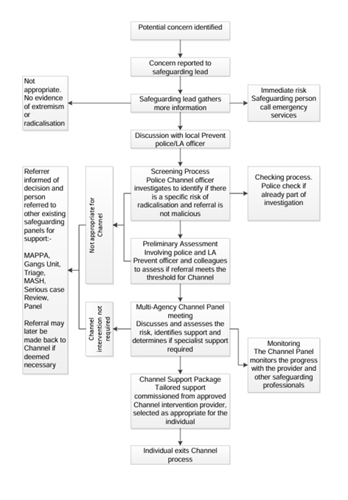
Preparing a Prevent referral
AEiG have robust safeguarding policies in place to ensure that those at risk of radicalisation are identified and appropriate support is provided. Learners, staff, tutors, assessors or volunteers can raise concerns regarding radicalisation.
When making a referral, try to provide as much detail as possible to support the assessment process.
Details to include in the referral
When you make a Prevent referral about a learner, you should describe:
•how or why your organisation came to be concerned
•what happened if there was a specific event
•the indicators that something is wrong
•any sympathetic interest in hate crimes, extremism or terrorism - including any extremist ideology, group or cause, support for ‘school shooters’ or public massacres, or murders of public figures
•any worrying use of mobile phone, internet or social media and how you found this out
•any contact with groups or individuals that cause you concern, including who andhow often, and why you’re concerned
•any expression of wanting to cause physical harm, or threats of violence, including who to, when and what was said or expressed
•any additional need, disability or special educational need, including what they areand if they’re known or suspected
•any other safeguarding concerns about the family, peer group or environment
•any discussions you’ve had with the learner, parent or carer (if under 18)
•the parental or carer support (if known and under 18)
•why the referral is relevant to Prevent, for example, is there a presence or possible presence, of any terrorist or terrorism-linked ideology
•what you’re worried about, what may happen if the learner’s needs are not met and how this will affect them
Informing the child, young person, parents or carers
If the concern relates to an adult, the DSL will speak to the learner and advise that they will speak to the Police. If the issue relates to a child, the DSL should tell the child or young person that they’re going to speak with their parents or carers (if under 18) and refer this to the Police.
The reason for a referral is to:
•make a multi-agency safeguarding assessment•support vulnerable people to move away from harmful activity
The DSL should tell the parents or carers that making a referral to the local authority does not mean they’re accusing the child, young person or adult of a crime.
Sharing information
Before sharing information, you should try to get consent from the parents or carers (if under 18). Do not do this if it would place the child or young person at more risk of harm. You can share information without consent if you have a good reason and if it will help to safeguard the child or young person sooner.
When seeking to share personal data regarding people susceptible to radicalisation, you should consider whether it is appropriate to rely on the person’s consent and must ensure that the requirements of the data protection legislation are complied with. Where it is not possible to rely on consent, it is still possible to share information if there is a lawful basis for doing so, for example, under the Data Protection Act 2018 which contains ‘safeguarding of children and individuals at risk’ as a processing condition that allows settings to share information, including without consent.
When deciding to share or withhold information, you should record who has been given the information and why. Do not assume that a colleague or another professional will share the information that might be critical in keeping the learner safe. Keeping children safe in education says early information sharing is vital to identify, assess and allocate appropriate service provision.
Information sharing advice for safeguarding practitioners includes the 7 golden rules for sharing information and considerations with regard to the Data Protection Act 2018 and General Data Protection Regulation.
Settings can find information on their obligations and how to comply at the Information Commissioner’s Office (ICO).
Worries about making a Prevent referral
Safeguarding learners who may be susceptible to radicalisation into terrorism is no different to other types of safeguarding harms, many of which are interconnected.
A Prevent referral is not an accusation of criminality and will not affect a person’s education or career prospects. Instead, it allows for their circumstances to be assessed and any relevant safeguarding support to be provided. DSLs should exercise their professional judgment about whether a referral is proportionate and appropriate, as they do for all other safeguarding risks.
25 For organisations | ICO Keeping children safe in education - GOV.UK information sharing advice for safeguarding practitioners - GOV.UK For organisations | ICO
At times, you may experience resistance or distress from parents and carers when referring their child to children’s services. It is good practice to listen to parents and carers in a safe space. Follow your existing procedures in these instances. Counter Terrorism Police’s ACT Early partnership with netmums includes articles, videos and an interactive forum where parents or carers can ask questions of expert practitioners on the risks of radicalisation. These are on the netmums Act Early page. 2930
If you have any concerns about a learner’s welfare, you must act on them immediately.
Police assess case for genuine vulnerability. If it’s being investigated, it does not go to Prevent. If vulnerabilities are not counter-terrorism related, it goes to mainstream services. If they are, Channel panel decides if support is needed.
The Channel panel
The Channel panel is a multi-agency panel, which includes the police. Channel works in a similar way to existing multi-agency partnerships for vulnerable people.
If the case is passed to a Channel panel, the members will assess the risk to the learner and decide whether to adopt the case. Statutory interventions could take place alongside the Channel process. Channel panels work with local partners to develop an individualised support package to reduce:
•broader risks to the learner
•the risk of extremism or radicalisation
•the risk of the learner becoming a terrorist or supporting terrorism
Channel is a voluntary process. Parents, carers and adult learners can turn down the support offered. If this happens, the learner will be signposted to other services, if appropriate.
For more information, see:
•Channel and Prevent Multi-Agency Panel (PMAP) guidance
•Act Early
Channel decisions
1. No support
If the Channel panel decides the referral is not appropriate for Channel support or other safeguarding services, it will signpost it back to the education setting.
ACT Early Act Early - Netmums - Netmums Channel and Prevent Multi-Agency Panel (PMAP) guidance - GOV.UK
The Channel panel will list the areas of concern and the learner’s vulnerabilities. It may suggest how you might deal with them but it will be up to you to choose how you support the learner.
You can ask your local authority or Prevent policing teams for advice.
2. Support from other safeguarding services
If the Channel panel decides the referral is not appropriate for Channel support but thinks the learner can best be supported through other services, it will signpost it to other safeguarding services.
3. Support from Channel
If the Channel panel decides the referral is appropriate for support through Channel, it will design a support package for the learner based on the risks and vulnerabilities identified.
Channel support
Channel support is tailored to the learner based on their identified needs. The DSL (and the referrer, if different) can attend the Channel panel to be part of this process.
The DSL can pass on any relevant information from the setting’s point of view and liaise with parents or carers (if under 18) and panel members to understand the decisions and discuss how the education setting could support them.
Participation in the Channel programme is confidential and parents and carers need to give their consent (if under 18) before Channel support is provided.
Many types of support are available, addressing educational, vocational, mental health and other vulnerabilities. Ideological mentoring is common. The Channel panel will decide what is appropriate and proportionate for the case, then either:
•coordinate new activity through statutory partners and intervention providers that it has commissioned.
•oversee existing activity.
Channel support could include:
•family support programmes.
•family therapy or child and adolescent mental health services (CAMHS)programmes.
•targeted youth support.
•crime prevention programmes.
•focused theological or educational programmes.
•parenting programmes.
•one-to-one or group counselling.
•behaviour support or anger management programmes.
One-to-one ideological support or mentoring is often delivered by a Home Office approved intervention provider. They can build a rapport with the learner to discuss their views and understanding.
The Channel panel will review the progress of the learner each month. When the panel decides there is no more risk of radicalisation, the learner will leave the programme. In some cases, the learner could still be supported to address concerns not related to radicalisation. This would be managed outside of the Channel programme. Learners who drop out of Channel support may be offered alternatives by the local authority or other providers. In these cases, the police will continue to manage any risk of terrorism that they might present.
After a learner has left the Channel programme, their progress will be reviewed after 6 and 12 months and they may re-enter the programme. If they show further concerns relating to radicalisation, they can re-enter the Channel programme and receive further support at any point.
For more information, see
•Channel and Prevent Multi-Agency Panel (PMAP) guidance.
For examples of Channel intervention and support packages, see case study 1: Channel support case study 3: Channel support
Parents or carers turn down Channel support
Parents and carers can turn down the voluntary Channel support. If this happens, the members of the Channel panel should suggest alternative services to provide support, such as early help or another agency. In some, the child or young person may meet the threshold for a child in need service (section 17) from children’s social care. If the parents or carers refuse Channel support but there is still a terrorism risk, the police may progress the referral outside of the Channel framework.
Support without Channel
If the local authority or police decide that the concern does not meet the threshold for early help or child protection services, you may need to think about what general services the child or young person has access to and assess what additional support can be put in place.
For an example of a concern that was not appropriate for local authority support, see case study 4: responding to extremism concerns in the classroom.
Education settings may put in place protective interventions to support a learner who may be susceptible to radicalisation into terrorism. This might be when no further action is taken by the police or local authority, or it could be wider work delivered by the education provider when a learner is in receipt of Channel support.
Whole setting and individual interventions can support a learner while they are in the Channel programme or after they have left.
Interventions are projects intended to divert learners who are being drawn into terrorist activity.
Interventions can include:
•mentoring
•counselling
•theological support
•encouraging civic engagement
•developing support networks (family and peer structures)
•providing mainstream services (education, employment, health, finance or housing)
Whole setting interventions
Whole setting interventions can help to address concerns that other learners may also experience without singling out an individual.
Whole setting interventions can include:
•reviewing the curriculum for relationships, sex and health education, spiritual, moral,social and cultural development and British values
•embedding online safety and digital literacy within the curriculum (see teaching online safety in schools)
•providing opportunities for safe place debates to discuss controversial issues. see NSPCC’s how to have difficult conversations with children)
•building lessons on resilience to exploitation, grooming and radicalisation
•supporting parents with parental controls and online safety advice
•promoting emotional wellbeing and mental health initiatives (seeteaching about mental wellbeing and promoting and supporting mental health and wellbeing in schools and colleges)
•having an effective safeguarding policy and staff training policy for Prevent
•educating staff about vulnerability to radicalisation and current extremist and terroristideologies
•reducing risk, especially for the most vulnerable - thinking about how to reducevulnerability among ‘at risk’ learners
Individual interventions
Individual interventions could include:
•discussions and support to family - parental programmes mentoring or buddy up systems.
•preventing bullying at school, which can reduce victimisation.
•diversionary activities such as extracurricular clubs or sports.
•improving social skills - communication, leadership, conflict solving, social problem solving.
•cognitive behavioural training - managing anxiety or anger, problem solving and coping strategies.
•establishing a positive and supportive relationship with the learner.
•using emotional wellbeing and mental health initiatives, counselling or toolkits.
•careers guidance.
•behavioural or attendance support.
•engagement with community groups or organisations.
For examples of protective interventions when no further action is taken by the policy or local authority, see
•case study 5: protective intervention by education settings
•case study 6: protective intervention in education settings.
Bullying at school: The law - GOV.UK
Careers guidance and access for education and training providers - GOV.UK
Annex E: Speak up if its not right
Any reported concern will be taken seriously. Please click on the link below for more information on raising a concern:
•Whistleblowing form for individuals to complete
How to raise a concern
Any reported concern will be taken seriously. Please remember that you do not need to have firm evidence of wrong-doing before raising a concern. However wrong doing that you explain as fully as you can the information or circumstances that gave rise to your concern. If you want to raise the matter confidentially, please say so at the outset so that appropriate arrangements can be made.
Option 1
If you have a concern, we hope you will feel able to raise it first with your manager or team leader. This may be done verbally or in writing.
Option 2
If you feel unable to raise the matter with your manager, for whatever reason, please raise the matter with:
•Your own head of service or director
•Piyush Fatania, Head of Audit, Risk and Assurance or Carolyne Wignall, Principal Auditor
•Eleanor Hutchison, Head of Human Resources
•Gillian Parkinson, Assistant Director of Legal Services
•For Schools: Kirsten Harrison, Director of Education
These people have been given special responsibility and training in dealing with whistleblowing concerns.
Option 3
Contact the Monitoring Officer - Rob Ayliffe, Director of Policy, Performance and Governance
•01452 328506•Rob.Ayliffe@gloucestershire.gov.uk
Option 4
If you need support and advice you can also contact:
•The HR Advice Line on 01452 425888
- Email Dignity at Work Network: dignity@gloucestershire.gov.uk• You can also speak to your trade union representative Access Health Assured Employee Assistance Programme (EAP) support
- 0800 028 0199 (free 24 hour helpline) • Use Health Assured's app ‘Wisdom’
Annex F: Safeguarding & useful contact details:
Gloucestershire MASH contacts
•Gloucestershire Police 01452 753458•Email Mash Police : cruenquiries@gloucestershire.police.uk
Childrens Social Services
•GCC Childrens Helpdesk 01452 426565•Email : childrenshelpdesk@gloucestershire.gov.uk
Local Authority Designated Officer
•01452 426 994
Adult Social Services
•01452 426868 - Emergency Duty Team•01452 614758 - out of hours•socialservicesenq@gloucestershire.gov.uk
PREVENT - Police contacts:
•Prevent Officer - Gloucestershire Constabulary, Waterwells, 1 Waterwells Drive, Gloucester, GL2 2AN.•01452 752802 Group Ext 2802•01452 754319•Police Control Room - 101•prevent@gloucestershire.police.uk
Useful local contacts
•Gloucestershire Fire and Rescue Service - Community Safety Team•Call: 01452 888777Email: fire@glosfire.gov.ukWeb: www.gloucestershire.gov.uk/glosfire
Gloucestershire Police
•Call 101 (non-emergency)Web: www.gloucestershire.police.uk
Victim Support (Gloucestershire)
•Call: 0808 281 0112Web: www.victimsupport.org.uk/resources/gloucestershire
NHS 111
•Call: 111•Web: https://111.nhs.uk
Gloucestershire Rape & Sexual Abuse Centre (GRASAC)
- Call: 01452 305421
Web: www.glosrasac.orgGloucestershire Domestic Abuse Support Service (GDASS)
- Call: 01452 726570
Email: support@gdass.org.ukWeb: www.gdass.org.ukGloucestershire Community PALS
- Call: 0800 019 3282
Email: ghn-tr.pals.gloshospitals@nhs.netWeb: www.gloshospitals.nhs.uk/contact-us/patient-advice-and-supportHealthwatch Gloucestershire
- Call: 0800 652 5193 or 01452 504989
Email: info@healthwatchgloucestershire.co.ukWeb: www.healthwatchgloucestershire.co.ukPOhWER (Advocacy Service)
- Call: 0300 003 1162
Email: glosadvocacy@pohwer.netWeb: www.pohwer.net/gloucestershireGloucestershire Carers Hub
- Call: 0300 111 9000
Email: carers@peopleplus.co.ukWeb: www.gloucestershirecarershub.co.ukNational helplines
- Age UK (Gloucestershire) - 01452 422660 • Alzheimer’s Society - 0333 150 3456 • Silver Line - 0800 470 8090 • Benefit Enquiry Line - 0800 731 0469 • Citizens Advice (Gloucestershire) - 01452 527202 • Dementia UK - 0800 888 6678
Annex G: Training and CPD Weblinks
•Prevent duty training: Learn how to support people susceptible to radicalisation |
Prevent duty training•How we’re safeguarding students and learners from radicalisation – The Education
Hub•The Prevent Duty in higher education (HE): training and guidance for practitioners -
GOV.UK•Let's Discuss: Islamist Extremism - Educate Against Hate•Let's Discuss: Extreme Right-Wing - Educate Against Hate•Let's Discuss: Extreme Left-Wing, Anarchist and Single-Issue Extremism - Educate
Against Hate•Let's Discuss: Fundamental British Values - Educate Against Hate•Notice, Check, Share•Prevent duty guidance: England and Wales (2023) - GOV.UK•Prevent Duty Guidance - Further education and skills final•You searched for let's discuss - Educate Against Hate•Going Too Far?•Base44 Superagents - Your Personal AI Agent•ACT Early
Annex H - Exams This policy is for Examiners marking Pearson Qualifications How to raise a safeguarding concern You may have a concern about a child or adults at risk because of:
- Learner or candidate work you have seen. • Reports that you have received. The contact or information you have may be from direct or online contact. The concern may be that the individual is at risk of harm from others or from themselves. Sometimes you might not have much information and might worry about raising a concern as a result. However, the safest option is to always report any safeguarding concerns as soon as you can. Contact the Pearson Safeguarding team to raise your safeguarding concerns, this can be done in these ways:
- Directly using the email address safeguarding@pearson.com. • Associates should raise concerns found in learner work using the online
Safeguarding- raising a concern form. You should include as much detail as possible, including your name and position, the nature of your concerns and the evidence that gave rise to your concerns. If you are an Associate raising a concern based on a disclosure in an exam paper marked on ePen it is essential that you include the document identification number of the paper and exam series. The safeguarding team will consider any report, seeking legal advice where necessary, and will act, which may involve referral of the incident to the appropriate authorities, within 24 hours for any incident where there may be the threat of harm to themselves or others, and within three working days for all other incident incidents. The Safeguarding team will contact the centre involved and liaise with their DSL to ensure support is given to any child or adult at risk about whom the concern is raised. The safeguarding team will confirm receipt of your concern and if requested let you know when action has been taken but cannot discuss the incident further, except for clarification. If any Associates have any concerns about the action being taken, they can raise it with the Pearson Associate Management team. All sensitive information received by Pearson in relation to a safeguarding case is kept confidential and secure, including dates and details of the referral, the feedback received from the school or institution Pearson inform, the procedures followed, and the outcome of advice given by Social Services, as appropriate. This information will be held in line with Pearson’s data retention policy.
Annex I: GCC Media Consent Form
GCC and AEiG may collect and use photographs, video recordings, and audio recordings of individuals for communication, promotional, educational, engagement, and public information purposes. These materials may be published on GCC websites, social media channels, printed publications, presentations, reports, and other official communications. Consent will be obtained before media is used where required. Individuals have the right to:
- Understand how their image, voice, or likeness will be used.
- Decline to provide consent without prejudice.
- Withdraw consent at any time by contacting GCC, subject to the practical limitationsof removing content already published or shared.
- Request further information about how their personal data is processed. Any media collected and stored by GCC will be handled in accordance with applicable data protection legislation, including the UK General Data Protection Regulation (UK GDPR) and the Data Protection Act 2018. GCC is committed to using media responsibly, respectfully, and in a manner consistent with its public duties and privacy obligations. The GCC media consent form can be found at the following link.
GCC-photograph-video-permissions-form-June-2023--1-.docx
Annex J: Safeguarding Posters
British Values



Individual liberty
Democracy
The rule of law


Mutual respect for and tolerance of those with different faiths and beliefs and for those without faith.
If you have any concerns about British Values, or if you see someone you consider to be disregarding them, please talk to your tutor in confidence, or contact one of the following:
Nusrath Khan Safeguarding Officer01452 583536 or 07825 424319
Nick Morrall Designated Safeguarding Lead 01452 583676 or 07900 135123
GCC_3565 6.22
The Adult Helpdesk 01452 426868 or 01452 614758

Stay safe
Abuse can take many forms – physical, psychological, emotional, sexual, financial, material, neglect, organisational, modern slavery and discriminatory abuse.
If you, or someone you know, is experiencing abuse - either in the classroom, at home, or elsewhere - tell someone and get help.
Contacts:
Nick Morrall Designated Safeguarding Lead01452 583676 or 07900 135123
Nusrath Khan Safeguarding Officer01452 583536 or 07825 424319
The Adult Helpdesk 01452 426868 or 01452 614758
The Children’s Helpdesk 01452 426565
In an emergency dial 999
GCC_3564 6.22
Annex K: Safeguarding Incident Form

Safeguarding/Welfare incident disclosure form
This form must be completed with only true and accurate accounts of incidents/suspicions. This form will be used by the safeguarding officers to report on all findings and action taken. If the matter is urgent please contact a member of the safeguarding team immediately or 999
Details of Person reporting Your Name: Your Position: Place of Work: Commercial Road Contact Phone Number: Time and Date of Report: Details of Adult Full Name: Address: Contact Number: Contact Email: DOB: Gender: Language: Next of Kin contact details: Details of Disclosure/Suspicions – including all dates and times (Please only report on facts, not opinion or judgments) Signature of Person completing the Form:
Once this report has been completed, please contact the safeguarding officer either via mobile to report initially and then email this report via egress switch to a work email account. The case will then be taken over by the officer and you will be kept briefly updated on the outcome. Please do not share any details of this report and once sent please delete all copies. Details of Safeguarding Officer Officer Name: Position:
Place of Work:
Contact Phone Number: Contact Email: Time and Date of Report: Signature of Safeguarding Officer:
V3 Updated by NM 31/01/25
Annex L: Terrorism (Protection of Premises) Act 2025 checklist
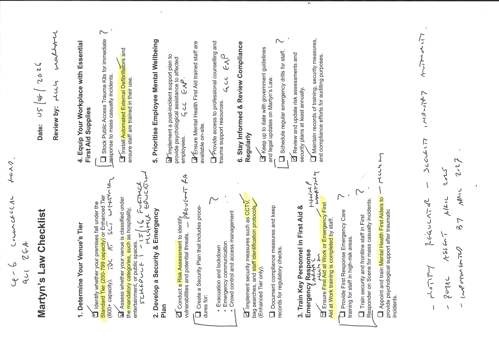
Annex M: A Quality Framework for protecting children and adults from abuse and neglect (example template)
Theme To what extent… Evidence
Is there a commitment to working with existing local safeguarding boards and other health and social care partnerships?
1 – Partnership
Are there clear lines of accountability within the senior management, governing body or corporation of the organisation that show where responsibilities lie?
2 – Accountability, roles and responsibility
Is there a clear indication of who has the responsibility and at what level for different aspects of safeguarding children and adults?
Is there a clear statement that shows the organisation’s values and belief in relation to individual rights to freedom from abuse and harm?
3 – Rights and values
Does it state the expectation for the whole organisation to demonstrate these values through corporate and individual behaviour?
Is there a clear statement for all learners and staff which indicates that there is zero tolerance of abuse and other harmful behaviours?
4 – Tolerance levels
Do policies and procedures direct both staff and learners towards taking appropriate actions when abuse and harmful behaviours occur?
Are these policies and procedures having an impact?
5 – Risk assessment Does the risk management system work in relation to safeguarding vulnerable groups?
Are there policy and procedures for safeguarding children and adults?
6 – Policy
Do all staff know about these?
Does the organisation demonstrate their commitment to good quality processes in the recruitment and vetting of new staff and the monitoring of existing staff and volunteers?
7 – Staff and volunteer recruitment
Is there a clear commitment to training all staff at all levels on the issue of safeguarding vulnerable adults?
8 – Capacity and capability
Is there a range of staff training opportunities?
Is information for learners and staff (on safe guarding, abuse and how to seek help) both available and accessible?
Is there a clear communications system for issues of safeguarding, including reporting of allegations or concerns?
9 – Information and communication
Does information on safeguarding and health feature in all communication processes, such as on the Internet, intranet, in handbooks and on notice boards?
10 – Curriculum Are personal safety rights and responsibilities embedded into the curriculum for all learners?
Has the organisation ensured that learners are included in identifying, developing and monitoring the impact of safeguarding work, from developing the partnerships, policies and procedures to monitoring and evaluating its effectiveness?
11 – Involving learners / learner induction
Is safeguarding part of induction for all learners and staff?
Converted from the September 2026 PDF supplied by the document owner. The original table of contents has been omitted.
Adult Education in Gloucestershire will scrutinise applicants, verifying Right to Work in the UK and qualifications, obtaining suitable references and checking previous employment history.
| Role | Requirement | |
| 1 | Safeguarding officer including DSL | Enhanced DBS and check against adult and children’s barred list |
| 2 | Tutors, support workers and volunteers who work in schools during school hours | Enhanced DBS and check against children’s barred list |
| 3 | Family learning Tutors who regularly work in schools | Enhanced DBS and check against children’s barred list |
| 4 | Tutors who teach in all other settings including support Tutors | Enhanced DBS |
| 5 | All other Staff | Basic DBS |
It has also been recently suggested by the Department for Education in their new draft guidance that as part of the shortlisting process for new staff, we should consider carrying out an online search (including social media) as part of our due diligence on the shortlisted candidates.
This has been suggested to help identify any incidents or issues that have happened, and are publicly available online, which we may want to explore more with the applicant at ‘interview’.
Relevant Tutors, assessors and managers are DBS checked according to role:
Adult Education in Gloucestershire follow GCC requirements and implement new procedures as they come into force. Recruiting managers will have training in safer recruitment practice, as well as safeguarding training.
Relevant staff will be DBS checked when starting work with AES and documentation must be shown to line managers if using a ‘portable’ DBS check. If the tutor is going to teach groups of young people or children or work in a regulated place, a satisfactory clearance must be obtained in advance.
The risk assessment will be done by the recruiting manager and will take into account factors such as any previous DBS for a similar role (the original must be seen); whether the member of staff will work at a main site or at another venue, whether the person has a significant gap in their employment history. Managers should always arrange for a checked member of staff to support until the check comes through.
GCC requires all DBS checks to be renewed after 3 years. Responsibility for ensuring DBS checks are renewed on time rests with the Designated Safeguarding Officer.
Providers must develop safer recruitment procedures for paid and voluntary staff to create a culture of safe recruitment and, as part of that, adopt recruitment procedures that help deter, reject or identify people who might abuse children. Governing bodies and management teams must act reasonably in making decisions about the suitability of the prospective employee based on checks and evidence, including criminal record checks) Disclosure and Barring Service (DBS) checks) and barred list checks, together with references and interview information.
Vetting staff and volunteers by conducting various checks is one of a menus of actions that education and training providers should undertake when recruiting.
In addition, in some cases where a tutor is working with groups of adults where the adults in the group and the activities fall into the pre-September 2012 definition of regulated activity, the tutor may be eligible for, but not legally required to have, an enhanced criminal records check without barred list information. Information on Regulated Activity in relation to adults, as defined in the Safeguarding Vulnerable Groups Act 2006 as amended by the Protection of Freedom Act 2012, is contained in Regulated activity (adults) August 2012 (Department of Health).
It is not expected that providers will request criminal records or barring checks routinely for other adult learning tutors. It is the responsibility of providers to familiarise themselves with the statutory requirements for safeguarding; to identify staff roles that require DBS checks, and to maintain an appropriate single central record.
7. Induction, Training and Development
All employees should receive relevant induction that includes advice on appropriate conduct with children and adults and should be given direct access to the organisation’s Safeguarding Policy and clear guidance on safeguarding procedures. Appropriate ongoing training and CPD opportunities for staff should be provided, including training on the issues of safe working practices and on creating safe environments for children and adults. Staff should update their training annually and those staff who are regularly dealing with safeguarding issues should update at least every three years. Where appropriate, staff appraisal reviews should include discussion about safeguarding issues. Providers are responsible for ensuring that staff are conversant with the policies and procedures, have undertaken initial training and receive regular and ongoing training and support.
The new draft DfE guidance suggests that whilst the majority of governors already undertake some form of safeguarding training, they intend to make the need more explicit. The new draft guidance states that governing bodies and provider proprietors “should ensure that all governors and trustees receive appropriate safeguarding and child protection training at induction”. This training “should be regularly updated”.
The consultation document states that training is “essential to ensure new governors/trustees understand their roles and responsibilities, particular in them taking a strategic rather than an operational approach”.
All staff need to be aware of the processes to be followed if there are concerns about the conduct of colleagues or other adults towards children and adults and the need to record and share all such concerns, however, minor. Staff should be alert to any indications that a child or adult may need to be safeguarded from harm and know who to contact if they have concerns.
8. Learner Involvement
Learner involvement in the management and organisation of the learning provision is important for the quality improvement agenda. Learners should be involved in creating a safe and secure learning environment through induction, consultation, reviews and curriculum-based activities.
Initial assessment and individual reviews provide opportunities for tutors to identify areas of concern for learners and address these through individual learning and/or course plans. These should be regularly reviewed by tutors and learners. Learners are asked for feedback during and at the end of their course and their personal safety and well-being should be included in this process.
9. Disseminating Information to Learners and Staff
Providers should ensure that information and knowledge about discrimination, equality, wellbeing, personal safety and security are conveyed and embedded in the curriculum and are supported by the culture of the organisation and corporate and individual behaviour.
Reference to these aspects should be included in learner and staff handbooks, posters and information leaflets, web-based resources and any other forms of communication with staff and learners.
10. Principles of Obtaining, Recording and Sharing Information
Where there are concerns about the safety and well-being of children or adults it is vital that information is shared with relevant organisations: most decisions to share information require professional judgement. There must be a legal basis for sharing information and a legitimate purpose for doing so. Whenever information is shared, it is important that the information should be recorded along with the date, the person(s) it was shared with and for what purpose.
A failure to share information, even at a level of ‘niggling worry’ may have serious consequences for the welfare of a child or adult and it is important that individuals are not deterred from sharing information because of perceived legal hurdles, or assuming that the ‘safer’ course is not to share information.
The DfE have also added a paragraph to the new draft guidance that states ‘’all staff should be aware that children and adults may not feel ready or know how to tell someone that they are being abused, exploited or neglected, and/or they may not recognise their experiences as “harmful’’.
The General Data Protection Regulations do not prevent, or limit, the sharing of information for the purpose of keeping children safe. Fears about sharing information must not be allowed to stand in the way of the need to promote the welfare and protect the safety of children.
11. Photo, Video and Audio Consent
There is a requirement to obtain the permission of anyone appearing in photographs, audio and videos recordings. This includes children and adults. If you wish to obtain pictures or videos of any adult or child than please ensure that the attached form is used and permission is sought from the adult or parent/carer
Media Consent form - Jan 2018.docx
Managers are responsible for ensuring that clear guidance is available to staff and volunteers; that staff are aware of the requirements; and that appropriate consent forms are readily available and are appropriately used.
12. Dealing with Concerns
Staff should be made aware of the procedures to follow if s/he has a concern about any child’s or adult’s welfare. In cases where a child or adult discloses that s/he is being, or has been, harmed or abused, or such a disclosure is made by a staff member, learner or member of the public, the member of staff should record the nature of the concern in writing and speak to his/her line manager who will contact the Safeguarding Officer. It is the role of the Safeguarding Officer to assess the concerns to determine whether an external referral to Children’s Services, Adult Services or the police needs to take place, or whether the matter can be addressed via the County’s internal procedures.
The Safeguarding Officer should have received adequate safeguarding training and his/her role and responsibilities should be clearly defined in the job description. Where a staff member is unable to make contact with their line manager, or Safeguarding Officer/Designated Lead they will be required to contact the MASH (Multi Agency Support Hub) directly to seek advice and then communicate to their line manager and a Safeguarding Officer / Designated Lead the discussions that they have had with the helpline staff.
To refer a concern to MASH in such circumstances staff should complete the Inter Agency Referral form (MARF) via the following hyperlink MARF Form
All immediate safeguarding concerns should be made initially by telephone on the Children’s Professionals line, or by email - Gloucestershire MASH contacts:
Gloucestershire Police 01452 753458
Email Mash Police : cruenquiries@gloucestershire.pnn.police.uk
GCC Childrens Helpdesk 01452 426565
Email : childrenshelpdesk@gloucestershire.gov.uk
Where a referral is to be made externally, the appointed officer will report the matter to Children’s Services, or Adult Services, and/or to the police. The external agency will conduct their own investigation regarding their policies and guidelines. Anonymity may not be maintained on reporting.
12.1 Sub-contracted Provision
Providers delivering work under sub-contracted provision must ensure that their own policies are in line with the Adult Education in Gloucestershire policy and procedures.
In addition, sub-contracted providers must provide Adult Education in Gloucestershire with information relating to concerns, disclosures, actions taken and the outcomes. This information should be summarised and sent to Designated Officer within 24 hours of any concern or incident. A monthly summary of safeguarding concerns (Safeguarding and Prevent), should be submitted monthly by email to the Designated Safeguarding Officer via email : nick.morrall@gloucestershire.gov.uk
This process will naturally form part of contract monitoring and performance reviews.
13. Dealing with Allegations of Abuse
In all cases where there are allegations of abuse, it is vital that these are dealt with fairly, quickly and consistently.
13.1 Allegations against members of staff
This procedure should be used in any case in which it is alleged that a member of staff or volunteer has:
Behaved in a way that has harmed a learner or may have harmed a learner.
Possibly committed a criminal offence against or related to a learner.
Behaved in a way that indicates s/he is unsuitable to work with children, young people or vulnerable adults.
Although it is an uncomfortable thought, it needs to be acknowledged that there is the potential for staff to abuse.
All staff working within AES must report any potential safeguarding concerns about an individual’s behaviour towards children, young people or vulnerable adults immediately. Allegations or concerns must be reported directly to a member of the AES Leadership Team unless the concern relates to the Head of Service. If the concern relates to the Head of Service, it must be reported immediately to Pete Carr, Head of Employment and Skills.
A member of the AES Leadership Team will carry out an initial consideration to establish whether there is substance to the allegation. If there are credible child protection
concerns, the member of Adult Education in Gloucestershire Leadership Team will notify the Local Authority Designated Officer (LADO) team. The LADO team will advise about action to be taken and may initiate referrals. If there are no credible child protection concerns, internal disciplinary procedures may need to be used to address the issue. In this case a written record must be made of the decision and reasons for it.
The LADO can be contacted on 01452 426 994, 01452 425 017 or 01452 426 320.
Any member of Adult Education in Gloucestershire who is accused or suspected of mistreating a child is advised to:
- Contact their union representative
- Keep records of all conversations, meetings attended, letters received and telephone calls relating to the allegation.
13.2 Procedures for Children and Young People
Abuse of children and young people: If anything should arise which causes a member of staff to believe that a child or young person has been or is at risk of significant harm or abuse, it is their responsibility to report it to a Designated Safeguarding Officer. In the case of classes run in partnership, this will normally be to the designated staff at the setting and AES designated Safeguarding Officers should be informed. Even if staff have only heard rumours of abuse or have a suspicion but do not have firm evidence, they should still contact the designated person to discuss their concerns.
Record it as accurately as is possible. The child or young person should not be asked any ‘leading’ questions but should be allowed to disclose whatever they may want to. They should also be made aware that the information may need to be passed on in confidence and who it will be passed on to. The report should be signed, dated and immediately given to the designated person as well as a copy stored in a secure place.
Considering all the information available, the Designated Safeguarding Officer will decide on the next steps, which may include taking no further action, monitoring the situation or making a referral. The full details of the GCC Safeguarding Children’s Board can be found here:
14. Whistle Blowing
Adult Education in Gloucestershire is committed to the highest standards of openness and accountability and takes all incidents seriously. All staff have a right and duty to report concerns seriously. All workers have a right and a duty to report concerns that are in the public interest.
Whistleblowing is ‘making a disclosure in the public interest’ and occurs when a worker raises a concern about a danger, illegality or incident that affects others, for example members of the public.
A worker who has a whistleblowing concern should report it to their line manager or senior manager verbally or in writing in the first instance and at the earliest opportunity.
15. Embedding Quality Processes in Safeguarding Practice
It is important that learning providers have a quality assurance framework for safeguarding practice in their organisations. A set of standards enables providers to carry out a self-assessment of the provision. This quality process, and any subsequent evaluation of the quality process, is an effective way of ensuring that safeguarding practice is checked.
A framework for self-assessment of safeguarding practice incorporating the duties and responsibilities of learning providers is included at. This framework outlines guidelines for good practice in safeguarding. However, it is the responsibility of each learning provider to identify the most appropriate strategic approach and adapt this to their circumstances.
16. The Prevent Duty
16.1 What is the Prevent Duty?
In 2010 the Government published the Prevent strategy which addresses the specific need to safeguard adults, young people and children from extremism, radicalisation and terrorism. AES in Gloucestershire values freedom of speech and the expression of beliefs as fundamental rights underpinning British Values. Whilst we value free speech, we also believe it is subject to the laws and policies governing equality, human rights, community safety and community cohesion and we encourage our learners and staff to uphold the fundamental British Values of the rule of law, mutual respect and democracy.
AES in Gloucestershire seeks to protect learners from the messages of radicalisation and extremism including, but not restricted to, those linked to far-right extremism, environmental extremism, religious extremism and animal rights extremism. We are committed to supporting those who are vulnerable to radicalisation and extremism. We have in place a Prevent Risk Assessment Register and Action Development Plan to ensure staff have up to date knowledge regarding risks.
Indicators of vulnerability include:
- Identity Crisis – the learner is distanced from their cultural / religious heritage and experiences discomfort about their place in society.
- Personal Crisis – the learner may be experiencing family tensions; a sense of isolation; and low self-esteem; they may have dissociated from their existing friendship group and become involved with a new and different group of friends; they may be searching for answers to questions about identity, faith and belonging.
- Personal Circumstances – migration; local community tensions; and events affecting the learner’s country or region of origin may contribute to a sense of grievance that is triggered by personal experience of racism, hate crime, or discrimination or aspects of Government policy.
- Unmet Aspirations – the learner may have perceptions of injustice; a feeling of failure; rejection of civic life.
- Experiences of Criminality – which may include involvement with criminal groups, imprisonment and poor resettlement / reintegration.
- Special Educational Need – the learner may experience difficulties with social interaction, empathy with others, understanding the consequences of their actions and awareness of the motivations of others.
This list is not exhaustive, nor does it mean that all learners experiencing the above are at risk of radicalisation and extremism.
More critical risk factors could include:
- Being in contact with extremist recruiters
- Accessing extremist websites, especially those with a social networking element
- Possessing or accessing extremist literature
- Using extremist narratives and a global ideology to explain personal disadvantage
- Justifying the use of violence to solve societal issues
- Joining or seeking to join extremist organizations
- Significant changes to appearance and / or behavior
- Experiencing a high level of social isolation resulting in issues of identity crisis and / or personal crisis.
However, we are aware that some of these factors may be related to other Safeguarding concerns.
Concerns about radicalisation and extremism should be referred / reported to PC Adam Large of the Gloucestershire Police who is the ‘Single Point of Contact’, or another member of the AES Safeguarding team in his absence. The Safeguarding Lead and Safeguarding Officers in the AES team should be informed of any referrals.
PC Adam Large / Matt Morris Prevent Officer - Gloucestershire Constabulary
Waterwells, 1 Waterwells Drive, Gloucester, GL2 2AN.
Ext 2802. Direct Dial 01452 752802 Group – 01452 754319 Force Control Room - 101
Email : Special.Branch@gloucestershire.pnn.police.uk
16.2 What are British Values?
British values are defined as "democracy, the rule of law, individual liberty and mutual respect and tolerance for those with different faiths and beliefs"; institutions are expected to encourage students to respect other people with particular regard to the protected characteristics set out in the Equality Act 2010.
- All staff have a legal responsibility under the Prevent Duty:
- All staff and volunteers must attend safeguarding and Prevent duty training as identified or provided by their institution.
- All staff and volunteers are expected to uphold the values embedded within the Equality Act 2010 at all times and embed these values into their practice.
- All staff and volunteers should use any relevant opportunities to promote the values.
- All staff and volunteers must report any safeguarding and Prevent concerns to the named staff responsible in their organisation.
- All staff and volunteers should always refer concerns to the appropriate Prevent (normally the safeguarding) team internally.
Adult Education in Gloucestershire highlights how the service promotes and exemplifies British values and provides examples of applying this through policies, procedures and delivery.
For guidance on Prevent and Channel Programme please see appendix 4.
17 Examination Guidance
17.1 Our awarding and examination bodies have a duty to inform Adult Education of any Safeguarding and Prevent concerns they may identify. This could relate to information they witness in the course of an examination or something that learners may have written. Pearson policy can be found at Appendix 7. We also use Training Qualifications UK and all the online delivery will make reference to the AES Safeguarding policy and what to do if there is a concern.
Appendix 1
Types of abuse and neglect
All staff should be aware that abuse, neglect and safeguarding issues are rarely standalone events that can be covered by one definition or label. In most cases, multiple issues will overlap with one another.
- Physical – the use of force resulting in pain or injury, for example by hitting, shaking or burning or by female genital mutilation.
- Sexual – the involvement in sexual activity which is unwanted or not understood or with a minor. This could be forced marriage, child sexual exploitation, harassment, teasing or innuendo.
- Financial – use of a person’s income or assets without their informed consent, for example taking money or possessions, fraud.
- Emotional – behavior which has a harmful effect on emotional health and development, for example insults, threats, humiliation, all kinds of hate crime, bullying (including cyber bullying) and includes unreasonable exertion of influence over an individual.
- Neglect – a lack of care, for example insufficient food, medication not given, lack of access for personal hygiene.
- Discriminatory – abuse motivated by discriminatory attitudes, for example towards race, religion, culture, gender, disability, sexual orientation.
- Institutional – accepted working practices or procedures of a service have an abusive effect on some or all users of that service, for example lack of privacy or supervision, lack of choice and consideration.
- Extremism – vocal or active opposition to the British values of “democracy, the rule of law, individual liberty and mutual respect and tolerance of different faiths and beliefs”.
- Sexual Exploitation – occurs when a child or young person, or another person, receives “something” (for example food, accommodation, drugs, alcohol, cigarettes, affection, gifts, money) as a result of the child/young person performing sexual activities, or another person performing sexual activities on the child/young person.
- Grooming, including online grooming – occurs when someone builds an emotional connection with another person to gain their trust for the purposes of future sexual abuse or other exploitation.
Appendix 2
Specific safeguarding issues
All staff should have an awareness of safeguarding issues, some of which are listed below.
Staff should be aware that behaviours linked to the likes of drug taking, alcohol abuse, truanting and sexting put children in danger.
- bullying including cyberbullying
- children missing education
- child missing from home or care
- child sexual exploitation (CSE)
- domestic violence
- drugs
- fabricated or induced illness
- faith abuse
- female genital mutilation (FGM)
- forced marriage
- gangs and youth violence
- gender-based violence/violence against women and girls (VAWG)
- mental health
- missing children and adults
- private fostering
- preventing radicalisation
- relationship abuse
- sexting
- trafficking.
Child sexual exploitation is a form of sexual abuse where children are sexually exploited for money, power or status. It can involve violent, humiliating and degrading sexual assaults. In some cases, young people are persuaded or forced into exchanging sexual activity for money, drugs, gifts, affection or status. Consent cannot be given, even where a child may believe they are voluntarily engaging in sexual activity with the person who is exploiting them. Child sexual exploitation does not always involve physical contact and can happen online. A significant number of children who are victims of sexual exploitation go missing from home, care and education at some point.
Some of the following signs may be indicators of sexual exploitation:
- children who appear with unexplained gifts or new possessions;
children who associate with other young people involved in exploitation;
children who have older boyfriends or girlfriends;
children who suffer from sexually transmitted infections or become pregnant;
children who suffer from changes in emotional well-being;
children who misuse drugs and alcohol;
children who go missing for periods of time or regularly come home late; and
children who regularly miss school or education or do not take part in education.
Female Genital Mutilation Mandatory Reporting Duty
FGM comprises all procedures involving partial or total removal of the external female genitalia or other injury to the female genital organs. It is illegal in the UK and a form of child abuse with long-lasting harmful consequences.
Section 5B of the Female Genital Mutilation Act 2003 (as inserted by section 74 of the Serious Crime Act 2015) places a statutory duty upon teachers along with regulated health and social care professionals in England and Wales, to report to the police where they discover (either through disclosure by the victim or visual evidence) that FGM appears to have been carried out on a girl under 18. Those failing to report such cases will face disciplinary sanctions. It will be rare for staff to see visual evidence, and they should not be examining pupils, but the same definition of what is meant by “to discover that an act of FGM appears to have been carried out” is used for all professionals to whom this mandatory reporting duty applies. Information on when and how to make a report can be found at Mandatory reporting of female genital mutilation procedural information.
Teachers must personally report to the police cases where they discover that an act of FGM appears to have been carried out. Unless the teacher has a good reason not to, they should also still consider and discuss any such case with the school or college’s designated safeguarding lead and involve children’s social care as appropriate. The duty does not apply in relation to at risk or suspected cases (i.e., where the teacher does not discover that an act of FGM appears to have been carried out, either through disclosure by the victim or visual evidence) or in cases where the woman is 18 or over. In these cases, teachers should follow local safeguarding procedures.
Patterns of Abuse
Most incidents of abuse by staff and volunteers towards children, when seen with hindsight, contain prior indications of the potential for abuse that have been missed, ignored or overlooked by the department. Sexual abuse in particular is likely to be characterised by a process of grooming of one or more youngsters prior to a specific act. This will often consist of blurring of boundaries with children to allow opportunities for abuse to take place.
It is essential that managers are fully aware of this possibility and are alert to indications of conduct that could be part of a grooming process.
“Grooming” can constitute an offence and applies to specific behaviour towards children up to 16 years. Further, whilst the age of consent for sexual activity is 16, any sexual activity between a pupil/student up to the age of 18 and a member of staff, even if perceived to be with the consent of a pupil, is an ‘Abuse of Trust’ offence and should be brought to the immediate attention of the Safeguarding Officer who will liaise with the Local Authority Designated Officer (LADO).
Activities that might arouse suspicion or merit further investigation, especially when conducted in a clandestine manner, and are contrary to the department’s policy, and which occur in combinations in relation to the same member of staff or volunteer might include:
- meeting or visiting children and young people outside of the activity
- offering extra support to individual children and young people
- placing themselves in closed rooms or inappropriate situations with a child or young person
- a series of minor concerns about physical contact
- inappropriate behaviour/conduct/boundaries with children or young people
- use of inappropriate and/or familiar language
- communicating electronically children or young people
- underperforming in their job linked to other behavioural concerns
- a history of frequent moves from job to job working with young people or children
- constantly ignoring rules about safe levels of staff to children/ young people ratios.
Allegations of abuse made against other children or young people
Staff should recognise that children and young people are capable of abusing their peers, and there are many forms of abuse that may occur between peers. This list is not exhaustive:
- physical abuse (biting, kicking, hair pulling etc)
- sexually harmful behaviour (inappropriate sexual behaviour, touching, sexual assault etc)
- bullying (physical, name calling, homophobic etc.)
- cyber bullying
- sexting
- onitiation, hazing
- teenage relationship abuse.
Special educational needs and disabilities
Children/young people who have special educational needs and/or disabilities can have additional vulnerabilities when recognising abuse and neglect.
These can include:
- assumptions that indicators of possible abuse such as behaviour, mood and injury relate to the child’s disability without further exploration
- the potential for children with SEN and disabilities being disproportionally impacted by behaviours such as bullying, without outwardly showing any signs
- communication barriers and difficulties in overcoming these barriers
- have fewer outside contacts than other children
- receive intimate care from a considerable number of carers, which may increase the risk of exposure to abusive behaviour and make it more difficult to set and maintain physical boundaries
- have an impaired capacity to resist or avoid abuse
- have communication difficulties that may make it difficult to tell others what is happening
- be inhibited about complaining for fear of losing services
- be especially vulnerable to bullying and intimidation
- be more vulnerable than other children to abuse by their peers.
What you should do if you think a child is being abused
If you have any concerns because you think that a child might be being abused, don’t assume that someone else is doing something about it, you must do the following:
- In an emergency (i.e. a serious incident, the child is in need of medical attention or a crime may have occurred) call 999.
- Contact your line manager who will report your concerns to Children’s Services.
- If you are unable to contact a line manager use the Children’s or Adult Services helplines for advice: Childrens Services 0300 555 1384, Adult Services 0300 555 1386.
- Keep a record of your concerns and any action taken.
Appendix 3
Adult Education in Gloucestershire Reporting Process
What you should do if you think someone is being abused:
If you have any concerns because you think that an adult is being abused, don’t assume that someone else is doing something about it, you must do the following:
- In an emergency (i.e. a serious incident, someone is in need of medical attention or a crime may have occurred) call 999.
- NON-EMERGENCY- contact line manager on same day and write a report on what you have seen or heard. Sign it and include date and time.
- Contact your line manager who will report your concerns to Adult Services.
If you are unable to contact a line manager use the helplines below for advice:
Social Services Teams for referrals:
Gloucestershire County Council (Adult Help Desk) 01452 426868 / Emergency Duty Team - out of hours 01452 614758 socialservicesenq@gloucestershire.gov.uk
Gloucestershire County Council (Children's Help Desk) 01452 426565 childrenshelpdesk@gloucestershire.gov.uk
Police
In an emergency phone 999
To report a crime 101
Keep a record of your concerns and any action taken.
AES Designated Safeguarding Lead:
Nick Morrall
Tel: 01452 583676
Mobile: 07900 135123
E: nick.morrall@gloucestershire.gov.uk
AES Safeguarding Officers:
Natasha Panchbhaya
Tel: 01452 583842
Mobile: 07795 265598
E: natasha.panchbhaya@gloucestershire.gov.uk
Nusrath Khan
Tel: 01452 583536
Mobile: 07768 803257
E: nusrath.khan@gloucestershire.gov.uk
A Quality Framework for protecting children and adults from abuse and neglect (example template)
| Theme | To what extent... | Evidence |
| 1 – Partnership |
|
|
| 2 – Accountability, roles and responsibility |
|
|
| 3 – Rights and values |
|
|
| 4 – Tolerance levels |
|
|
| 5 – Risk assessment |
|
|
| 6 – Policy |
|
|
| 7 – Staff and volunteer recruitment |
|
|
| 8 – Capacity and capability |
|
|
| 9 – Information and communication |
|
|
| 10 – Curriculum |
|
|
| 11 – Involving learners / learner induction |
|
Appendix 6
Safeguarding contact details:
Gloucestershire MASH contacts
Gloucestershire Police 01452 753458
Email Mash Police : cruenquiries@gloucestershire.pnn.police.uk
GCC Childrens Helpdesk 01452 426565
Email : childrenshelpdesk@gloucestershire.gov.uk
Gloucestershire County Council LADO 01452 426 994, 01452 425 017 or 01452 426 320.
Social Services Teams for referrals:
Gloucestershire County Council (Adult Help Desk) 01452 426868 / Emergency Duty Team - out of hours 01452 614758
socialservicesenq@gloucestershire.gov.uk
Gloucestershire County Council (Children's Help Desk) 01452 426565
childrenshelpdesk@gloucestershire.gov.uk
PREVENT - Police contacts:
PC Adam Large / Matt Morris Prevent Officer - Gloucestershire Constabulary
Waterwells, 1 Waterwells Drive, Gloucester, GL2 2AN.
Direct Dial 01452 752802 Group Ext 2802
01452 754319
Police Control Room - 101
Email : Special.Branch@gloucestershire.pnn.police.uk
Appendix 7
This policy is for Examiners marking Pearson Qualifications
How to raise a safeguarding concern
You may have a concern about a child or adults at risk because of:
- Learner or candidate work you have seen.
- Reports that you have received.
The contact or information you have may be from direct or online contact. The concern may be that the individual is at risk of harm from others or from themselves. Sometimes you might not have much information and might worry about raising a concern as a result. However, the safest option is to always report any safeguarding concerns as soon as you can.
Contact the Pearson Safeguarding team to raise your safeguarding concerns, this can be done in these ways:
- Directly using the email address safeguarding@pearson.com.
- Associates should raise concerns found in learner work using the online Safeguarding- raising a concern form.
You should include as much detail as possible, including your name and position, the nature of your concerns and the evidence that gave rise to your concerns. If you are an Associate raising a concern based on a disclosure in an exam paper marked on ePen it is essential that you include the document identification number of the paper and exam series.
The safeguarding team will consider any report, seeking legal advice where necessary, and will act, which may involve referral of the incident to the appropriate authorities, within 24 hours for any incident where there may be the threat of harm to themselves or others, and within three working days for all other incident incidents.
The Safeguarding team will contact the centre involved and liaise with their Designated Safeguarding Lead to ensure support is given to any child or adult at risk about whom the concern is raised.
The safeguarding team will confirm receipt of your concern and if requested let you know when action has been taken but cannot discuss the incident further, except for clarification. If any Associates have any concerns about the action being taken, they can raise it with the Pearson Associate Management team.
All sensitive information received by Pearson in relation to a safeguarding case is kept confidential and secure, including dates and details of the referral, the feedback received from the school or institution Pearson inform, the procedures followed, and the outcome of advice given by Social Services, as appropriate. This information will be held in line with Pearson’s data retention policy.
Adult Education in Gloucestershire Safeguarding and Prevent Policy (PDF, 323.6 KB)
Last reviewed: