
Pay quartiles
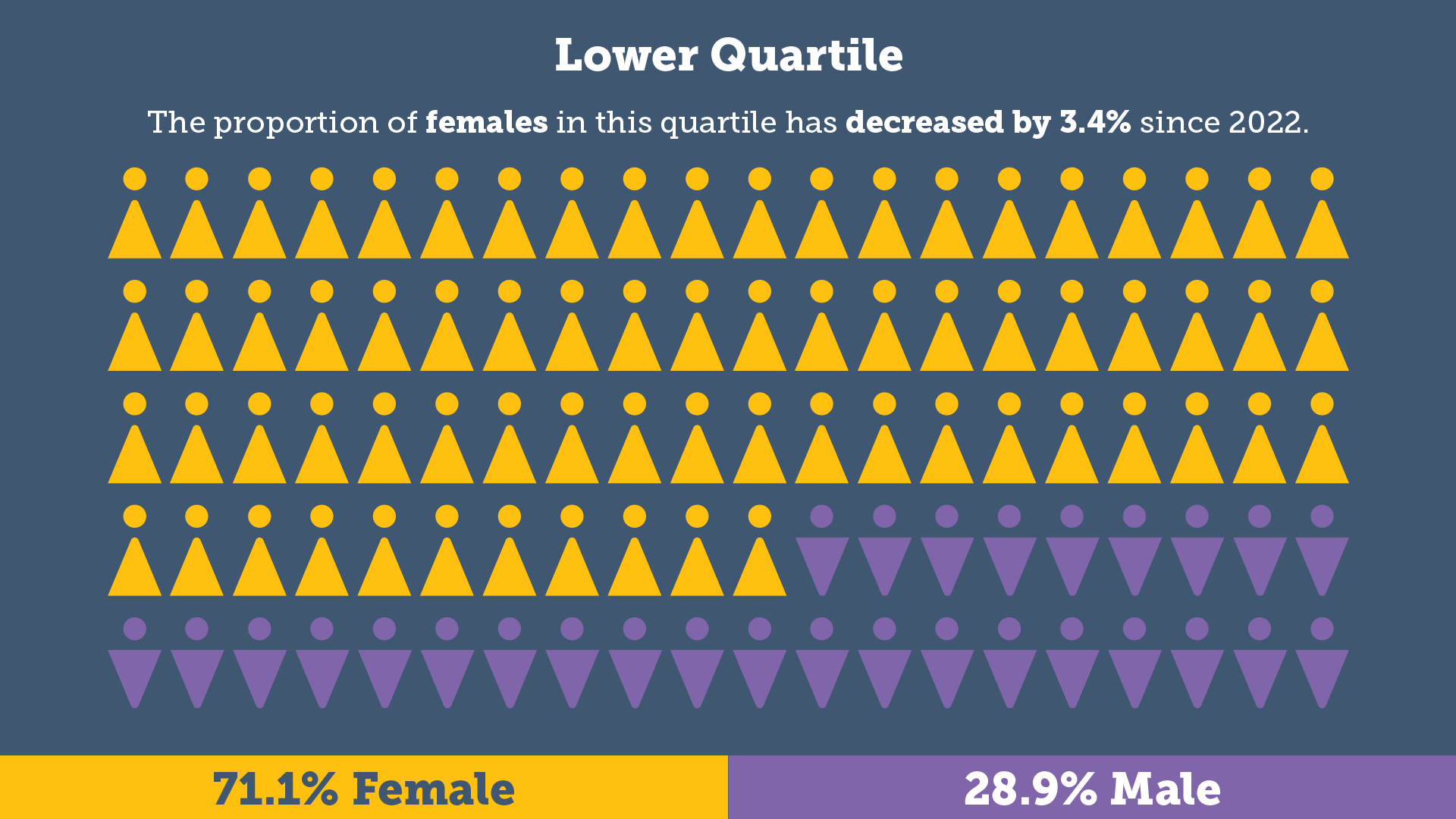
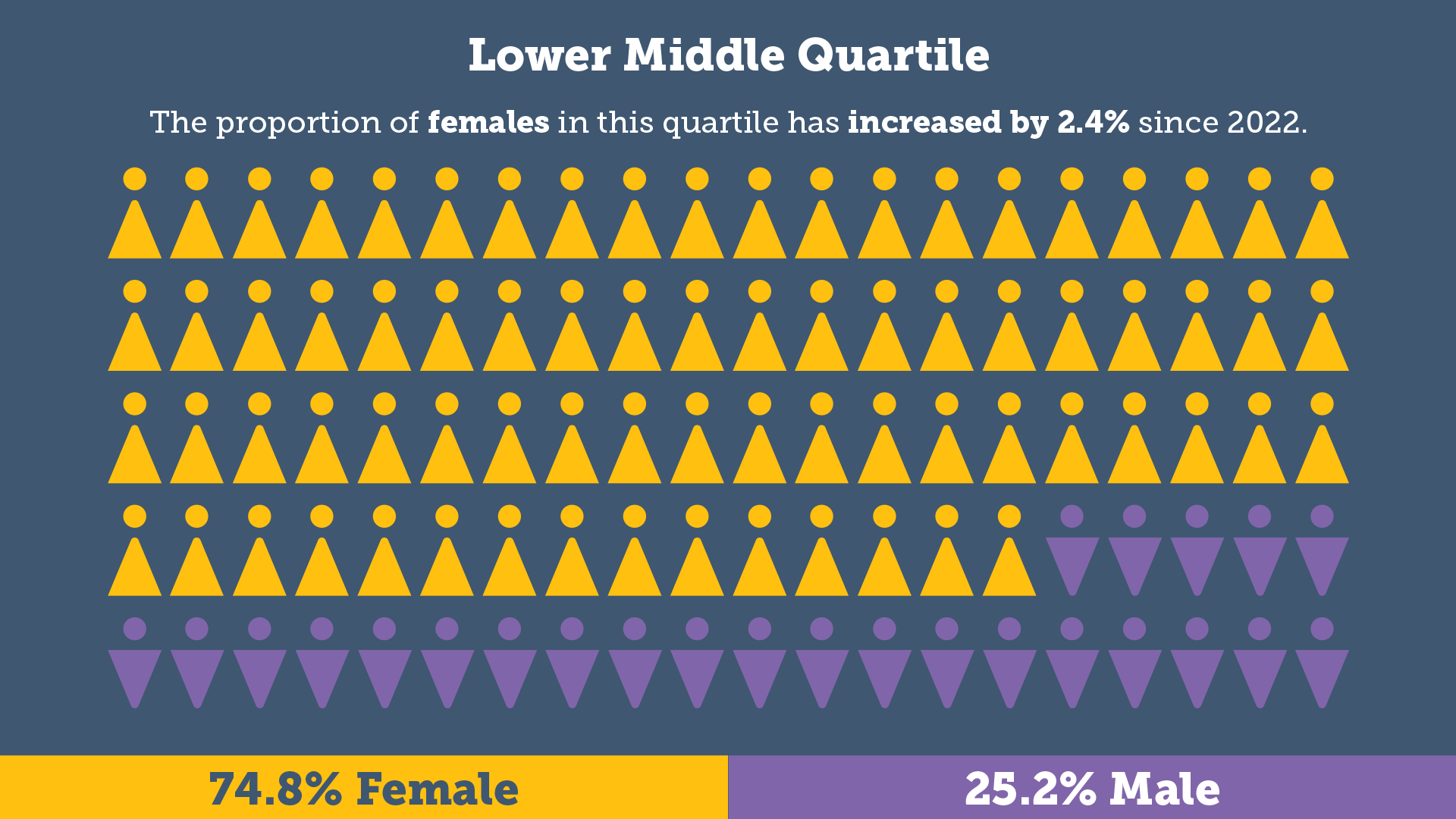
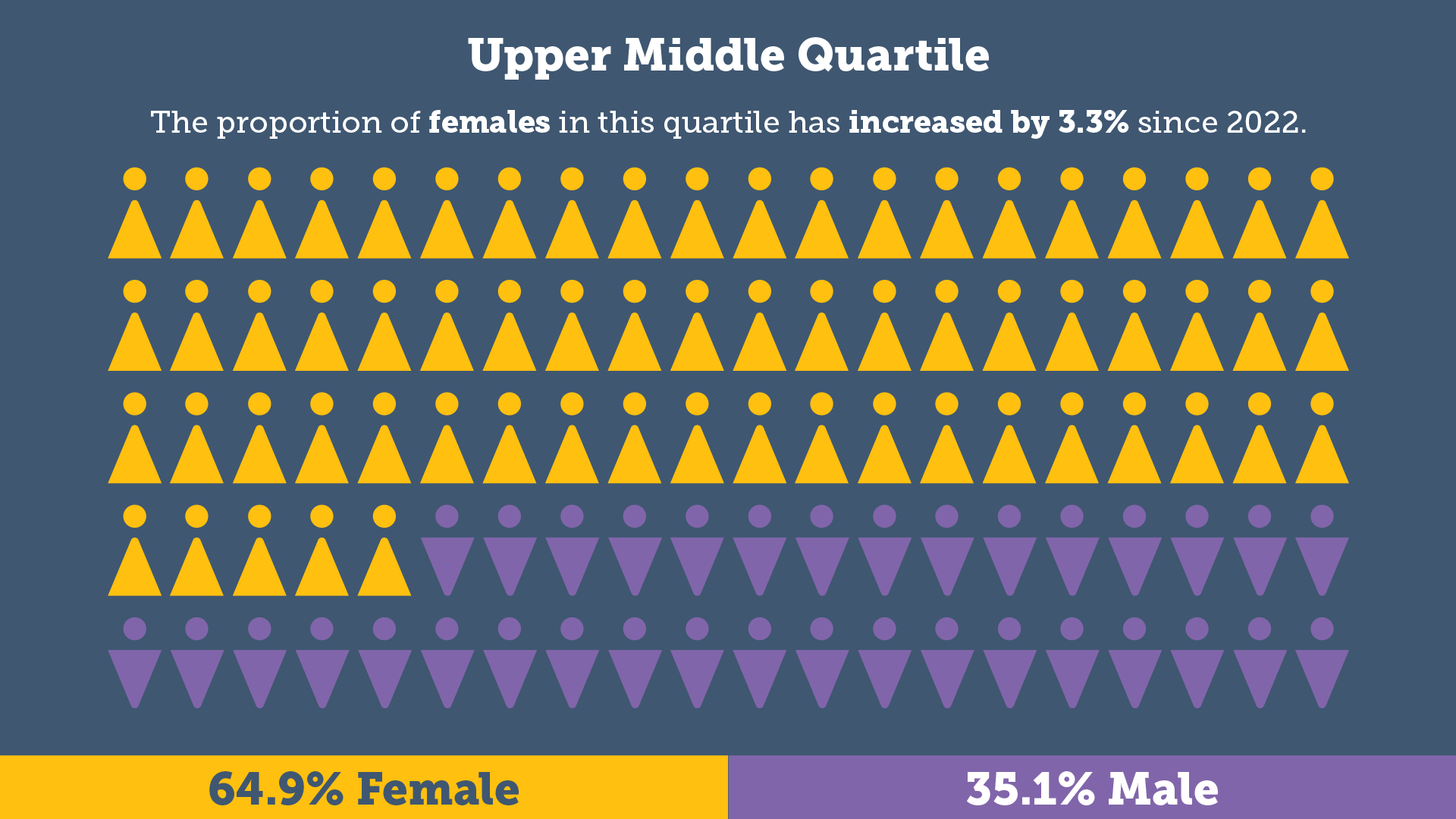
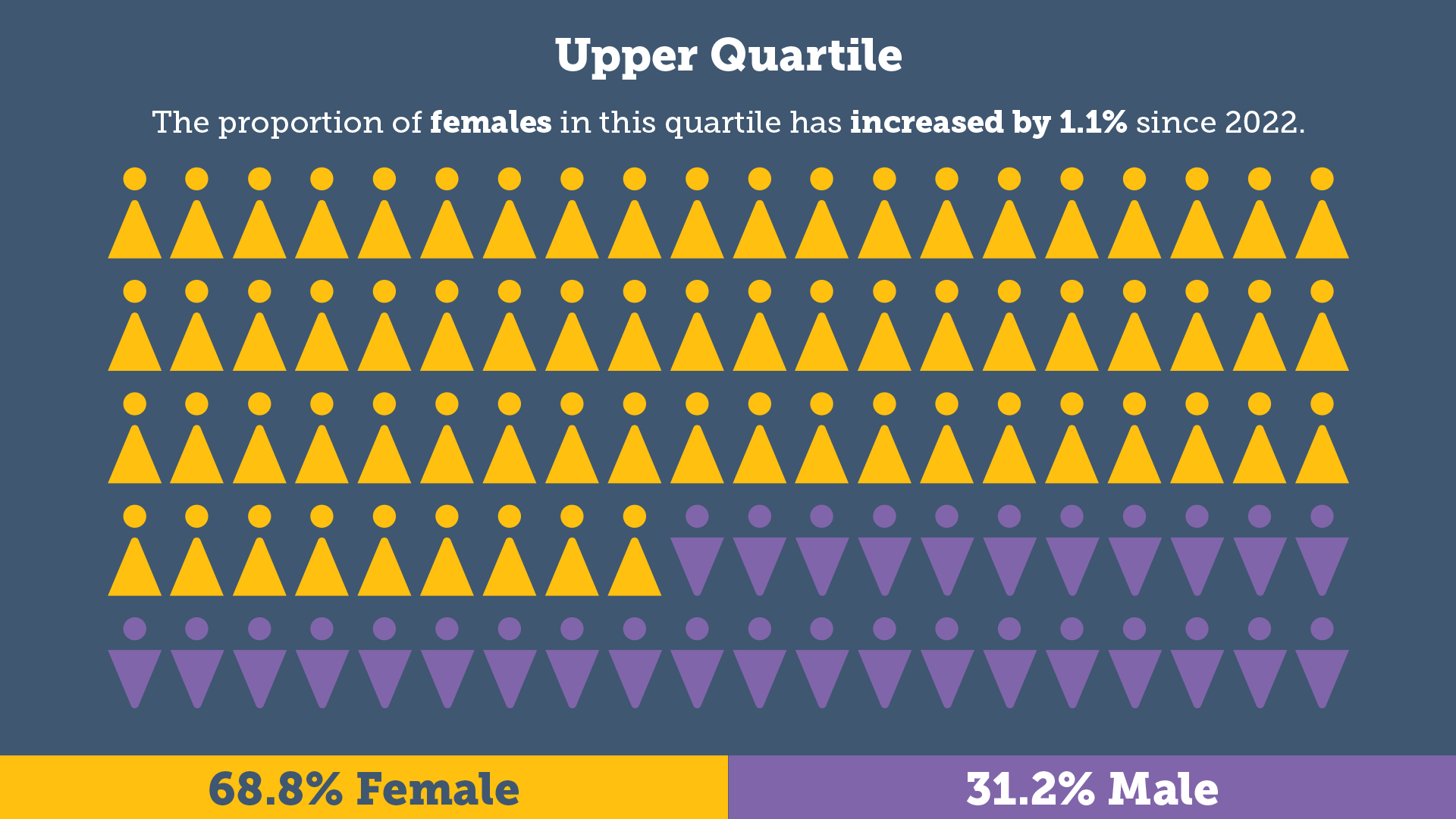
The gender split for each of the 4 quartiles is broadly in line with our workforce demographics of 69.6% women and 30.4% men. There are slightly higher proportions of women in the lower and lower middle quartiles and fewer women in the upper middle and upper quartiles. This is a key factor for GPG as (proportionately) more women at the lower grades and fewer women at higher grades affects the mean and median pay for the female workforce. For there to be no GPG you would expect to see the workforce demographics reflected in each quartile.
As the number of women in the upper and upper middle quartile is fewer than the workforce split and the other quartiles are higher, this could suggest that women may have fewer progression opportunities than men. This may be largely impacted by wider societal factors. Women are more likely than men to have had periods of time away from work and caring responsibilities which may affect their career progression. They may be more likely to use salary sacrifice schemes and are also more likely to work part-time.
Many of the jobs that are available across the council on a part-time basis are in the lower pay brackets (See section ‘Breakdown of Full Pay Relevant Staff).
Last reviewed: