
Water safety
Gloucestershire Fire and Rescue Service are supporting the National Fire Chief's Council (NFCC) and asking people to ‘Be Water Aware’. We want to make people safer by making them aware of the risks and dangers when around water, what to do if they fall into water and how to help someone who is in trouble in the water.
BE WATER AWARE:
Drowning is amongst the leading causes of accidental death in the UK. Being water aware aims to encourage people to spend time in and around the water in the safest way possible. Our aim is not to discourage people from enjoying being in or near water but to ensure they are doing it in the safest way possible.
Cold water can kill:
When you suddenly enter cold water your body reacts instantly with an involuntary gasp, rapid breathing, and a spike in heart rate. These reactions can overwhelm even strong swimmers. In the UK most waters are cold, generally around 15°C even on a hot day.
Around ½ of accidental drownings happen to people who didn't intend to go into water.
54% of people who accidentally drowned between 2019-2024 never intended to enter the water, with 56% of these fatalities happening in inland waters.
Be Water Aware encourages people to spend time in on and around water safely and recognising the risks around open water which might include slips, accidental falls, being aware of surroundings which can change due to weather. Staying away from edges, avoiding distractions and to keep yourself and other safe by being aware of the risks and how to respond if you or someone else is in trouble.
Additional information for walkers and runners: Water safety tips for runners and walkers - NFCC
What to do in an emergency - PHONE, FLOAT, THROW
We encourage people to know how to help without putting themselves at or emergency responders at risk.
If we see someone in trouble in the water, our instinct can often be to jump in to try and save them. But entering the water yourself is dangerous and can put you at risk of drowning too.
Instead, if you see someone in trouble, remember Phone Float Throw: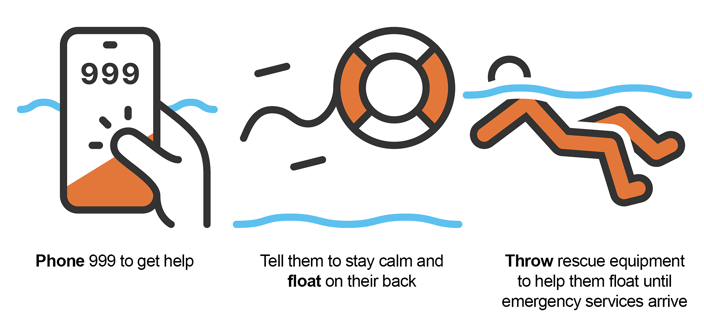
Float to live
If people fall into water unexpectedly or find they are struggling, Float to live is lifesaving advice which can help people regain control until they can get help or help themselves.
Alcohol and water don't mix
Annually several drowning incidents involve alcohol and or drugs. Choosing to enter the water while under the influence or walking a route next to water after a night out can lead to drowning.
Research by Royal Life Saving Society (RLSS) shows, 46% of accidental drownings in those ages 18-25 involve alcohol and/or drugs, based on Water Incident Data (WAID) 2018-23.
3 in 4 young adult drinkers think it is okay to drink alcohol and get into the water.
In the last year, young adult drinkers are 3x more likely to have been swimming or have entered the water after drinking alcohol, when compared to older adults.
Respect The Water
SOMEONE IN TROUBLE IN THE WATER?
If you see someone struggling in the water, remember Phone Float Throw – it could save their life. Phone 999 to get help. Tell the person in trouble to stay calm and float on their back. Throw them rescue equipment to help them float until the emergency services arrive.
More information on respecting the water: Respect The Water
When you're away from home 🧳
The risks of drowning are higher when people are less familiar with the area both at home and abroad. A lack of local knowledge combined with a relaxed holiday outlook can increase the risk of a drowning incident for people visiting areas near water.
Read safety signs near the beach, keep away from cliff edges and never swim alone.
What to do if someone falls into deep water 🆘
- Call 999 or 112 - straightaway. If you don't have a phone shout for help - you may have to look for help but do not enter the water.
- If you are near the coast, ask for the coastguard, if you are inland ask for fire service and ambulance.
- The emergency services will need to know where you are. Accurate information can save precious minutes. If you have a smart phone and have location services or map tool enabled, this can help.
- The What3Words app gives a precise location and is used by many emergency services. If not look around for any landmarks or signs – for example bridges will often have numbers on them which can identify their location.
- Don’t hang up – stay on the line but try and continue to try to help the person if appropriate.
- Encourage them to try and float on their back - if there is rescue equipment nearby throw it to them.
- When you have made the call shout for help from anyone who might be close by.
Human nature says you are likely to want to attempt to help while rescue services are on their way. Never enter the water, keep looking where the person is so you can give information to the emergency services and tell the person to float on their back. People can float for far longer than they can swim if they are panicking.
Fight the instinct to panic or swim
Lie back and keep your airways clear, push your stomach up and extend your arms and legs, moving hands and feet to help you float
Try to take and control the effects of cold-water shock such as the gasping reflex. Once your breathing is controlled call for help and if possible, try making your way towards safety. If you find yourself unexpectedly in the water, do as little as possible, and float.
RNLI Float to Live (suitable for coast and inland):
What to do if you unexpectedly fall into the water (river):
Water rescue incident:
What to do if you fall into water (canal)
What to do if you find someone in the water (canal)
- StayWise is a free digital, safety education library with educational resources which can be accessed by teachers, parents and carers.
- SkillZONE is the Gloucestershire Fire & Rescue Service interactive life skills centre and has a water scenario in which volunteers teach children these essential water safety messages.
- National Water Safety Forum
Last reviewed: