
Case Studies
What did they do?
Severn Wye Energy Agency supporting people to overcome fuel poverty and providing expert, impartial advice on energy efficiency and renewable energy generation. They worked with local community members to promote and install Eco Boost measures in their homes.
The measures were:
- Draft proofing (including chimney draft excluders)- Draught-proofing is one of the cheapest and most effective ways to save energy and money in any type of building. In the UK this is an average of £40 a year (EST 2025)
- LED light bulbs -If you replace all the bulbs in your home with LED lights, you could reduce your annual carbon dioxide emissions by up to 35kg in Great Britain (GB) (EST 2020)
- Radiator reflectors- fixed behind your radiators, they reflect heat from the radiator back into the room, instead of letting the heat out through an external wall. They can produce the most benefit when installed on uninsulated solid walls.
🌏1,595 of these solutions have been purchased and delivered which saved approximately 43.4 tonnes of CO emissions.🌏
Case Study
- A referral was received via Adult Social Care for a vulnerable client living with significant health challenges, including a respiratory condition and reduced mobility following a spinal injury. The client, who lives alone following their partner’s hospital admission, was struggling with rising energy costs and maintaining adequate warmth within the home.
- During a home visit, it became clear that the property was poorly insulated, with no cavity wall insulation, inadequate loft insulation, and partial double glazing. The client had attempted to manage draughts independently, using makeshift solutions around an open chimney, while relying heavily on costly electric heaters.
- A key focus of the intervention was the installation of simple, low-cost energy efficiency measures that could deliver immediate impact. A chimney sheep (draught excluder) was fitted to the open chimney, significantly reducing heat loss and preventing cold air from entering the living space. This measure alone helped improve warmth retention in the main room the client occupied most frequently.
- In addition, radiator reflector foil was provided for six radiators throughout the property. This will help reflect heat back into the rooms rather than allowing it to escape through external walls, improving overall heating efficiency. The client arranged for a family member to install the foil, ensuring sustainability of the intervention.
- Alongside these measures, tailored advice was given on heating usage, including increasing radiator settings in occupied rooms and reducing reliance on expensive electric heaters. These small but targeted changes were designed to maximise comfort while minimising costs.
- The combined impact of these interventions was immediate. The client reported feeling reassured, less anxious about heating their home, and more confident in managing their energy use. This case highlights how simple, practical measures can make a meaningful difference in improving warmth, comfort, and wellbeing for vulnerable households.

What did they do?
Severn Wye Energy Agency supporting people to overcome fuel poverty and providing expert, impartial advice on energy efficiency and renewable energy generation. They worked with local community members to promote and install Eco Boost measures in their homes.
The measures were:
- Draft proofing (including chimney draft excluders)- Draught-proofing is one of the cheapest and most effective ways to save energy and money in any type of building. In the UK this is an average of £40 a year (EST 2025)
- LED light bulbs -If you replace all the bulbs in your home with LED lights, you could reduce your annual carbon dioxide emissions by up to 35kg in Great Britain (GB) (EST 2020)
- Radiator reflectors- fixed behind your radiators, they reflect heat from the radiator back into the room, instead of letting the heat out through an external wall. They can produce the most benefit when installed on uninsulated solid walls.
🌏1,595 of these solutions have been purchased and delivered which saved approximately 43.4 tonnes of CO emissions.🌏
Case Study
- A referral was received via Adult Social Care for a vulnerable client living with significant health challenges, including a respiratory condition and reduced mobility following a spinal injury. The client, who lives alone following their partner’s hospital admission, was struggling with rising energy costs and maintaining adequate warmth within the home.
- During a home visit, it became clear that the property was poorly insulated, with no cavity wall insulation, inadequate loft insulation, and partial double glazing. The client had attempted to manage draughts independently, using makeshift solutions around an open chimney, while relying heavily on costly electric heaters.
- A key focus of the intervention was the installation of simple, low-cost energy efficiency measures that could deliver immediate impact. A chimney sheep (draught excluder) was fitted to the open chimney, significantly reducing heat loss and preventing cold air from entering the living space. This measure alone helped improve warmth retention in the main room the client occupied most frequently.
- In addition, radiator reflector foil was provided for six radiators throughout the property. This will help reflect heat back into the rooms rather than allowing it to escape through external walls, improving overall heating efficiency. The client arranged for a family member to install the foil, ensuring sustainability of the intervention.
- Alongside these measures, tailored advice was given on heating usage, including increasing radiator settings in occupied rooms and reducing reliance on expensive electric heaters. These small but targeted changes were designed to maximise comfort while minimising costs.
- The combined impact of these interventions was immediate. The client reported feeling reassured, less anxious about heating their home, and more confident in managing their energy use. This case highlights how simple, practical measures can make a meaningful difference in improving warmth, comfort, and wellbeing for vulnerable households.
What did they do?
The Scrapstore and the City Works venue at Alfred Street, Gloucester, are run by The Gloucestershire Resource Centre (GRC) to promote the principles of ‘re-use’ through arts, education, and play in a vibrant environmentally conscious venue for social enterprise, businesses, and community groups to create, meet, and work.
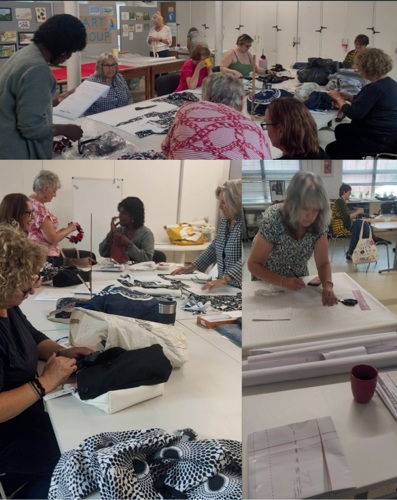
They used their grant money to run 3 Saturday fabric sales, 10 Social Dressmaking sessions and 6 Textile Café sessions. 👇
"The grant from GCC helped us reduce carbon emissions in the county and engage with others to reduce their carbon emissions too. Our 3 fabric sales saved approx 15.68 tonnes of carbon emissions.
It also enabled us to promote the Scrapstore project and attract new members to use it, meaning more people are aware of what we do and can access materials diverted from the waste stream rather than buying new. So this will continue to reduce carbon emissions and will help change behaviours beyond the project funding.
The Textile Café workshops also provided inspiration and starting points about how to use some of the resources in the Scrapstore and helped teach skills to support mending and repairing items of clothing."
👗Social dressmaking – 75 people attended across 10 sessions.
👚Textile Cafes – 67 people attended
🧣Total fabric reused from 3 fabric sales...3,486 m2! That's equivalent to 15,686.5kg CO2! 🌎🎉
Quotes from workshop participants:
🗨️“The best thing about the group is we learn from each other. We also bring things to swap – I’ve been able to try out new fabrics that I’ve not used before. Reusing materials and trying new ideas at no extra cost.”
🗨️““I came along to the social dressmaking session with a friend as we were looking for a sewing group to join together. We have been coming ever since and have learned so much from all of the other sewers. We’ve made new friends and learned so many new skills.”
What did they do?
The Scrapstore and the City Works venue at Alfred Street, Gloucester, are run by The Gloucestershire Resource Centre (GRC) to promote the principles of ‘re-use’ through arts, education, and play in a vibrant environmentally conscious venue for social enterprise, businesses, and community groups to create, meet, and work.
They used their grant money to run 3 Saturday fabric sales, 10 Social Dressmaking sessions and 6 Textile Café sessions. 👇
"The grant from GCC helped us reduce carbon emissions in the county and engage with others to reduce their carbon emissions too. Our 3 fabric sales saved approx 15.68 tonnes of carbon emissions.
It also enabled us to promote the Scrapstore project and attract new members to use it, meaning more people are aware of what we do and can access materials diverted from the waste stream rather than buying new. So this will continue to reduce carbon emissions and will help change behaviours beyond the project funding.
The Textile Café workshops also provided inspiration and starting points about how to use some of the resources in the Scrapstore and helped teach skills to support mending and repairing items of clothing."
👗Social dressmaking – 75 people attended across 10 sessions.
👚Textile Cafes – 67 people attended
🧣Total fabric reused from 3 fabric sales...3,486 m2! That's equivalent to 15,686.5kg CO2! 🌎🎉
Quotes from workshop participants:
🗨️“The best thing about the group is we learn from each other. We also bring things to swap – I’ve been able to try out new fabrics that I’ve not used before. Reusing materials and trying new ideas at no extra cost.”
🗨️““I came along to the social dressmaking session with a friend as we were looking for a sewing group to join together. We have been coming ever since and have learned so much from all of the other sewers. We’ve made new friends and learned so many new skills.”
What did they do?
"Tools and things" project
The George at Newnham is a community hub that used our grant funding to offer carbon literacy training and ongoing support sessions, alongside setting up a sharing hub for tools, appliances and other resources.
🗨️“Establishing the ‘tools and things’ library at The George has really fired imaginations in the community. We have had donations of really good but rarely used tools including a Flymo lawnmower, Bosch hedge trimmer, garden shredder, several power drills, steam cleaner, sewing machine, disc sander etc. These are all available now for people to borrow rather than buy and it will be exciting to see how this develops.”
- Siobhan, The George at Newnham
Visit their website to find out more👉The George At Newnham | Community Hub in Newnham on Severn

What did they do?
"Tools and things" project
The George at Newnham is a community hub that used our grant funding to offer carbon literacy training and ongoing support sessions, alongside setting up a sharing hub for tools, appliances and other resources.
🗨️“Establishing the ‘tools and things’ library at The George has really fired imaginations in the community. We have had donations of really good but rarely used tools including a Flymo lawnmower, Bosch hedge trimmer, garden shredder, several power drills, steam cleaner, sewing machine, disc sander etc. These are all available now for people to borrow rather than buy and it will be exciting to see how this develops.”
- Siobhan, The George at Newnham
Visit their website to find out more👉The George At Newnham | Community Hub in Newnham on Severn
What was the project?
In an exciting partnership with the Royal Agricultural University (RAU), FWAG are converting an arable field into a regenerative horticultural enterprise and agroecological teaching and research space. Charity Zerodig Earth helped to set up ‘no-dig’ production on the site, helping us use innovative, nature-friendly farming methods to grow fresh, highly nutritious produce, while engaging students and faculty from the Royal Agricultural University, as well as the wider local community.
The project is now in its 2nd year, providing horticultural produce with very low food miles and short supply chains to the Royal Agricultural University, local projects and the local community. The grant funding allowed the installation of 5-7 composting bays for large volume composting, rainwater harvesting, GAS testing, and communication activities (including a free to attend composting open day event) to encourage people to try ‘no dig’ growing and composting.
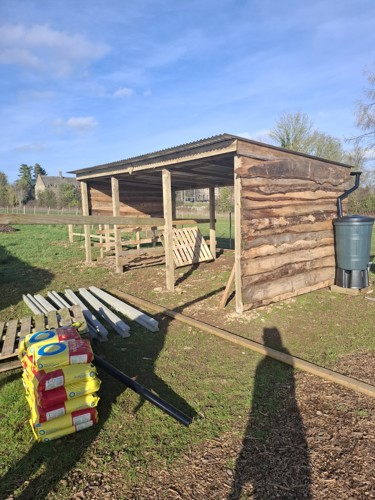
The grant has enabled the GREAT Market Garden to set up field scale composting at our community market garden and share practical learning about how to do this at household, allotment and market garden scale. The food grown in the no-dig beds of compost builds carbon in the soil and reduces carbon emissions from ploughing/tilling. The project also provides food to local communities and businesses with short supply chains or ‘food miles.’
- 30 people from a diverse range of communities attended a Composting Workshop ‘Soil Matters’ with expert Eddie Bailey from RhizoPhyllia.
- Approximately 150 RAU students and 50 visiting academics attended sessions at the Project between Sept and Dec 2025. All these sessions involved an element of learning around composting and soil testing
- Soil testing results show increasing levels of carbon sequestration since the project, which will continue to accumulate long after the duration of this grant as now composting is established it will have a longer term benefit.
- Organic Matter has increased from 4% (typical for an agricultural soil) to 10.3% (high). Carbon content has increased from 2.38% (low) to 7.5% (high).
- Organic carbon stock of the growing area is now 178 t/ha (compared to the fallow area of the field which is 140 t/ha) meaning that carbon sequestration has taken place and is building Soil Organic Carbon.
What was the project?
In an exciting partnership with the Royal Agricultural University (RAU), FWAG are converting an arable field into a regenerative horticultural enterprise and agroecological teaching and research space. Charity Zerodig Earth helped to set up ‘no-dig’ production on the site, helping us use innovative, nature-friendly farming methods to grow fresh, highly nutritious produce, while engaging students and faculty from the Royal Agricultural University, as well as the wider local community.
The project is now in its 2nd year, providing horticultural produce with very low food miles and short supply chains to the Royal Agricultural University, local projects and the local community. The grant funding allowed the installation of 5-7 composting bays for large volume composting, rainwater harvesting, GAS testing, and communication activities (including a free to attend composting open day event) to encourage people to try ‘no dig’ growing and composting.
The grant has enabled the GREAT Market Garden to set up field scale composting at our community market garden and share practical learning about how to do this at household, allotment and market garden scale. The food grown in the no-dig beds of compost builds carbon in the soil and reduces carbon emissions from ploughing/tilling. The project also provides food to local communities and businesses with short supply chains or ‘food miles.’
- 30 people from a diverse range of communities attended a Composting Workshop ‘Soil Matters’ with expert Eddie Bailey from RhizoPhyllia.
- Approximately 150 RAU students and 50 visiting academics attended sessions at the Project between Sept and Dec 2025. All these sessions involved an element of learning around composting and soil testing
- Soil testing results show increasing levels of carbon sequestration since the project, which will continue to accumulate long after the duration of this grant as now composting is established it will have a longer term benefit.
- Organic Matter has increased from 4% (typical for an agricultural soil) to 10.3% (high). Carbon content has increased from 2.38% (low) to 7.5% (high).
- Organic carbon stock of the growing area is now 178 t/ha (compared to the fallow area of the field which is 140 t/ha) meaning that carbon sequestration has taken place and is building Soil Organic Carbon.
What did they do?
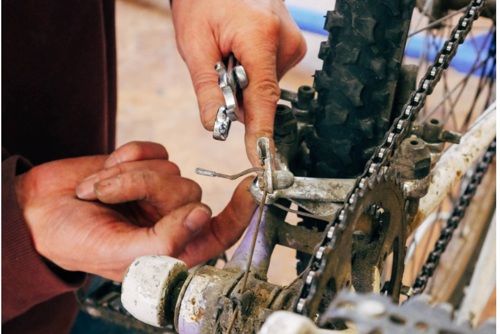
The cycle project at School House Cafe serves the local community. A team of volunteers maintain and repair the bikes that are brought in. Rather than have a charging system, the owners are invited to make a donation to Fresh Hope and cover the cost of any parts that have to be purchased. We have also refurbished and sold donated bikes, although our capacity to do this is now limited as the maintenance and repair service has proved so popular!
“The grant has allowed an expansion of bicycle repair and diversion of bikes heading to the recycling centres through an increase in tools, bicycle parts and workstations with an increase of volunteers numbers from 5 to 13 members operating now on three days a week from the st pauls community hub together, and enabling outreach events in local schools and parish council community events. For example a free bike repair station at the recent Charlton kings parish council air quality information day on sat 7 March 2026.”
Mark Barbour, coordinator and trustee of Fresh Hope Charity.
During the period March 2025/2026:
· 220 donated bikes have been repaired
· more than 500 customer bikes serviced and repaired to allow their continued usage as means of local transport or leisure.
· Increased volunteers from 5-13
Check out their website 👉Cycle Project - Fresh Hope
What did they do?
The cycle project at School House Cafe serves the local community. A team of volunteers maintain and repair the bikes that are brought in. Rather than have a charging system, the owners are invited to make a donation to Fresh Hope and cover the cost of any parts that have to be purchased. We have also refurbished and sold donated bikes, although our capacity to do this is now limited as the maintenance and repair service has proved so popular!
“The grant has allowed an expansion of bicycle repair and diversion of bikes heading to the recycling centres through an increase in tools, bicycle parts and workstations with an increase of volunteers numbers from 5 to 13 members operating now on three days a week from the st pauls community hub together, and enabling outreach events in local schools and parish council community events. For example a free bike repair station at the recent Charlton kings parish council air quality information day on sat 7 March 2026.”
Mark Barbour, coordinator and trustee of Fresh Hope Charity.
During the period March 2025/2026:
· 220 donated bikes have been repaired
· more than 500 customer bikes serviced and repaired to allow their continued usage as means of local transport or leisure.
· Increased volunteers from 5-13
Check out their website 👉Cycle Project - Fresh Hope
Last reviewed: