
Display 4 of 19
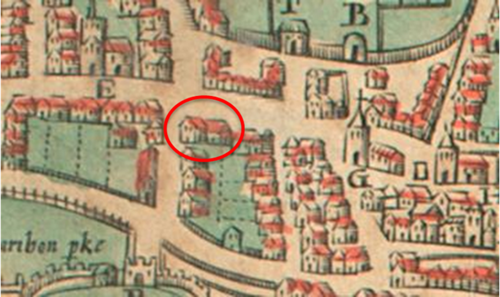
The Gildehall
From Speed’s map of Gloucestershire 1610 (SR85/1610Speed)
The reeve administered the town in a hundred court, as Gloucester was a separate hundred in the shire. This court met in the Gildehalle, a building used by merchants and tradesmen for business and located in Westgate Street between Upper Quay Lane and Berkeley Street. Gloucester’s true civil government began in 1155 when Henry II granted the town a charter giving it borough status – which gave it various privileges such as exemption from feudal dues, the right to hold a market and levy taxes, etc – in return for an annual rent to the Crown. A group of merchants and traders – who were all freemen and keen to gain more control over their affairs in the town – promptly became burgesses of the borough. Other charters followed, confirming these rights, and adding more privileges: In 1194 Richard I granted the borough to 'the burgesses of Gloucester of the merchants' guild’ and in 1200, King John granted the burgesses the right to elect 2 of their own reeves to govern, along with 4 stewards to oversee the reeves. From this time, the borough jealously guarded its privileges and rights to administer the town.
Last reviewed: