
Display 14 of 20
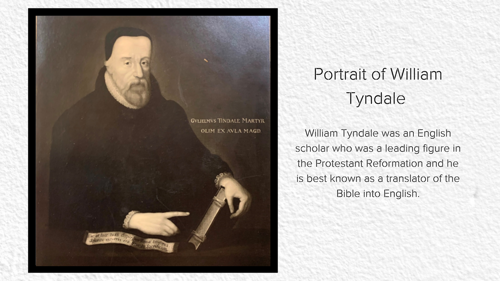
Portrait of William Tyndale (SRPort/TyndaleGS)
William Tyndale was an English scholar who was a leading figure in the Protestant Reformation and he is best known as a translator of the Bible into English, although he never actually completed a full translation. Henry VIII used Tyndale's ‘The Obedience of a Christian Man’ (1528) as a rationale for breaking away from the Catholic Church in 1534. However when Tyndale wrote ‘The Practyse of Prelates’ in 1530, which opposed Henry's marriage annulment on the grounds that it contravened Scripture, he was forced to flee England. He sought refuge in the Flemish territory of the Catholic Emperor Charles V but in 1535 he was arrested and in the following years, he was convicted of heresy and executed by strangulation, after which his body was burnt at the stake. The Tyndale Monument was built in 1866 on a hill at North Nibley, traditionally acknowledged as Tyndale’s birthplace. It commands a wide range of views, especially looking down to the River Severn and is a notable landmark for travellers, especially those on the M5 motorway. Locally, it is known as the ‘Nibley Monument’ rather than its official name.
Last reviewed: