Introduction
Gloucestershire is a rural county with lots of country estates, woodland, gardens and many other green spaces. This presentation will look at the historical records concerning all kinds of ‘growing’ in these environments, focusing on orchards and gardens. It’s obviously impossible to cover everything so we’ll be looking at an eclectic ‘selection box’ of items so there will be something for everyone – whether you are interested in the large county estates of the landed gentry, local nurseries, backyard gardens, orchards, flowers, flower paintings, orchard pigs, or ‘Dig for Victory’. There's even a Cotswold Pixie!
First mention of orchard and garden in Gloucestershire
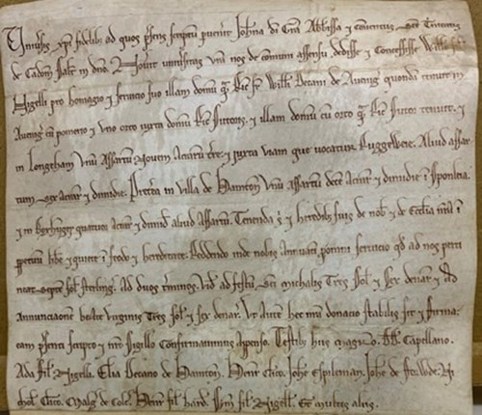
The first reference to a garden and orchard in Gloucestershire is in the archive of the Kingscote family of Kingscote, one of the oldest county families. It is a deed gifting a house in Avening with an orchard and garden owned by the Convent of Holy Trinity of Caen to William, son of Nigel of Kingscote, in either 1180 or 1220. The document itself is undated but is endorsed by Joan the Abbesse and Convent of St. Trinity of Cadom [Caen] and it is known that there were two Abbesses called Joan: one c.1180, the other c.1220. On line 4, the misspelled words ‘pomerium’ (‘apple tree’ or orchard) and ‘orto’ (for ‘hortus’ or garden) can be seen.
D471/T1/3
First named orchard
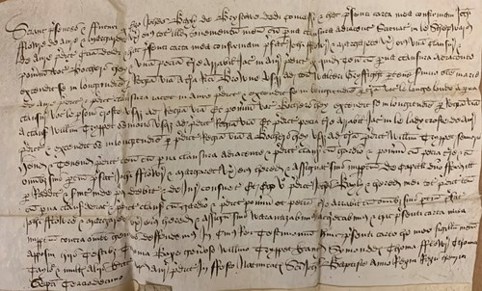
The first named orchard appears in Awre in 1498 and is named ‘Bothers Hey’. It features in this agreement made by ‘John Bayley of Beystowe with John and Margaret Flowre of Aure [Awre] concerning a tenement and adjacent land in Shepward in Aure, also an orchard called Bothers Hey and a parcel of arable in Aure’. The orchard may have been near Shepherdine House in Awre and the name ‘Bothers Hey’ may imply that the site had a dwelling (‘bothi’) that was enclosed by a hedge (‘hey’, ‘hay’).
D7661/Box13a/2
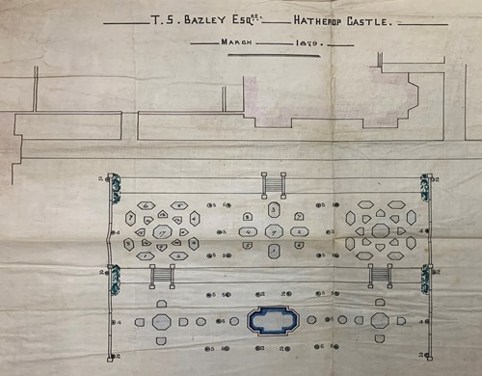
Hatherop Castle Italian garden plan
Not very many garden plans survive – this plan shows part of the gardens of Hatherop Castle, circa 1879. There are gardens all around the east and north-east sides of the ‘Castle’ but this plan shows the ‘Italian Garden’ on the west side. This rectangular parterre had two terraces, with flights of stone steps, formal beds and gravel pathways. The plan not only shows the layout of the garden but also the planting – which is something not usually recorded. The plants here included Cotonaster microphylla (now C. microphyllus), Erica carnea (aka Alpine Heath), Mahonia aquafolium (aka Oregon Grape) and Pernettya mucronate (aka Prickly Heath).
D540/P24
Sir James’ Garden
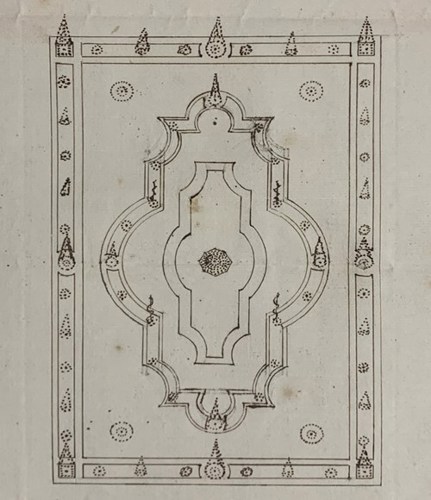
When garden plans survive, they are more like this example. Little is known about this plan, other than it is marked as "Sir James' garden” and is clearly a formal parterre design with symmetrical planting. It is from the Lloyd-Baker family of Hardwicke Court archive and specifically is amongst the papers of John Sharp, Archbishop of York (1644-1714). However, it was probably something to do with James Sharp, the engineer, inventor and ironmonger (1731-1783) and the brother of abolitionist Granville Sharp.
D3549/6/4/91
Garden Plan 1917
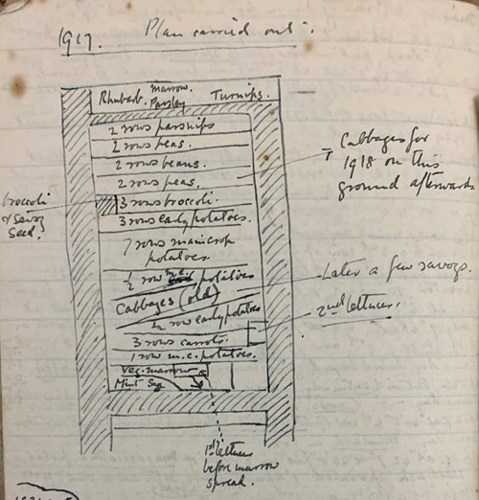
Not all garden plans are so ‘posh’! This garden plan was written by Arnold Whitehouse of Churchdown. He planned his garden in meticulous – if rather scrappy – detail, and kept detailed gardening diaries, giving planting and harvest dates and yields. The variety of vegetables for this year, 1917, is impressive – rhubarb, marrow, parsley, turnips, peas, beans, broccoli, potatoes (early and maincrop), cabbages, carrots, lettuces, mint, and sage.
D6035/8/3
Grotto garden, Bedfont House, Chipping Campden
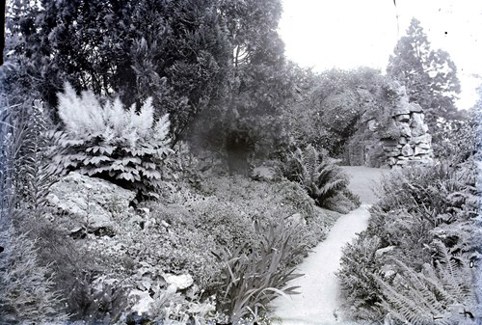
Grotto gardens are based on an artificial, decorative simulation of natural caves and they have been a recurring feature in the history of the Western Garden. Their origins can be traced back to ancient Greece, where natural and man-made caves were used for living and ritual use. Grottoes are generally found in areas of limestone geology, where the acidity of standing water has dissolved the carbonates in the rock matrix as it passes through what were originally small fissures – but many can be man-made using imported non-local stone. In Gloucestershire, there are grottoes at Hidcote Manor, Bedfont House, Highnam Court and Batsford Arboretum.
D11554/409
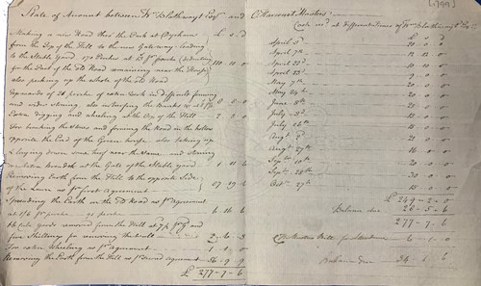
State of Account between W. Blathwayt Esq and C. Harcourt-Masters, 1799
The costs of landscape gardening were high – this is a bill for some landscape gardening work at Dyrham Park undertaken by C. Harcourt Masters, a surveyor and architect in Bath. This particular work cost William Blathwayt £277 7s 6d - about £22,000 today.
D1799/A161
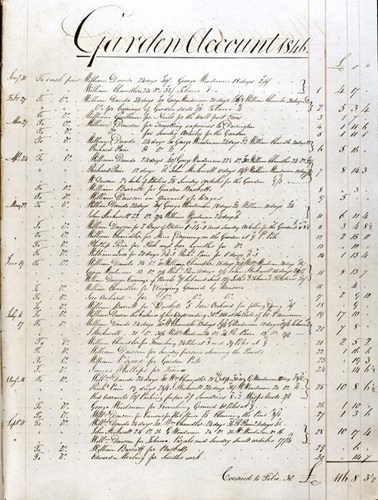
Garden Account 1846
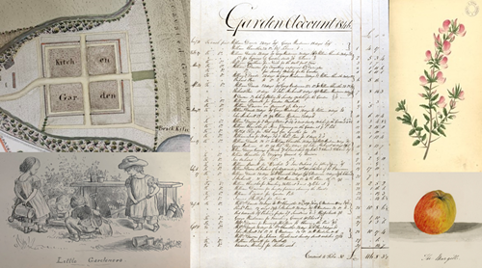
Ongoing gardening costs could be quite high as well! This document records the expenditure at Dodington Park and includes labour and wages, seeds, nails, travelling expenses, seed potatoes, baskets, trenching (ditching), cleaning ponds, twine, packing paper (for fruit), blacksmiths’ work plus sundries. The account runs from January to September 1843 and comes to the princely sum of £116 8s 3½d – about £7k today!
D1610/A80
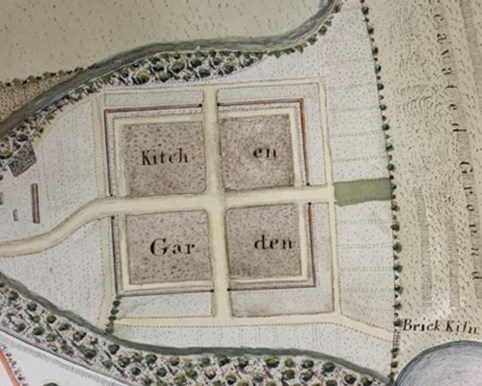
Kitchen garden, Dodington Park
Every country house – big, medium or small – had some form of kitchen garden. These highly productive plots supplied food, herbs and flowers to their households. The high walls that surrounded these gardens provided protection from pests and from the elements. They typically had vegetable beds in the centre, fruit along the walls, and greenhouses and outbuildings for storage and work.
D1610-P25
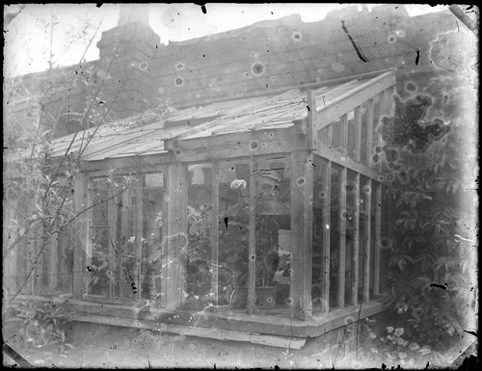
Greenhouse, Chipping Campden
The concept of greenhouses originated in Roman times, but the first true ones appeared in Korea in the mid-1400s. By the 1600s they were being used in the Netherlands and England and the first stove heated greenhouse was built at Chelsea Physic Garden in 1681, in order to grow medicinal plants. Despite being expensive items (due mainly to the cost of glass), they subsequently became common in large gentry properties, allowing the growth of exotic fruits and vegetables. Greenhouses came in all shapes and sizes, from free standing ones to lean-to types, like this one, whose location is unknown, but we think may have been around Chipping Campden.
D11554/1721
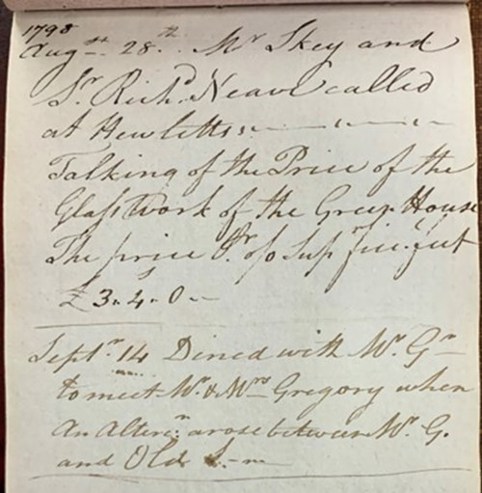
Price of Glasswork for a Green House
Greenhouses were – and still are – expensive items for a garden and so was replacing broken panes of glass! This document from the Hewlett estate memoranda book of James Agg, relates to 'the price of the Glasswork of the Green House’ at Hewlett’s which the contractor estimated would cost £3 4s 0d – about £245 today.
D855/E8
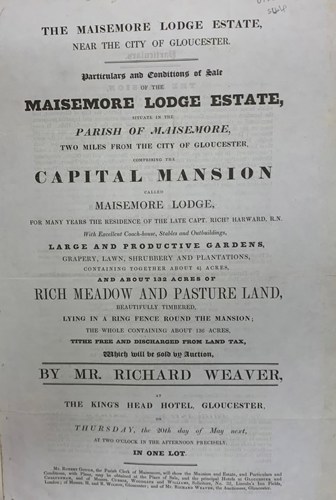
Sales Particulars for Maisemore Lodge Estate
Sales particulars can be used to reveal gardens, but they generally have little detail – apart from implicating how ‘productive’ they were! This one, printed for the sale of Maisemore Lodge Estate in 1847 notes that the property has ‘large and productive gardens’, clearly intended to demonstrate what a good buy the property would be.
D1388/SL4/2
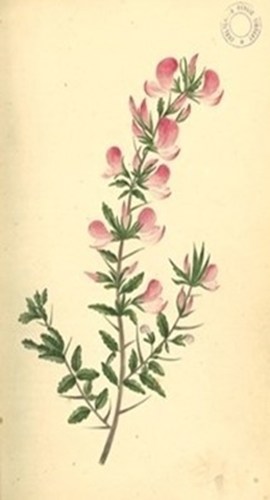
Spiny restharrow
People have always liked drawing and painting flowers. This wonderful painting of Ononis Spinosa aka Spiny Restharrow, is from a sketch book owned by Miss Anne Hill, titled "Original Drawings of Botanical Specimens”.
D5130/Accession 11122/Box 2
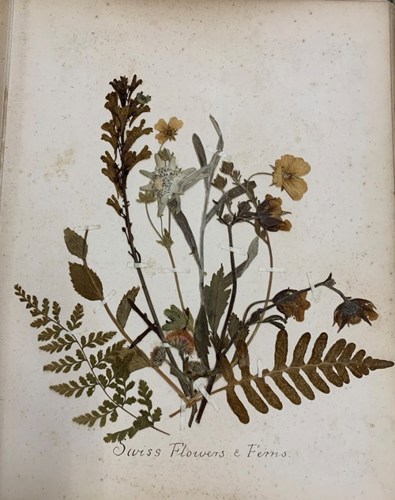
Pressed flowers
Flower pressing was a popular hobby in Victorian and Edwardian times. These pressed Swiss flowers and ferns come from a book belonging to Alice Spencer and dates to the late 1800s. The book contains excellent drawings and is in the archive of the Chalford Hill County Primary school, suggesting that Alice was probably a teacher there.
S73/2/6/1
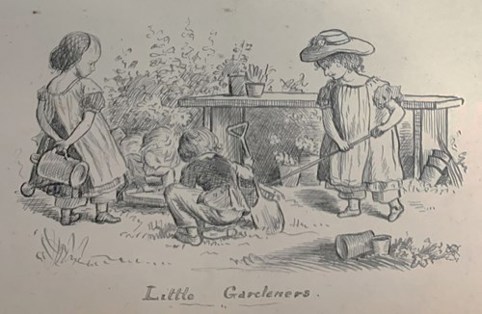
Little Gardeners by Alice Spencer
This is one of the wonderful drawings that are contained within Alice Spencer’s book of drawings and pressed flowers.
S73/2/6/1
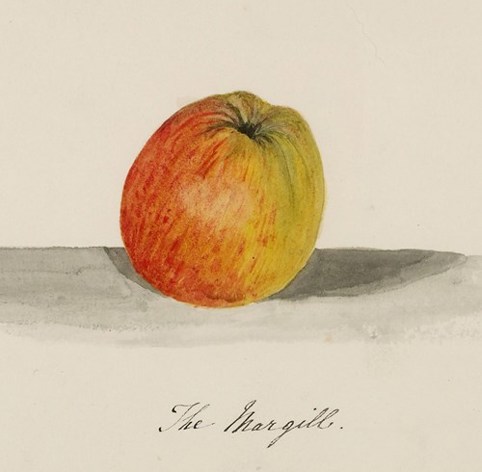
The Margill apple
Mary Baker, wife of Thomas John Lloyd Baker, painted several botanical watercolours c. 1798-1842, including several local apple varieties. She also corresponded with other local experts regarding specimens, varieties, and tips on cultivation. Thanks to the Gloucestershire Orchard Trust, many of these local varieties still survive – most notably the Ashmead Kernel, which is one of the heritage fruit trees in the community garden at Gloucestershire Heritage Hub.
D3549/24/1/1
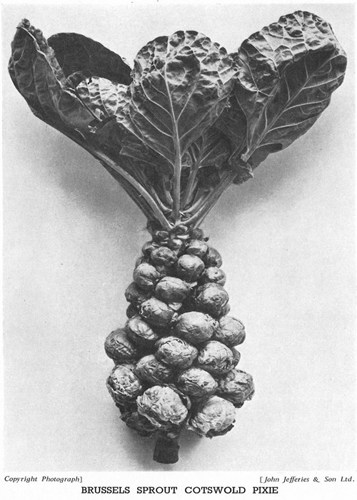
John Jefferies & Son’s Cotswold Pixie Sprout, 1939
Local nurseries and seed merchants often produced their own varieties of plant. This is the Cotswold Pixie grown by John Jefferies & Son of Cirencester. It was marketed as ‘the perfect Brussel sprout’ and was an early dwarf variety that produced ‘50-60 good sized sprouts of exceptional flavour’. Jefferies stated that the plants could be grown much closer together than other sprouts and would never blow over so resulted in good yields. Sadly, it is not known if any of these plants survive today.
D6464/5/4
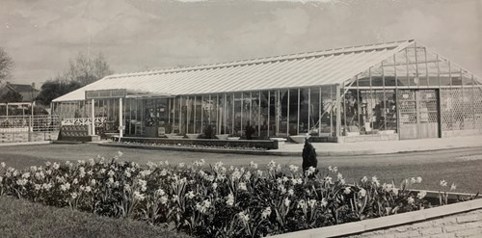
Hurrans Garden Centre, Churchdown, 1967
Today, most local seed suppliers and nurseries have morphed into garden centres. One early example was Hurrans of Churchdown, which was originally the Churchdown Nurseries, but rebranded itself in 1967. Times change and it is now under the Churchdown Tesco.
D10638/1/1967/15
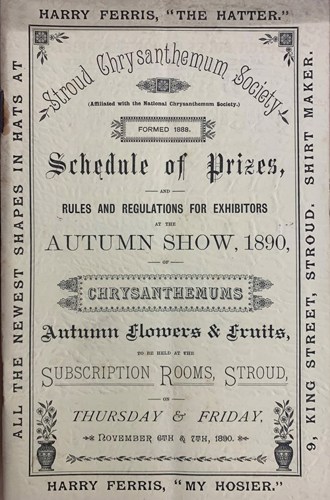
Stroud Chrysanthemum Society Autumn Show 1890
The first horticultural societies were formed in the 1830s starting in Gloucester and then expanding to Cirencester and Cheltenham. The earliest formal society was 'The Cheltenham Horticultural and Floral Society' which registered with the Royal Horticultural Society in 1832. Numerous others followed, including the Stroud Chrysanthemum Society which is still going strong today. This booklet was printed for their annual autumn show in 1890. The annual garden show – usually held at the local church fete – are hotbeds of competition and renowned for being among the most conflict-ridden and troublesome local activities!
N15GS
Shooting the Gardener
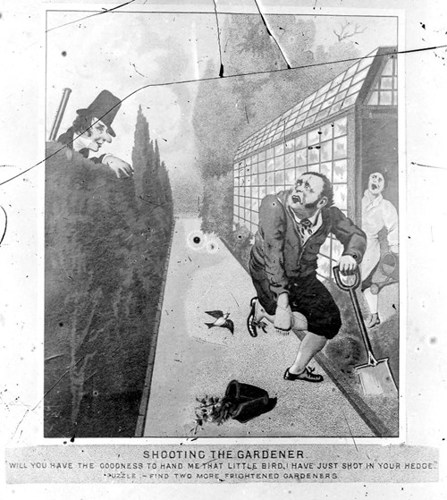
Gardens are seen as places where people feel they can relax in safety, but not in this image, showing a gardener who has been shot through a hedge by a neighbour who was shooting at a bird! We know nothing about this cartoon other than that it is in the Jessie Taylor of Chipping Campden archive. The Royal Society for the Prevention of Accidents (ROSPA) figures show that around 300,000 people each year visit hospital with garden injuries. The most common injury in a garden is a fall (115,000), but the biggest threat to people doing gardening is a cut (19,000), then falls (18,000) and being struck by things (12,600). Lawnmowers are the most dangerous items, followed by flowerpots, secateurs, spades, and hedge trimmers!
D11554/1172