NHS75 Introduction
The 5th July 2023 marks 75 years of the National Health Service.
In this exhibition we explore the foundations on which the NHS was built in Gloucestershire and developments over the last 75 years.
Treating over a million people a day in England, the NHS touches all our lives. When it was founded in 1948, the NHS was the first universal health system to be available to all, free at the point of delivery. Today, nine in ten people agree that healthcare should be free of charge, more than four in five agree that care should be available to everyone, and that the NHS makes them most proud to be British.
Funding the health service pre-NHS
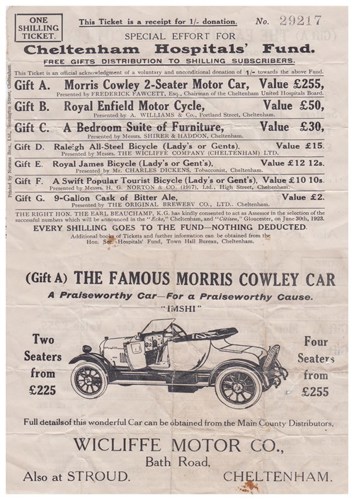
As a major change, there were understandable concerns about the proposed new NHS in the 1940s. But Dr Arnold Alcock (former senior surgeon and chair of the medical board at Gloucester Royal Infirmary) foresaw ‘not revolution but evolution’, with scope for progress. One of the key benefits of course was the provision of a free national service for all. Access to healthcare would no longer rely on subscriptions, voluntary contributions, private endowments, lotteries and so on.
Amazing prizes were on offer in the ‘one shilling’ raffle for the Cheltenham Hospitals’ Fund in 1923.
NHS AccNo 16402
Funding the health service after foundation of the NHS
Today the NHS is primarily funded by central government from general taxation, with a small proportion coming from National Insurance contributions.
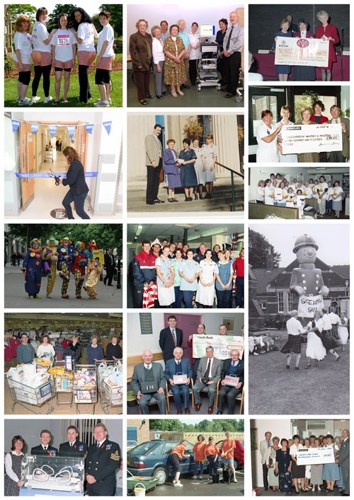
Gloucestershire’s ‘Workpeople’s Hospital Contributory Scheme’ stopped on 5 July 1948. However, fundraising for ‘extras’ re-started immediately and continues to this day.
Creative fundraising activities to support the NHS over recent decades.
NHS AccNo 16402
Hospital provision before the NHS
Most early hospitals were charitable foundations and were often linked with religious houses. From the mid-16th century many of these were replaced with almshouses and small hospitals. These were often funded by a bequest from a wealthy individual. Many towns had almshouses which provided accommodation for the elderly poor people.
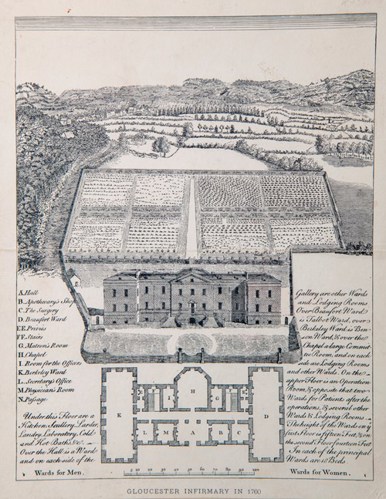
Some like the Infirmary in Gloucester had their origins in the 18th century and were funded by subscribers. They provided medical treatment for subscribers, their families and nominees but there was no universal provision of care. For poor people, workhouses usually included an infirmary which was open to inmates and was funded by the Poor Rate collected by the Guardians of the Poor.
This print shows Gloucester Infirmary in 1760. Note the three-storey building, extensive grounds and separate provision for men and women.
Glos Archives ref: SRPrints GL45.1
Hospital provision before the NHS
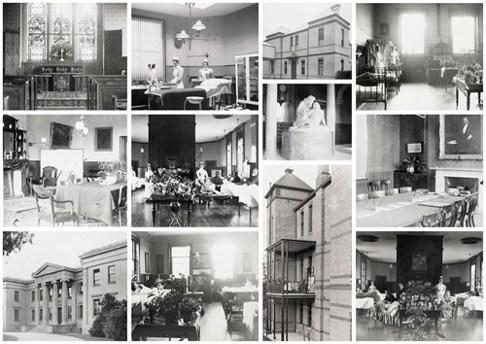
By the end of the 19th century all the larger towns in Gloucestershire had at least one hospital. Some hospitals were founded by an individual person with an interest in public health or as a lasting memorial to a notable local figure. From the late 19th century specialist hospitals were built or evolved. For example, maternity or mother and baby homes and hospitals to treat specific diseases like smallpox and TB (Tuberculosis).
These images show pre-NHS hospitals in Cheltenham.
NHS AccNo 16402
Hospitals as part of the National Health Service
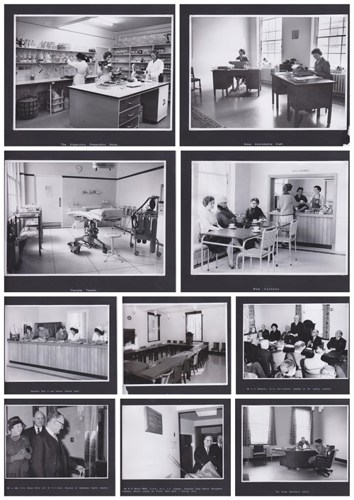
When the National Health Service came into existence in July 1948, it took over the running of many hospitals. Most voluntary hospitals came into public ownership, funded principally from general taxation with salaried medical staff and professional administrators.
Here are a series of commissioned photographs showing the modern facilities at Cheltenham General Hospital in the 1960s.
NHS AccNo 16402
Hospitals as part of the National Health Service
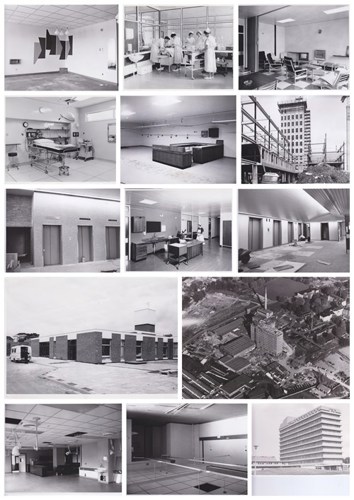
These photographs show the Gloucestershire Royal Hospital tower block and maternity hospital in 1970. The tower block in Great Western Road remains a major feature of the Gloucester landscape and at the heart of delivering healthcare today.
NHS AccNo 60402
Services in the community pre-NHS
Many health professionals are not based in hospitals but deliver services out and about in the community.
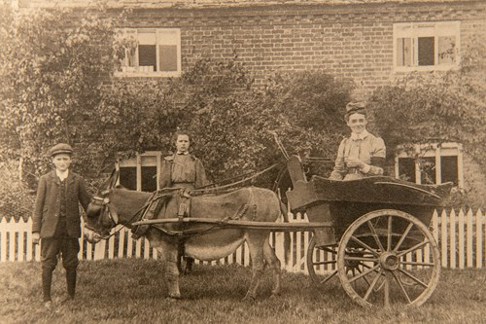
Nurse Wolfe in a donkey cart in Gotherington about to start her rounds in 1895. A note on the back of the photograph states that her salary was £35 a year.
Glos Archives ref: D4057/26
Services in the community pre-NHS
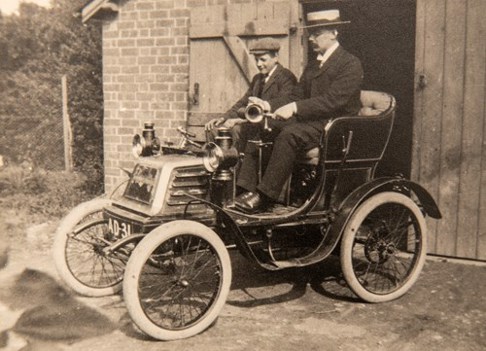
General Practitioners (or GPs as we know them) were amongst the earliest professionals to buy cars. Dr John J Foster of Churchdown is pictured here in his first car, a 4 1/2 horsepower Georges Richard voiturette, registration number AD 31.
Glos Archives ref: GPS 601-63
NHS services in the community
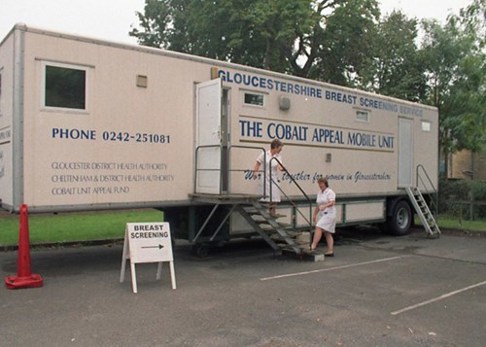
As well as the county’s major hospitals in Gloucester and Cheltenham, smaller cottage hospitals and other more locally based facilities also play an important role in the network of provision. Breast screening mobile unit outside Gloucestershire Royal Hospital, 1998
NHS AccNo 16402
Services in the community, pre and post NHS
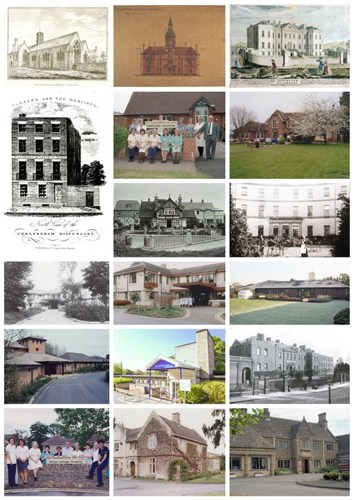
Here we show a variety of service points across the county. Can you spot Stroud Maternity Hospital, and the architect’s plans for Coney Hill mental hospital?
Pre-1948, Gloucester’s three mental hospitals played a pioneering role in mental health treatment. The NHS aspires to put mental health on an equal footing with physical health reflecting a growing understanding that no-one is immune from poor mental health.
NHS AccNo 16402
Staffing the NHS
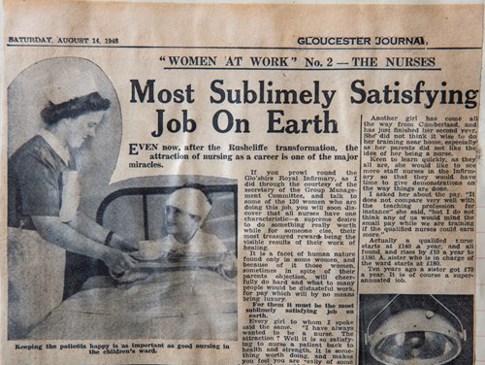
News article extolling nursing as a suitable job for women
Glos Archives ref: HO19/56/2
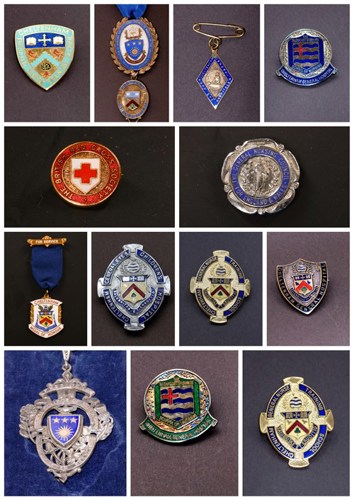
Nurses' badges through the ages
We’d be interested in finding out more about these badges. If you have further information please contact archives@gloucestershire.gov.uk
NHS AccNo 16402
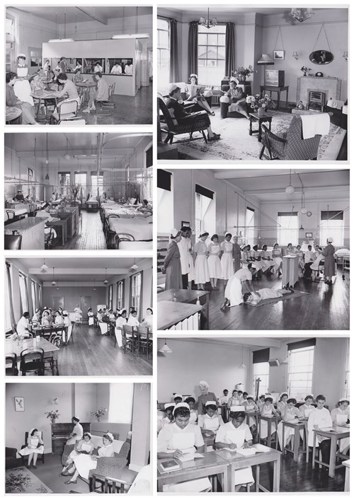
Staffing through the ages
Nurses at the Southgate Street branch of Gloucestershire Royal Hospital, 1970
The Southgate Street premises had their origins in the Gloucestershire General Infirmary, built in 1756. From 1904, the premises included a nurses’ home. The building was closed to patients in 1975 and demolished in 1984.
Today ethnic minority colleagues make up almost a quarter of the NHS workforce and 42% of medical staff and represent over 200 nationalities. From its earliest days, the NHS workforce has included talent from overseas. On 22 June 1948 HMT Empire Windrush arrived in the UK, carrying over 1000 passengers from the West Indies, many of whom took up roles in the NHS when it launched just two weeks later.
NHS AccNo 16402
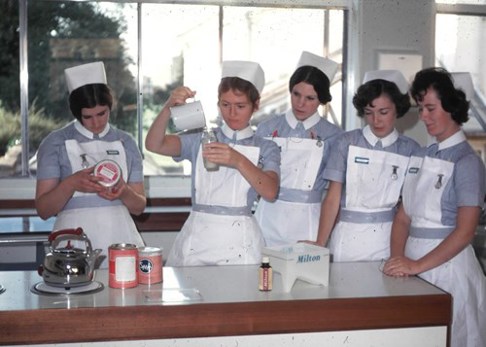
Nursing education
Student nurses at the Cheltenham School of Nursing, 1978
NHS AccNo 16402
Pioneering treatments pre-NHS
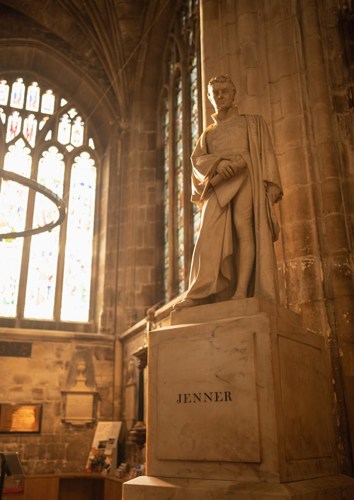
A Gloucestershire doctor, Edward Jenner (1749-1823), developed the world’s first vaccination. He practiced in Berkeley and through his observations of milkmaids appearing to be immune to smallpox he developed his pioneering vaccination. He is buried in the family vault in St Mary’s Church, Berkeley, but is also commemorated in Gloucester Cathedral.
It is calculated that COVID-19 vaccines saved around 20 million lives globally in the first year of the vaccination programme.
Photographer: Stephanie Rowe, Senior Clinical Photographer, Gloucestershire Hospitals NHS Foundation Trust
Pioneering treatments in the NHS
Penicillin was one of the innovative treatments available to patients attending the newly formed NHS. It had been used for treating soldiers in World War II and was first used in Gloucester Royal Infirmary in 1944 just before the NHS was formed.
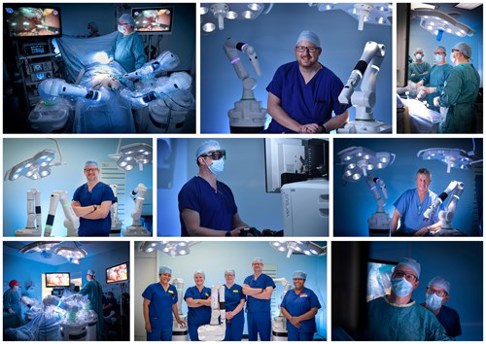
Medical innovations continue to this day, including the use of the Versius surgical robot. This robot has been used to assist with upper gastrointestinal surgery at Gloucestershire Royal Hospital since 2021. The use of minimal invasive surgery like robotic surgery can mean patients experience less pain, have shorter hospital stays and recover from procedures more quickly.
Simon Higgs (Consultant General and Upper Gastrointestinal Surgeon) and his pioneering team.
NHS AccNo 16402
Royal connections
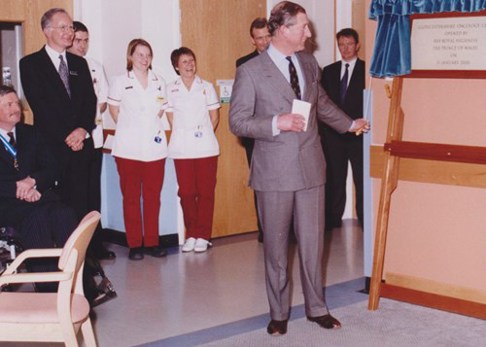
Members of the royal family have made many formal visits to Gloucestershire hospitals for special occasions, such as the opening of new facilities. A number of royal children have also been born in the maternity units across the county. Prince Charles, now King Charles III, is shown here opening the oncology unit at Cheltenham General Hospital in 2000.
But have you ever wondered why Gloucestershire Royal Hospital is, indeed, Royal? In June 1909, King Edward VII visited Gloucester. The Gloucester Journal records:
‘I am happy to take this opportunity to inform you that I give my permission for the title ‘Royal’ to be prefixed henceforward to the Gloucester General Infirmary, in recognition of the admirable work done by those responsible for its management and the devoted and successful efforts of its staff in the prevention and alleviation of human suffering.’
NHS AccNo 16402
VIP connections
Gloucestershire hospitals have expanded over the years, with new wards, wings and centres being added. This of course requires opening ceremonies and VIP help is always welcome. Notable visitors include Professor Cathy Warwick (General Secretary of the Royal College of Midwives); Jose Carreras (opera singer); Stirling Moss (racing driver).
Here jockey Willie Carson came to present the non-invasive ventilators to Gloucestershire Royal Hospital in 2019.
NHS AccNo 16402
The role of the NHS during the COVID-19 pandemic
‘Thank you NHS’ was a social phenomenon during the COVID-19 pandemic. People and organisations posted messages of support for members of the NHS and other key workers, to acknowledge their heavy workload as well as their risk of infection.
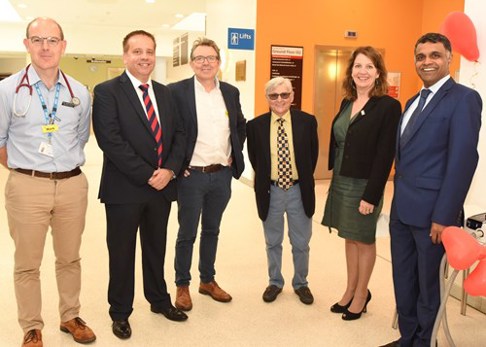
The Duchess of Cornwall, now Her Majesty Queen Camilla, visited to thank the NHS in Gloucestershire for their work during the COVID-19 pandemic.
NHS AccNo 16402
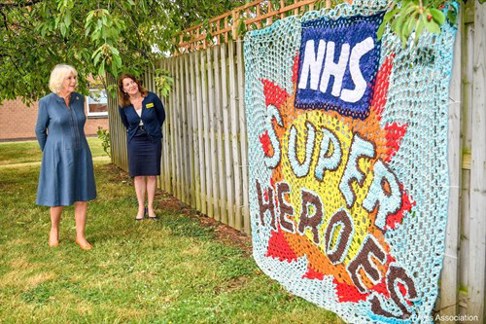
Thank you NHS
In its 75th year, we thank NHS, public health and social care staff and volunteers for their ongoing work in promoting the health of the nation.
NHS AccNo 16402

Further information
If you'd like to know more, please check out these links:
Timelines:
Online exhibitions:
Themed notes and extracts from documents at Gloucestershire Archives:
- NHS in the beginning
- Arnold Alcock, senior surgeon at Gloucestershire Royal Infirmary
- Matrons at Gloucestershire Royal Infirmary
- Women Doctors at Gloucestershire Royal Hospital
- Gloucester District Nursing Association
- The role of health visitor
- World War 2 and Gloucester Hospitals
- World War 2 and Cheltenham Hospitals
Events:
- NHS community art exhibition plus historical images from Gloucestershire Archives, were on display at Gloucester Cathedral, 1 July - 1 September 2023
- Exhibition of poetry, art work and textiles by local creatives Claire Smith and Laura Gibbons, inspired by mental health records and issues, was on display at Gloucestershire Heritage Hub, Alvin Street, Gloucester GL1 3DW, 1 -31 July 2023
Want to find out more: