
‘Tarts, Tramps & Toms': The Exhibition of Negotiable Affection
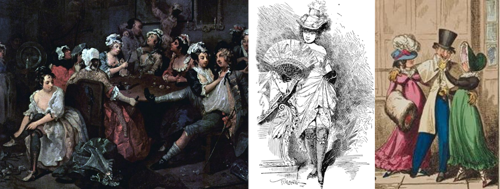
Prostitution has been described as "the world's oldest profession", and although this is no doubt incorrect, it has been around for a very long time! This exhibition will show some of the records that we have about prostitution in Gloucestershire’s past, as it appears in official records such as borough order books, gaol registers, gutter rhymes and street names. So, nudge, nudge, wink, wink, say no more....
Scroll through the online exhibition to delve into the records we hold on this profession, and how such activities were discussed and recorded.
Love Lane, Gloucester
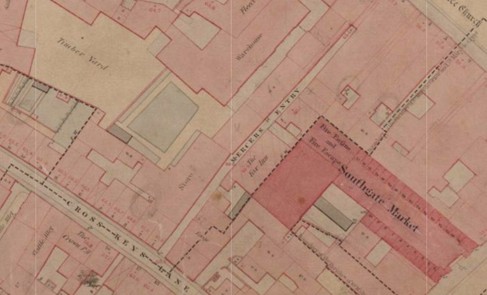
Gloucester Board of Health map, 1852
In the medieval period, street names tended to be identified from occupations or functions. Place name research has shown that many towns and cities had a ‘Love Lane’ - London had four, Bristol had one, and by the 1500s so did Reading, Chester, Shaftesbury and Salisbury. Topgraphical research suggests that these streets were dark or crooked and secluded, making them a natural location for illicit activity, especially as most were in densely populated areas, near a marketplace, with easy access to churches and within the town walls. Gloucester’s Love Lane was no different – being located off Westgate Street (the city’s busiest street) not far from the medieval markets that existed on Westgate and Southgate Streets. Love Lane was later renamed ‘Love Alley’ but or an unknown reason by the 1170s it had become a dead-end called Mercers Entry, seen in the centre of this map.
Powke Lane, Gloucester
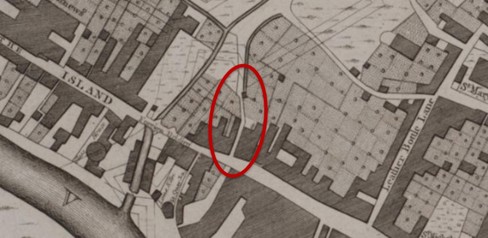
Hall & Pinnel Map of Gloucester, c. 1780
Much more to the point, Powke Lane (in the centre of this map) also strongly hints that it was a place of illicit sexual activity. Located on the north side of lower Westgate Street, linking to what became Dockham Lane, it appears to date from the early 1200s and had closed by 1544. Names linked to outdoor sexual activity were commonplace in the medieval period – as a well as Powke/Poke Lane, other names included Cock Alley (London, although some of these probably had connections to cockfighting), Whore Street (Bristol), and the two most infamous, Fockynggrove (Bristol) and Grope****layne (Oxford and Bristol). The latter usually became shortened to Grope Lane but, in most instances, the Victorians changed the name to Grape Lane.
Love Lane, Cirencester
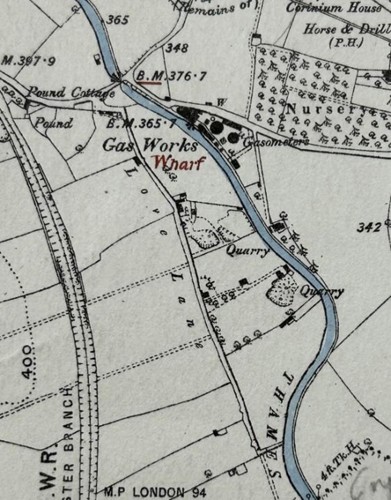
1881 1st Edition OS 6-inch map, reproduced with the acknowledgement of the Ordnance Survey
This is Love Lane on the southern outskirts of Cirencester. Although it features on earlier maps, this is the earliest map that gives it a name. It gave access to fields to the south of the town but was also a dead end until 1789, when it met the newly created Thames & Severn Canal. As a dead end it was presumably quiet and so was no doubt a popular destination for ‘recreational walks’ by courting couples and local prostitutes – although it was obviously much more open than Gloucester’s alleyways! Such lanes are common in the countryside villages and – like in towns – many places had them.
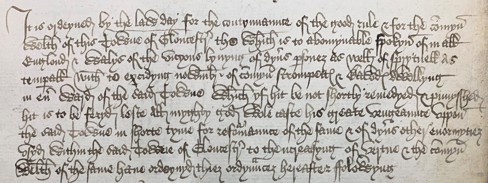
‘Exciding nowmbr of comyn strompetts & Bawds’ - The Red Book of Gloucester, 1500
GBR/B2/1
Among the records of the Borough of Gloucester is an official memoranda book or 'Red Book' 1486-1648. As well as a wealth of information about the day-to-day running of the town, it also contains the first real detailed information about prostitution in the city. This entry expresses concern that Gloucester has a bad reputation for immorality and a high number of prostitutes all of which will soon bring divine retribution down on the town.
“Gloucester, which is to abominable spoken in all of England and Wales of the vicyous living of dyvers persons as well as sprytuell as temporall with to exciding the nowmbr of comyn strompetts & Bawds dwelling in everly ward of the said Towne which of hit be not shortly remedied & punysshed hit is to be feryd lest allmyghty god wole caste his great vegeannce upon the saide towne……
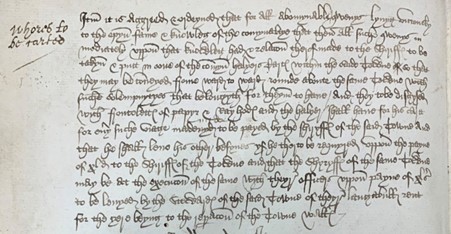
‘Whores to be carted’ - The Red Book of Gloucester, 1500
GBR/B2/1
In medieval times, prostitution was a paradox: officially condemned as sin by the Church but tolerated and regulated by authorities as a ‘necessary evil’. Many cities had established areas for licensed brothels (‘stews’) often owned by local bishops, who taxed them for revenue while restricting their activities, creating a legal grey area that is still present today! While prostitution was generally tolerated, at times it seems to have got out of hand and the borough officials periodically appear to have had roundups of prostitutes – and their customers – to fine them and shame them publicly. This picture is one such instance in Gloucester, recorded in the Red Book:
‘It is agreed & ordeyned that for all abominable qwenys lyvyg viciously to the opynn fame & knowledge of the comynalty that then all such qwenys immediately be taken & putt in one of the commyn halyers carts within the said Towne so that they may be conveyed from ward to ward round aboute same Towne with suche solempnytyes that belongyth for them to have….’
Transport of Prostitutes to the Salpêtrière by Étienne Jeaurat, 1745
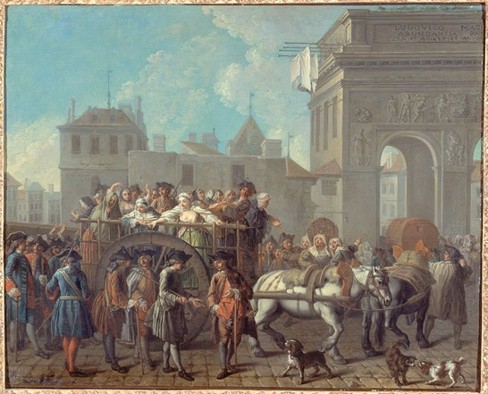
La Conduite des filles de joie à la Salpêtrière : le passage près de la porte Saint-Bernard by Étienne Jeaurat, Musée Carnavalet, Paris
This 1745 French painting by Étienne Jeaurat shows prostitutes being carted off to the Pitié-Salpêtrière Hospital and gives us some idea of the reality of Gloucester’s ‘Whores to be carted’ Red Book entry. The Pitié-Salpêtrière Hospital was a large charitable institution established by Louis XIV, used for housing the poor, mentally ill, and those deemed morally corrupt - including prostitutes. Although titled a hospital, it was more akin to a prison. The painting serves as a social commentary on the policing of public spaces and the forced confinement intended to ‘reform’ or remove marginalized women from (in this instance) Parisian society. Jeaurat's work captures the gritty, everyday life of the city, with detailed depictions of Parisian streets and the varied figures involved in such an arrest. The cart is a tumbrel, a one wheeled cart or wagon typically designed to be hauled by a single horse or ox. Their original use was for agricultural work; in particular they were associated with carrying manure, which is possibly why they were popular for carrying prostitutes! The Red Book also gives financial rewards for the carters involved in hauling prostitutes. They were to be paid 4d for each prostitute and were supposed to stop all other business. If they didn’t respond when ordered to do so by the town Sheriff, they were fined 40d (about £110 today).
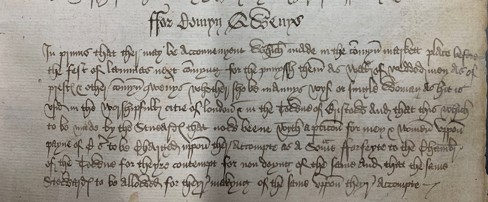
‘For Comyn Qwenys’ – the Red Book of Gloucester, 1500
GBR/B2/1
In addition to being carted, it was also decided that a suitable punishment for prostitutes – identified here as ‘comyn qwenys’ – and their customers, which was to include married men and priests, would be imprisoned in a hutch or cage in the marketplace. In the text, the word is ‘which’ or the Welsh ‘cwtch’ – the actual word cannot be made out precisely as the handwriting is not good and it looks abbreviated. While the latter is usually a word for a warm, affectionate hug, but it can also mean a small space or a cubbyhole. This was obviously an idea copied from London and Bristol, and such imprisonment was a common punishment in medieval times. A transcript of the text is as follows:
“In primis that there may be a cconnevyent cwtch made in the commyn market place before the fest of Lamma next for the punish them as well of wedded men as of prests & other commlyn qwenys whether she be mannys wyff or sigle woman as hit is usid in the worshipfull citie of London & in the Towne of Bristow & that this which to be made by the Stueards that now beene wyth a porticon for men & women uppon payne of Cs to be Charged uppon the accompte as a som[m]e forfeyte to the Chamb[e]r of the Towne for theyre contempte for non doyng of the same and that the same Stewards to be allowed for theyr makyng of the same uppon theyr accompte.”
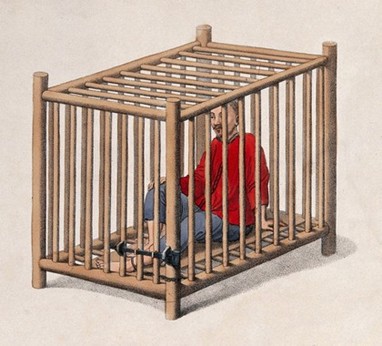
"A Chinese man is seated in a wooden cage." Coloured stipple print by J. Dadley, 1801.
Wellcome Collection 579701i
It seems likely that the Gloucester ‘which/cwtch’ was a cage of some sort. It may have possibly been like the one in this painting – showing a Chinese man imprisoned – although if it was intended to hold more than one person it would have had to have been larger. The most likely place for the location of the ‘hutch’ was Southgate Street – probably the top end near to the cross. This street formed part of the city market and from 1455, there was a pillory and stocks set up in ‘the marketplace’. Although Westgate Street was the most important market street, Southgate Street was a close second as by the early 1200s it was the usual pitch for sellers of fish, and by the beginning of the 1500s, a covered wheat market stood near its north end. Both the pillory and stocks still used occasionally in the early 1800s, but the hutch had long gone.
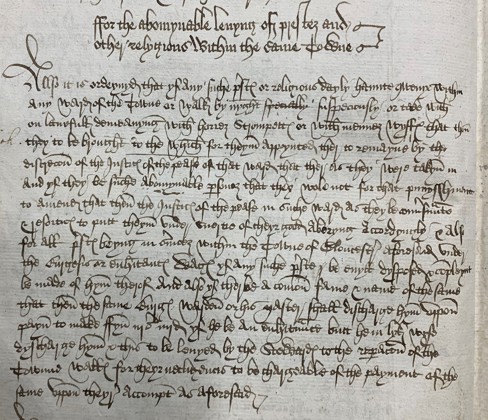
‘For the abomynable levyng of priests’– the Red Book of Gloucester, 1500
GBR/B2/1
The last reference to prostitutes in this section of the Red Book is in this paragraph. It appears that priests and friars in Gloucester were habitual customers of prostitutes – described here as ‘qwenys’, ‘horres’, ‘strompetts’ – and so this special ordinance was made to deal with them. Essentially those caught habitually using prostitutes were also to be imprisoned in the cage or hutch. The same punishment was also to be used if such priests or religious persons were found with other ‘mennes wyffs’.
“For the abomynable levyng of priests and
other relygious Within the same Towne
Also yt is ordeynyd that yf any suche p[re]sts or relygious dayly haunte qwenys within any ward of the Towne or walk by nyght specially suspeciously or take with on lawful [unlawful] demeanyng with horres strompetts or with mennes wyffs that then they should be brought to the which for theym appoynted there to remayne by the discrec[I]on of the Justices of the Pease in that ward that theras they were taken in.”
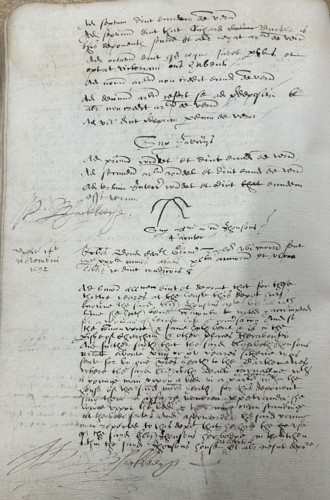
Elizabeth Jhonsons – lewd woman, Gloucester Diocesan Records
GDR/79/page 45v
The 424 volumes of the Diocese form the main episcopal archives and include act books, consistory court books, libri cleri ('call-books’), visitation records, meeting houses licencing, diocesan surveys and more besides. The most interesting are those of the consistory court, which was the bishop's court that dealt with church matters like tithes but also issues such as adultery, morality and defamation. Proceedings against individuals were initiated by a formal complaint from a plaintiff, or by parish churchwardens who were required to report misbehaviour in their parish. Oddly, none of the court papers directly reference women (or men) acting as prostitutes, although witnesses called in to give evidence in cases of morality and defamation often describe the accused or defendants as ‘whores’ or ‘lewd women’. This example, a deposition by John Bond, tailor of Gloucester, states that Elizabeth Jhonsons – who was before the court in November 1592 for defamation – was noted as a woman of lewd life and that men had had the use of her body in the kitchen of her house in Linton.
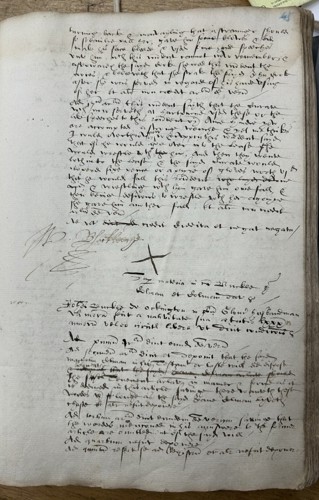
‘Jane Drewe is a common bawd’, Gloucester Diocesan Records
GDR/100/page 381
This case, brought against Jane Drewe for immorality, is typical and infers that she was a prostitute and possibly a bawd (brothel-keeper). This page records the evidence several witnesses - Ann Clerke, John Carter, Elizabeth Nurberie and Jane Jenkins. Essentially the evidence given by the witnesses described Jane Drewe’s life and that she was frequently seen allowing different men into her house, some of whom stayed for just a short time while others stayed longer. It was also stated that Jane Drewe had obtained girls for certain men – usually by tricking them into bringing clean shirts to men in Drewe’s house and then locking the girls in. A subplot to this case is that one of the witnesses – Jane Jenkins – had spent time in the stocks at Newent after the Newent parish constable heard her call Jane Drewe a whore!
‘A lewd and debased life’, Edward Stock, Rector of Kings Stanley , Gloucester Diocesan Records
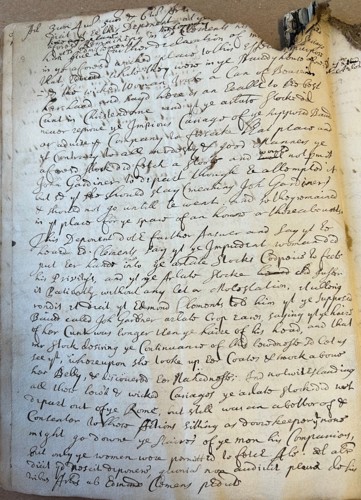
GDR/219
This deposition recounts how Edward Stock, Rector of Kings Stanley – a man noted for his lewd and debased life – visited a brothel in Broad Street in London while visiting a friend. The witness – Edward Wight of Kings Stanley – stated that one of the women had ‘put her hand in Stock’s codpiece to feel his privates’ and he allowed it and then that she had ‘took up her coates and smock above her belly and [he] discovered her nakedness.’ Stock was clearly a wayward character, having been brought before the Diocesan Court on several occasions for his behaviour. On one occasion, while staying at The Swan at Staverton, a maid had been sent to Stock’s chamber to warm the bed, but Stock would not let her leave the room and offered her his horse if she would lie with him all night.
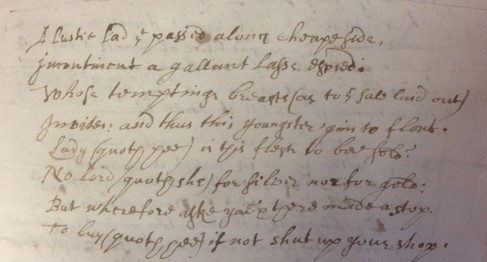
’A lustie lad that passed along Cheapeside’, Commonplace Book of Nathaniel Clutterbuck , Frampton-on-Severn, 1603-1721
D149/F13
The 1700s are known as the Golden Age of Prostitution, especially in London and other capital cities. Among the archives from this period that we hold is the Commonplace Book of Nathaniel Clutterbuck of Frampton-on-Severn. This fascinating book contains everything from farm accounts to the medical use of fox urine, but it also contains this wonderfully saucy poem which records a meeting with a prostitute in London….
A lustie lad that passed along Cheapeside,
Incontinent a gallant lasse espied,
Whose tempting breasts (as to their sale laid out)
Invites: and this youngster ‘gan to flout
Lady (quoth he) is this flesh to behold?
No Lord (quoth she) for silver nor for gold,
But wherefore aske you, and there made a stop
To buy (quoth he) if not shut up your shop.
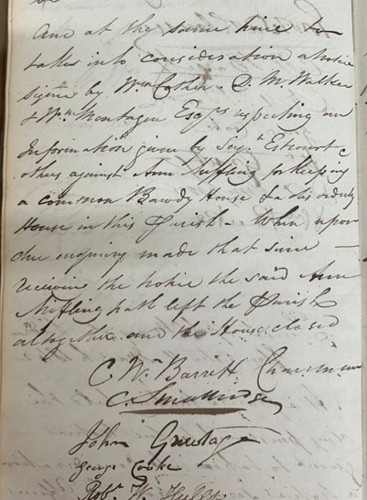
‘Keeping a Common Bawdy House’, Vestry minutes, St Mary de Lode Parish, 11 March 1842
P154/12/VE/2/1
This page is taken from the Vestry minutes of St Mary de Lode for 11 March 1842. After the usual business it records the Churchwardens starting an enquiry into the house of Anne Miffling, who was suspected of ‘keeping a common bawdy house or a disorderly house in this parish’. However, she obviously got wind of it and left the parish before they could act.
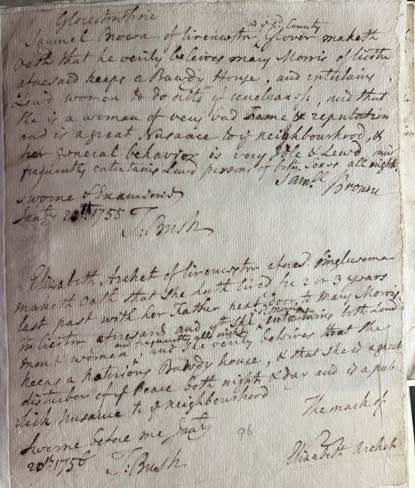
‘Acts of uncleanliness’, Cirencester, Quarter Sessions Informations and examinations 1756
Q/SD/1/1756
From the pages of the Quarter Sessions depositions for 1757, we have this case where, Mary Morris, was accused of keeping a bawdy house in Cirencester. Depositions of two witnesses are shown on this one page, Samuel Brown and Elizabeth Archer. Brown stated that Morris ‘keeps a Bawdy House and entertains lewd women to do acts of uncleanliness’ while Archer said that Morris ‘kept a bawdy house where she entertained men and women to do acts of uncleaness and she had a very bad reputation and was a nuisance in the neighbourhood’.
Sarah James, brothel owner, Gloucester Quarter Sessions, 1811

GBR/G3/G/3/1
Most bawdy houses and brothels operated without any fear of the law, especially the higher-class ones. The law did keep an eye on lower-class brothels because these houses were known as places where criminals would congregate, and were sometimes locations of considerable disorder, to the annoyance of respectable neighbours. Bawds of such lower-class brothels often appear in the gaol registers – as Sarah James here, being charged with ‘Keeping a Disorderly house’ in Gloucester Borough’s Quarter Sessions Gaol Register.
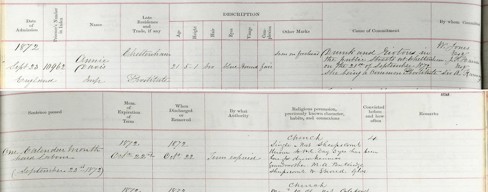
Annie Davis, prostitute, County Gaol Register, 1872
Q/GC/9/6
The main set of records relating to prostitution in the archives comes from their interaction with the law and their presence in the gaol registers. Technically prostitution wasn't illegal (and still isn’t), but the 1822 Vagrancy Act brought the word ‘prostitute’ into legal use and henceforth prostitutes could be arrested for ‘street-walking’ or being ‘lewd and disorderly’. This entry (a double page entry imaged one below the other) is typical and records the conviction of Annie Davis, a 21 year old prostitute of Cheltenham, who was given one calendar month hard labour for being ‘drunk and riotous in the public streets’.
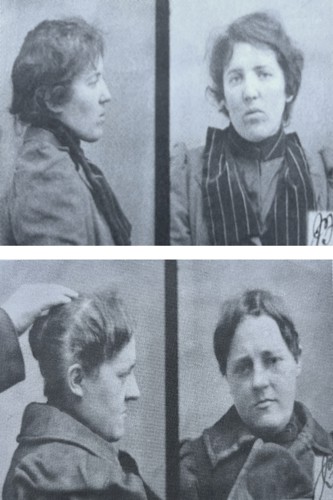
Alice Foley and Annie Brown, prostitutes, County Quarter Sessions Gaol Register
County Gaol Registers
These two images show two prostitutes, Alice foley (top) and Annie Brown (bottom) from their photographs taken for the County gaol register upon their conviction. Alice Foley was 25, from Cardiff, and was arrested just after Christmas 1902. She was working as a prostitute but was arrested and charged with obtaining money by false pretences. Annie Brown was born in Cheltenham in 1874 and was working as a prostitute in November 1891 aged just 17 when she was charged with stealing 2s 6d, for which she received a sentence of 5 months hard labour. As prostitution wasn’t technically illegal, most working girls who fell foul of the law were arrested and charged for other offences, usually theft, indecent conduct or other similar offences.
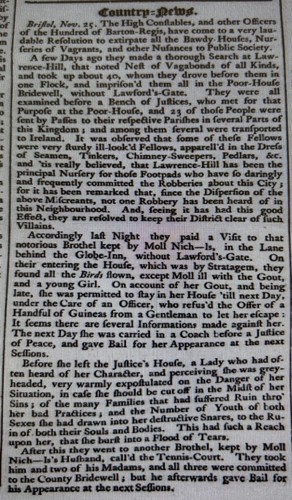
Country News, Gloucester Journal, 5 December 1749
Gloucester Journal 1749
Newspapers frequently carried reports of brothels and prostitutes that worked in them. The earliest such report from Gloucestershire is contained in the pages of the Gloucester Journal of 5th December 1749. It reports a roundup of tinkers and vagabonds by the High-Constable of Barton-Regis in late November, which subsequently included a raid on two brothels at night. The first was ‘the most notorious brothel kept by Moll Nicholls located in the lane behind the Globe Inn, at Lawford’s Gate’. However word got out about the impending raid and on entering the house, the officers found ‘all the birds flown’ apart from ‘Moll, ill with gout and a young girl’. The second brothel targeted had the unusual name of ‘The Tennis Court’ and was also run by Nicholls but here the law had more luck catching her husband (the owner of both houses) and two prostitutes – all of whom were taken to the bridewell to await trial at the next sessions.
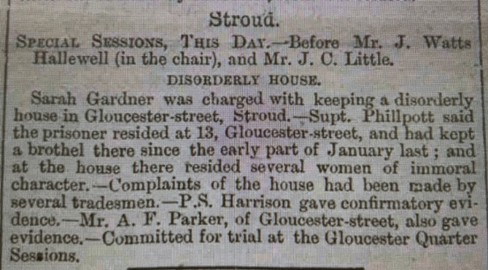
Disorderly House, Stroud, Gloucester Citizen, May 1881
Gloucester Citizen, 21 May 1881
This newspaper report, detailing a court sitting of the Special Sessions regarding a brothel was typical. The hearing charged Sarah Gardner with ‘keeping a disorderly house in Gloucester Street, Stroud’ and committed her for trail and the forthcoming Quarter Sessions at Gloucester. The case was led by Police Superintendent Harrison who provided evidence along with several tradesmen.
Criminal Law Amendment Act, Gloucester Citizen, 1 January 1886
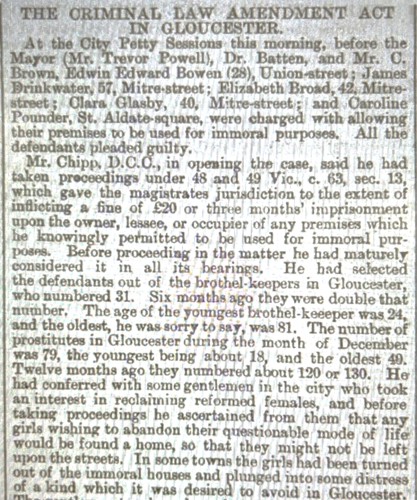
Gloucester Citizen, 1 January 1986
One of the aims of the 1885 Criminal Amendment Act was protecting women and girls, suppressing brothels, and increasing penalties for sexual offenses. On 1st January 1885, Gloucester’s Petty Sessions took proceedings against five brothel owners and opening the case, the city Deputy Chief Crown Prosecutor also gave a census of illicit sexual activity in the city. He said that he had selected the five from the 31 known brothels in the city and that 6 months earlier there had been 62. The age of the youngest brothel keeper was 24 and the oldest 81! In December 1885 it was ascertained that there were about 130 prostitutes in the city, the youngest being 18 and the oldest 40.
Marylone Alley, Gloucester
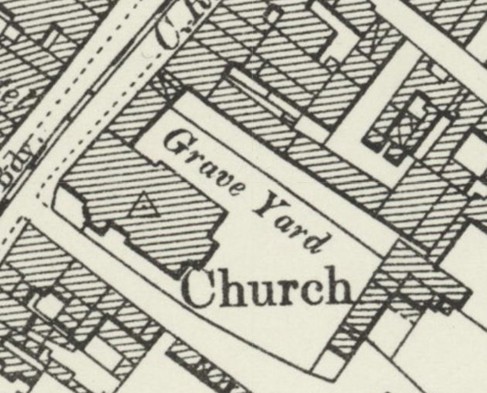
1902 2nd Edition OS map, reproduced with the acknowledgement of the Ordnance Survey
In Gloucester’s Town Clerk’s files there are papers about the status as a right of way of the passage called Marylone, between Southgate Street and Greyfriars by the old Crypt Schoolroom. Today, this alleyway forms the main access to the Café Rene! In these papers is a petition from the rector of St Mary de Crypt and occupiers of adjoining properties about the nuisance caused by "the covered alley communicating with Grey Friars, which is most objectionable both from a moral and sanitary point of view". Sanitary most probably referred to people urinating in the alley, and well, moral hints of its use by ‘thruppenny uprights’ – prostitutes, who, for the sum mentioned, dispensed their favours standing up against a wall.