
Display 1 of 19
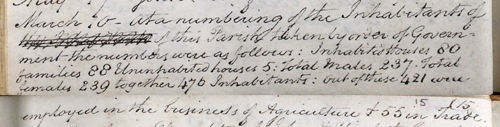
The 1801 census, Gloucestershire Archives P20/IN/1/2
Britain was a slow starter when it came to undertaking a census. The reason was that the government feared it would reveal the nation’s weakness to foreign enemies. However, this attitude changed in 1798, when the respected economist and demographer Thomas Malthus, published ‘An Essay on the Principle of Population or A view of its past and present effects on Human Happiness’. Malthus postulated that an increase in a nation's food production improved the well-being of the population, but it was only temporary, as it led to population growth, which in turn led to higher demand for food and lowered standards of living until the food supply was increased. Malthus argued that population growth in Britain would soon outstrip supplies of food and other resources, leading to famine, disease and ultimately, financial collapse, unrest, and revolution. Terrified by this potential outcome, the government decided to act, and the first census took place on 10 March 1801. The information was collected by the parish Overseers of the Poor, aided by parish constables and other officers of the peace. It revealed that the population was 8.9 million living in 1.8 million houses. This image shows the entry in the Ashleworth parish register:
March 10 – At a numbering of the Inhabitants of this parish taken by order of Government the numbers were as follows: Inhabited Houses 80 families 88 Uninhabited houses 5: Total males 237. Total females 239 together 476 Inhabitants: out of these 421 were employed in the business of Agriculture & 55 in Trade.
Last reviewed: