Rainbow Street
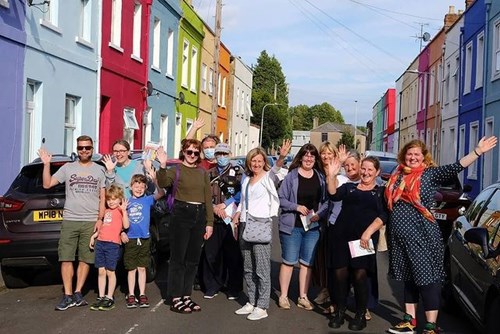
In 2020, the hitherto unremarkable St Mark’s Street in Kingsholm was transformed into ‘Rainbow Street’ when the outside of many of the houses were painted in vibrant colours.
Who was involved?
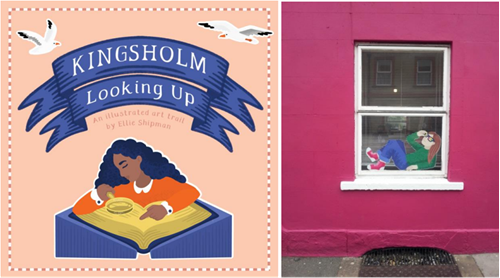
This initiative was started by street resident and landlady Natasha Frootko. Our first involvement with Natasha and ‘Rainbow Street’ came through our support of Gloucester History Festival’s ‘City Voices’ strand in 2020. Historic England had awarded funding for a project called ‘Gloucester Looking Up’, and Rainbow Street was an obvious choice to include on the map and related trail.
What were the aims?
It attracted considerable media attention and reinvigorated the sense of community for those living on the street. Leading up to the 2021 History festival, we have been working with Natasha and the City Voices team to develop a project which will showcase the street and its residents. Rainbow Street is an inspiring story of neighbours and communities working together, in partnership with others. It is an ongoing, developing project that will focus on the heritage and history of the street and the people who live, or have lived, on it.
What did you do?
QR codes in around 10 windows will link to information about the rainbow makeover and how it came about. Additionally, four QR codes will link to oral histories which we will record with street residents, including the person who has lived on the street the longest. Tours led by Natasha will be offered during the Festival, and an online map showing which houses have codes will allow self led tours, both during the Festival and beyond.
What were the outcomes?
Longer term, there is also scope for the Civic Trust guides to offer the tour as one of their very popular walks for tourists.
Residents who provide oral histories will be offered a tour of the Archives and Heritage Hub facilities, and their interviews will be added to our collections, along with photos and other material they may wish to donate. This element will start small in 2021 but can be scaled up if funding and COVID permit. We also want to foster the residents’ growing interest in the history of their street, for example by bringing them into the Archives for guided research sessions using Natasha as community organiser. As we approach an uncertain “new normal”, it is helpful that the Know Your Place digital heritage mapping resource offers online possibilities for engaging this community, both as a research tool and through adding to the community layer.