Voices Gloucester - Impact Summary

An impactful partnership

Gloucestershire Archives staff have worked closely with Voices Gloucester since it was established in 2016 (then known as City Voices).  The organisation (now a charity called Voices Gloucester) has really taken off in the last three years with expert freelancers and a small grants programme funded by the National Lottery Heritage Fund and Historic England.  One member of Archives staff has been a very active trustee throughout whilst another leads the heritage schools strand of the programme.  The Archives now has a formal ‘memorandum of understanding’ with Voices Gloucester to embed the mutually beneficial arrangements. 

Impact & Legacy

Voices Gloucester’s community created projects have a unique impact on both the producers and their audiences. Within the programme there is an opportunity to see your own heritage reflected back to you, as well as the chance to explore the stories of the comunities around you.

Diversity & Inclusivity

Historically underrepresented communities and systemically minoritised groups find a supportive platform to share experiences and traditions; this is history told in authentic voices - voices that can dispel myths, challenge misconceptions, and offer surprising connections. Representation has come from self-defined groups that include:

• Gypsy/Traveller/Roma.  Please see National Lottery Heritage Fund case study:  How community grants can support grassroots heritage | The National Lottery Heritage Fund

• LGBTQ+
• Asian/Asian British
• Black/Black British/Caribbean/African
• Refugee/Asylum Seekers/Migrants
• People with visual impairments and living with disability
• Gloucester’s emerging generation and seniors

Sustainability & Legacy

The focus is not on isolated funding of stand alone projects. The aim is to build community, generating personal and generational legacy - exploring the past, to uncover hidden histories, and better understand our identities.

The Numbers

In our first three years, growth has been seen in our audience figures and funding applications. There have been 127 events, 97,686 participants, 48 projects, 174 applications, and 1843 Vimeo views of our films. Our social media engagement has increased tenfold, and we have nurtured invaluable connections with local media, achieving print and broadcast coverage.

Case Studies

Case Study, Individual. Georgia Williams

Connected Communities, Historic England

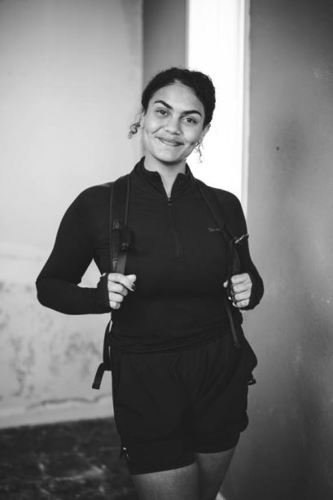
Georgia Williams initially applied to Voices Gloucester in Round 1, when she was in her early 20s and had just moved back to Gloucester after studying. At this point the community panel felt that her project was not yet developed enough, so through our Historic England funding we were able to support a mentoring opportunity with Rider Shafique, who himself had been mentored previously by Vanley Burke.

This led to Rider and Georgia successfully applying in Round 2 for the ‘People Are Cities, Cities are People’ project, which explored 50 years of Gloucester Carnival photographs and catalogued them for Gloucestershire Archives. This project was so successful that it resulted in the community building Georgia a permanent exhibition space in the Picturedrome in Barton Street, from where we launched Voices Gloucester and Gloucester Views in September 2022.

We were then able to offer Georgia the role of Young Curator, and she went on to support the ‘Unseen: Stories Behind the Homeless’ and ‘Kushti Divvus’, Romany histories. The role was closely supported by the Voices team, as both projects were by first time exhibitors.

By this time, Georgia has an excellent portfolio and range of experience, so has been able to access many more opportunities both locally and nationally, including being one of the artists selected for Storeys, Clapham Court. In the last round, Georgia applied to deliver a project ‘Our Homes’ in which she mentored three young women from diverse backgrounds, passing on the positive experience and legacy of the mentoring and support she has had through Voices. She is also working as co-curator with Jacqui Grange on the Beating Back the Past project, tackling the challenging history of enslavement.

"I gained great experience in working with minority groups and groups usually failed. I have strengthened interpersonal skills and ethical perspective when it comes to people and photography. I have gained great networks within the city and a stronger position as a curator amongst artists and organisations."


Learning Points (Impact Reflections)

  1. We are establishing a culture that supports progression. Rider was mentored, who in turn mentored Georgia, who is now mentoring young people.

  2. Pairing emerging practitioners within a supportive environment builds confidence and mutual support. These strong relationships have helped build a community around Voices Gloucester.

  3. Creating opportunity for early career community producers is essential. Georgia is very clear that she would have moved away from Gloucester if it wasn’t for the opportunities that have been afforded to her by Voices Gloucester.
Case Study, Individual. Georgia Williams

Connected Communities, Historic England

Georgia Williams initially applied to Voices Gloucester in Round 1, when she was in her early 20s and had just moved back to Gloucester after studying. At this point the community panel felt that her project was not yet developed enough, so through our Historic England funding we were able to support a mentoring opportunity with Rider Shafique, who himself had been mentored previously by Vanley Burke.

This led to Rider and Georgia successfully applying in Round 2 for the ‘People Are Cities, Cities are People’ project, which explored 50 years of Gloucester Carnival photographs and catalogued them for Gloucestershire Archives. This project was so successful that it resulted in the community building Georgia a permanent exhibition space in the Picturedrome in Barton Street, from where we launched Voices Gloucester and Gloucester Views in September 2022.

We were then able to offer Georgia the role of Young Curator, and she went on to support the ‘Unseen: Stories Behind the Homeless’ and ‘Kushti Divvus’, Romany histories. The role was closely supported by the Voices team, as both projects were by first time exhibitors.

By this time, Georgia has an excellent portfolio and range of experience, so has been able to access many more opportunities both locally and nationally, including being one of the artists selected for Storeys, Clapham Court. In the last round, Georgia applied to deliver a project ‘Our Homes’ in which she mentored three young women from diverse backgrounds, passing on the positive experience and legacy of the mentoring and support she has had through Voices. She is also working as co-curator with Jacqui Grange on the Beating Back the Past project, tackling the challenging history of enslavement.

"I gained great experience in working with minority groups and groups usually failed. I have strengthened interpersonal skills and ethical perspective when it comes to people and photography. I have gained great networks within the city and a stronger position as a curator amongst artists and organisations."


Learning Points (Impact Reflections)

  1. We are establishing a culture that supports progression. Rider was mentored, who in turn mentored Georgia, who is now mentoring young people.

  2. Pairing emerging practitioners within a supportive environment builds confidence and mutual support. These strong relationships have helped build a community around Voices Gloucester.

  3. Creating opportunity for early career community producers is essential. Georgia is very clear that she would have moved away from Gloucester if it wasn’t for the opportunities that have been afforded to her by Voices Gloucester.

Case Study, Threads

Thriving Places, Historic England

Threads is our annual textiles programme, now entering its third year. Initially inspired by the Voices Gloucester ‘Stitch in Time’ project, which worked with 14 women from different backgrounds to create an artwork that reflected what they felt was important about the City’s history and heritage.

In 2022 the programme focussed on collaborative textiles projects, including micro-commissions with textile artworks sharing ‘Westgate stories’ collected through the High Street Heritage Action Zone (HSHAZ) programme; exhibitions in the Cathedral Quarter including Gloucester Cathedral; and a talk and workshop programme at The Folk.

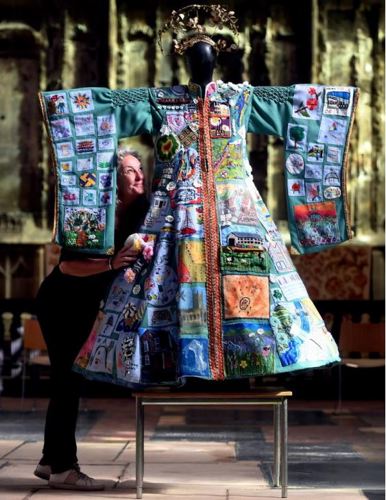
In 2023 we initiated Threads by bringing the Red Dress Project, an internationally renowned artwork, to a community space in an economically deprived area of the city. This provided the inspiration for the Costume of Gloucester (pictured), to which over 130 groups and individuals contributed. This artwork is now part of the Museum of Gloucester’s permanent collection; and will be a feature of the Gloucester Day parade annually.

In 2024, the centrepiece of the Threads exhibit in the Lady Chapel at the Cathedral was ‘Beating Back the Past’ - an installation combining textiles, film and audio by Rider Shafique and Vanley Burke, which explored the ongoing impact of the enslavement of African people. This artwork is inspired by an 18th century manuscript of a song sung by enslaved people from Barbados which was also on display. The manuscript is on UNESCO’s Memory of the World Register and is held by the Archives.

In 2024 we also piloted a series of linked exhibits around Gloucester exploring the people who worked in the textile trades in Gloucester throughout its history; and five quilt micro-commissions exhibited at the Cathedral which explored and celebrated Gloucester communities, including the church, neurodiverse, Polish and two heritage sites.


Learning Points (Impact Reflections)

  1. This project has helped us develop the concept of ‘growth’ projects - the initial group was just 14 women and by allowing access and sharing in high profile heritage venues such as the Cathedral and providing a related talk and education programme we have increased ambition on a yearly basis.

  2. This project established a core group of heritage and community partners including Gloucester Cathedral, The Folk, the Museum of Gloucester, the Emma Willis Sewing Studio and the HSHAZ which ensured a wide spectrum of engagement; and a broad selection of exhibition venues.

  3. Voices Gloucester’s core values, such as creating opportunity for early career community producers; and involving diverse communities, are upheld with every aspect of delivery.

Case Study, Threads

Thriving Places, Historic England

Threads is our annual textiles programme, now entering its third year. Initially inspired by the Voices Gloucester ‘Stitch in Time’ project, which worked with 14 women from different backgrounds to create an artwork that reflected what they felt was important about the City’s history and heritage.

In 2022 the programme focussed on collaborative textiles projects, including micro-commissions with textile artworks sharing ‘Westgate stories’ collected through the High Street Heritage Action Zone (HSHAZ) programme; exhibitions in the Cathedral Quarter including Gloucester Cathedral; and a talk and workshop programme at The Folk.

In 2023 we initiated Threads by bringing the Red Dress Project, an internationally renowned artwork, to a community space in an economically deprived area of the city. This provided the inspiration for the Costume of Gloucester (pictured), to which over 130 groups and individuals contributed. This artwork is now part of the Museum of Gloucester’s permanent collection; and will be a feature of the Gloucester Day parade annually.

In 2024, the centrepiece of the Threads exhibit in the Lady Chapel at the Cathedral was ‘Beating Back the Past’ - an installation combining textiles, film and audio by Rider Shafique and Vanley Burke, which explored the ongoing impact of the enslavement of African people. This artwork is inspired by an 18th century manuscript of a song sung by enslaved people from Barbados which was also on display. The manuscript is on UNESCO’s Memory of the World Register and is held by the Archives.

In 2024 we also piloted a series of linked exhibits around Gloucester exploring the people who worked in the textile trades in Gloucester throughout its history; and five quilt micro-commissions exhibited at the Cathedral which explored and celebrated Gloucester communities, including the church, neurodiverse, Polish and two heritage sites.


Learning Points (Impact Reflections)

  1. This project has helped us develop the concept of ‘growth’ projects - the initial group was just 14 women and by allowing access and sharing in high profile heritage venues such as the Cathedral and providing a related talk and education programme we have increased ambition on a yearly basis.

  2. This project established a core group of heritage and community partners including Gloucester Cathedral, The Folk, the Museum of Gloucester, the Emma Willis Sewing Studio and the HSHAZ which ensured a wide spectrum of engagement; and a broad selection of exhibition venues.

  3. Voices Gloucester’s core values, such as creating opportunity for early career community producers; and involving diverse communities, are upheld with every aspect of delivery.

In Quotes

Our monitoring and evaluation report indicates that through these projects knowledge and skills develop, attitudes and behaviours change. The following quotes highlight the impact on our producers. 

(Anonymised, attribution is available)

“Voices Gloucester is like a second family. They don’t think differently of you because of your background.” “Voices Gloucester shines a light on what is true and important.”

“Without Voices Gloucester, I wouldn’t have a CV to talk about. They are like a family. I know they will always be there to support me.”

“It is great for me to build a body of work that reflects and highlights untold stories of Gloucester.”

“We gained a vast amount of experience around the production and installation of public artworks. We also learned a lot about how better to embed co-creation in our projects.”

“We found out some fascinating things about Gloucester’s past and are really keen to continue that research in our future projects to make placed-based work. The Heritage Hub is a great resource, and we hope to connect with them in the future.”

“Voices Gloucester might look small, but it is significant in terms of the methodology. It is subtly changing things in the city in a really positive way. Changing ideas about why you would involve residents and finding genuine ways to do this. Key local players are becoming more open a,n,d ambitious in how they involve residents.”

“I see my hometown in a different light. The people, places and culture.”