Waste Management
Second Hand September
Second hand September is a campaign linking to the waste of the clothing industry, encouraging people to swap their clothing or buy second hand rather than buy new. To get involved we ran a 'Free Shop' clothing rail up in the public facing area.
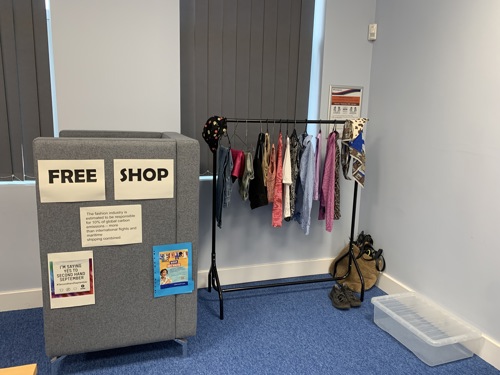
People claimed all sorts from denim jackets to funky hats, to knitting needles. At the end of the month everything left over was donated to charity.
Waste Auditing
During the project we carried out quarterly auditing, assessing what we were considering 'waste' and how we could minimise it further. Change can be challenging so we took it slow and steady tackling a few issues at a time and making sure we find a comfortable middle ground. Having addressed most issues and considerably reduced our waste, we are now carrying out monthly spot checks to ensure we are not slipping back into old habits. The results so far are good.
December 13th 2023 - 1st Audit
Our main takeaways of waste to tackle from the first waste audit:
- Paper towels
- Plastic cups
- Excessive bin bags
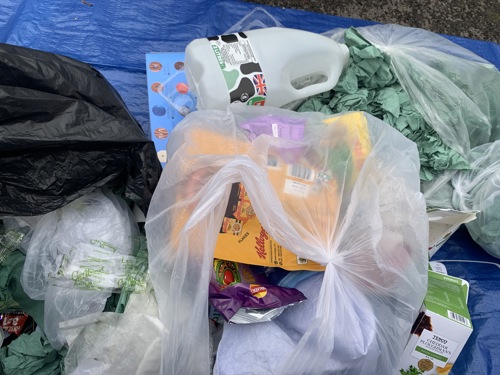
We have combatted these challenges by creating ‘Did You Know’ campaigns that have been shared on the SharePoint and around the office to inform the staff of the environmental impacts, so they equally feel inclined to make the step away from what at first can seem like ‘convivence’ but has a long-term detrimental impact.
Paper Towels
- Not Recyclable.
- Not Compostable.
- 2nd highest quantity material found in landfill after food waste.
- The methane generated from decomposing paper hand towels is equivalent to the emissions from 3.2 million passenger cars annually.
- 80% paper towels are sourced from virgin forests.
- Production uses heavy bleaches, dyes and chemicals (that then seeps into our soil and waterways).
- Paper towel production emits more greenhouse gases than many other types of paper products.
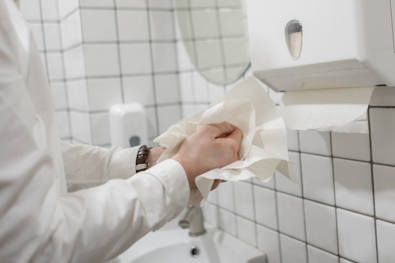
Paper towels were replaced with tea towels with tote bags for dirty to be washed.
Single Use Plastic
- Plastic bottles can last for up to 450 years.
- 90% of plastics are made from fossil fuels.
- 1 in 3 fish now contain plastic.
- Only 12% is recycled in the UK.
- In the North Pacific, a gyre (a slowly swirling whirlpool of ocean currents) collects plastic debris, estimating to be double the size of France.
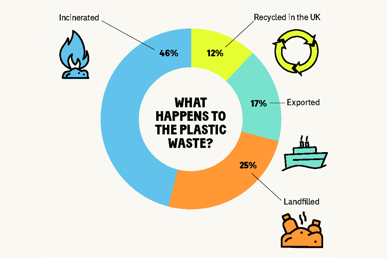
Single use plastic cups at the water fountain were replaced with washable reusable cups.
Bin Bags
Conversation about bin emptying schedule to see if this can be reduced to help unnecessary wastage.
28th March 2024 - 2nd Audit
Reflections
Our first audit was a success with remarkably only a few paper towels. Identifying them to be in a public facing kitchen they have been removed and replaced with more tea towels. The single use plastic cups were again notably less, but there were still a few. We have removed all single-use plastic cups from the kitchen so utilising is not possible. There was no excessive bin bags use which was a great win.
Next Steps
Our main takeaways of waste to tackle from the second waste audit:
- Toilet rolls
- Food waste
Toilet Rolls
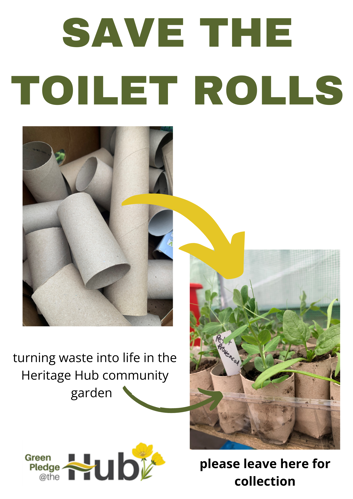
We used toilet rolls to grow plants in the community garden. We have made a poster for each of the toilets to inspire saving the toilet rolls and to think about waste differently.
Food Waste
We have put a food waste bin in the one of the public kitchens that didn't have one.
We also got a hot composter for the garden to make quicker compost and will send around pictures to help encourage staff and public to make the connection that 'waste = new life'.
7th June 2024 - Bin Audit
The waste in the bins is going down considerably. The majority of waste is being put in the right bin, recycling or compost which is a huge win.
Soft Plastic
The majority of the waste in the bins now is soft plastic. Soft plastic that can't be recycled in the ordinary recycling it has to be taken to a supermarket to a special recycling facility.
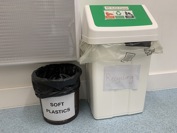
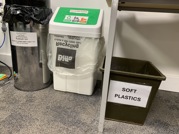
We trialled this in the staff room to see if this could be facilitated. Every two weeks we then took the soft plastic over to the supermarket on a bi-weekly walk. This trial proved successful and now this practice is continuing following the completion of the Green Pledge Project.

18th September 2024 - Bin Audit
Soft Plastic in Public Areas
Following on the from the success of the soft plastic waste disposal in the staff room we have rolled this out into the public facing areas.
We have also removed some bins in the events room to ensure they see the option for the recycling and food waste before placing straight into the bin.
Post Green Pledge Project - January 2026
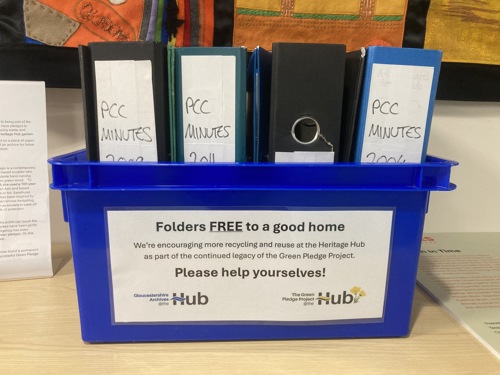
Folders, ring binders and poly pockets often arrive with deposits into the Archive. Whilst they may be useful in keeping order, they are sadly not ideal for continued preservation of the documents within them and subsequently need to be removed. This often left us with large piles of this material, which if not recyclable would unfortunately end up in landfill.
To combat this, we've now introduced a new pickup point in our reception area for empty folders that have been removed from collections. Visitors and users of the Heritage Hub can now collect as many as they want free of charge! This means rather than ending up in landfill or even being recycled, these folders can be reused and serve another purpose, and shows our continued efforts to promote the legacy of the Green Pledge Project.