
Public Pledge
The Pledgehog
The idea of making a pledge for wildlife, nature and the planet is at the core of the ‘Green Pledge Project’. We hoped that through our engagement people would take environmental action of their own.
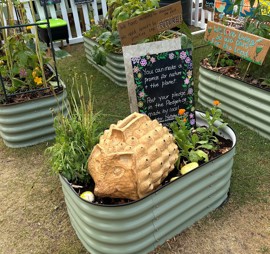
We thought long and hard about the best way to do this, and early in 2025 the ‘Pledgehog’ was born.
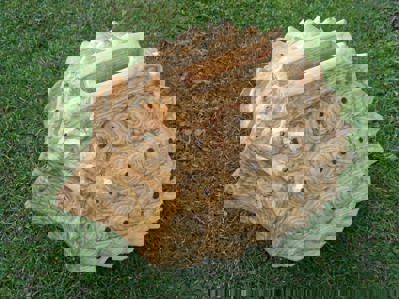
Our relationship with hedgehogs goes from revered, to persecuted, to protected. In ancient Egypt people saw their prickles as offering protection and wore amulets to ward of evil. In medieval times it was thought that hedgehogs stole apples from the orchards and milk from the udders of the cows. They became persecuted and the archives hold documents from parish records which show that hedgehogs had bounty on their heads. Fast forward to the 1970s and documents show a different understanding of these useful creatures. Their important role in pest control and intrinsic place in the ecosystem, coupled with knowledge of their declining numbers meant they became a protected species.
There is considerable evidence for a dramatic decline of hedgehogs in recent years, with around a third of the national population lost since the millennium. This is due to roads, garden machinery, drowning in swimming pools, declining habitats and use of chemicals.
The hedgehog has never changed, only our view of it, and how we behave towards it.
The project commissioned local sculptor Natasha Housego to create a piece from a 100 year old fallen ash tree. Natasha is a contemporary Gloucestershire based sculptor who always works outside, hand carving diseased or fallen green wood. Natasha wanted the carving to be very robust and tactile so the public can touch the rounded spikes and get a feel of its sculptural shape. The spikes have been gently scorched, which strengthens the wood and form.
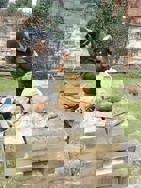
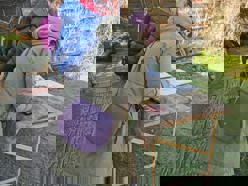
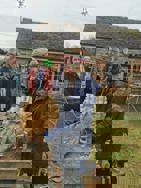
We made suggestions as to things that people could pledge or asked them to come up with their own ideas.
ü Refuse, reduce, reuse, recycle.
ü Upcycle items into something new and unique
ü Switch off machines rather than leaving on standby
ü Avoid paving over sections of your garden
ü Be diverse in your planting
ü Opt for a hedge rather than a fence
ü Grow plants up walls for wildlife
ü Don’t mow the lawn or at least leave some if to grow
ü Plant greenery around your house to help cool your house
ü Use Ecosia (the search engine that plants trees)
ü Join a litter pick
ü Join a community growing scheme or sign up for a veg box
ü Use public transport, bicycle, or car share when you can.
ü Avoid flights abroad where you can.
ü Drive efficiently (avoid idling, use higher gears and maintain steady stead whenever possible
ü Switch to renewable energy, eg solar panels
ü Draught proof your house and turn the heating down
ü When you replace your boiler, get a heat pump instead
ü Avoid single use plastic (carry your own reusable items
ü Conserve water (don’t run the tap while brushing your teeth, have showers rather than baths, only boil what you need, collect rainwater in water butts)
ü Plan meals to avoid food waste
ü Batch cook meals and put lids on saucepans during cooking
ü Eat less meat
ü Buy local and in season produce to reduce food miles
ü Let your washing dry naturally
ü Use your local refill shop
ü Make home-made presents
ü Wash clothes less often and on more gentle, cooler cycles
ü Pass clothes on and buy second hand
ü Use Repair Cafes