
How does the planning system work?
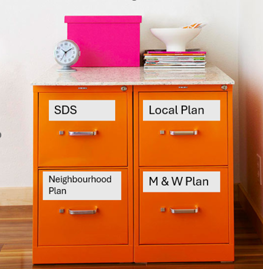
Planning works at different levels. National policy sets the overall framework. The Spatial Development Strategy looks at the big choices for Gloucestershire, such as how much growth is needed and how homes, jobs, infrastructure and the environment should be planned together. Local Plans provide more detail about individual areas and sites, while Neighbourhood and Supplementary Plans can provide further local detail. Together, these plans provide the framework for making decisions on planning policies.
Planning is about shaping the future of our places. It helps us decide where new homes, jobs and services should go, what infrastructure is needed to support them, and how we can protect the things people value. Good planning helps ensure that development meets people's need, supports healthy and thriving communities, protects the environment and makes the best use of land and resources.
Planning is plan-led. This means councils prepare plans that set out how places should grow and change, and these plans then help guide decisions on planning applications.
National policy sets out the Government's priorities and expectations for planning, including delivering homes, supporting economic growth, protecting the environment and providing infrastructure. Local and strategic plans need to be prepared within this national framework.
National policy sets out the Government's priorities and expectations for planning, including delivering homes, supporting economic growth, protecting the environment and providing infrastructure. Local and strategic plans need to be prepared within this national framework.
The SDS provides the strategic direction for a wider area. It considers issues that are best planned for together, such as the overall amount and broad distribution of growth, major infrastructure and cross-boundary needs. It provides the framework within which more detailed Local Plans are prepared.
The SDS will look at the big picture for Gloucestershire, helping us plan together for homes, jobs, transport, infrastructure and the environment over the longer term.
Local Plans provide much more detail about how development should happen locally. They can identify land for development and contain policies covering issues such as housing, employment, design, transport, infrastructure and the environment. The new Local Plan-making system came into force in England in March 2026.
Local Plans provide much more detail about how development should happen locally. They can identify land for development and contain policies covering issues such as housing, employment, design, transport, infrastructure and the environment. The new Local Plan-making system came into force in England in March 2026.
Neighbourhood Plans allow communities to develop planning policies for their neighbourhood. They provide an opportunity to influence how development takes place locally, within the wider strategic and local planning framework.
Neighbourhood Plans allow communities to develop planning policies for their neighbourhood. They provide an opportunity to influence how development takes place locally, within the wider strategic and local planning framework.
Under the new planning system, Supplementary Plans can provide additional policies where more focused planning is needed. Once adopted, a new-style Supplementary Plan forms part of the statutory development plan.
Under the new planning system, Supplementary Plans can provide additional policies where more focused planning is needed. Once adopted, a new-style Supplementary Plan forms part of the statutory development plan.
When somebody wants to build or significantly change the use of land or buildings, they may need to submit a planning application. The relevant planning authority considers the proposal against the development plan and other relevant planning considerations.
When somebody wants to build or significantly change the use of land or buildings, they may need to submit a planning application. The relevant planning authority considers the proposal against the development plan and other relevant planning considerations.
Last reviewed: